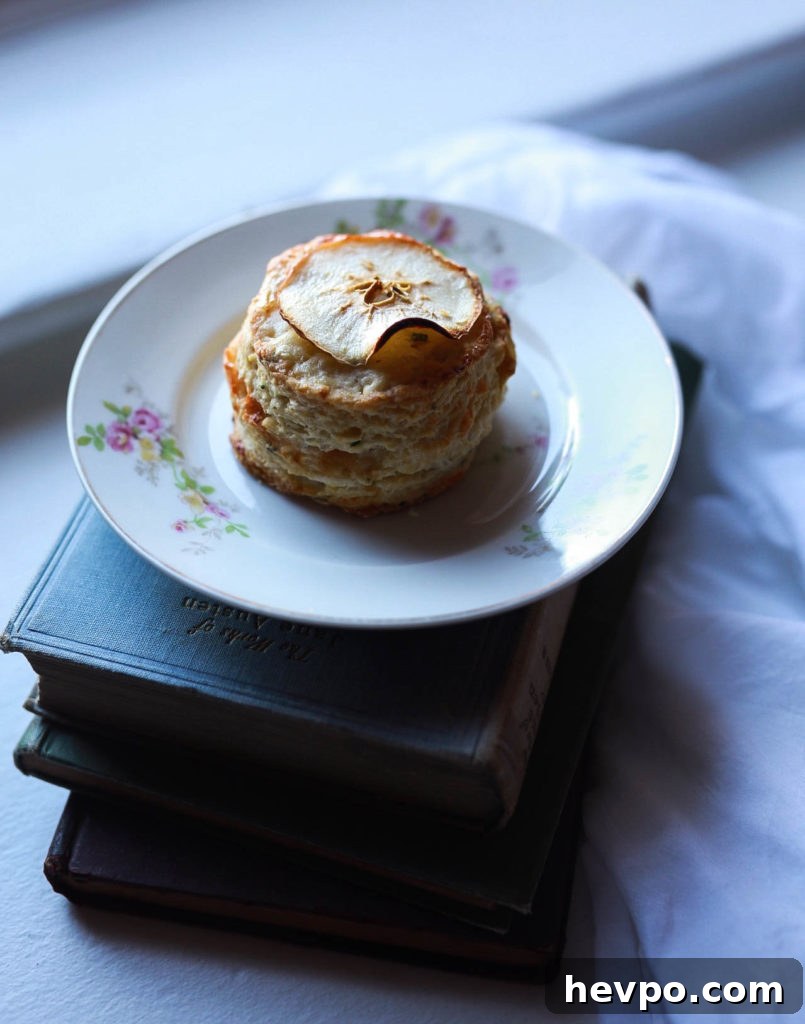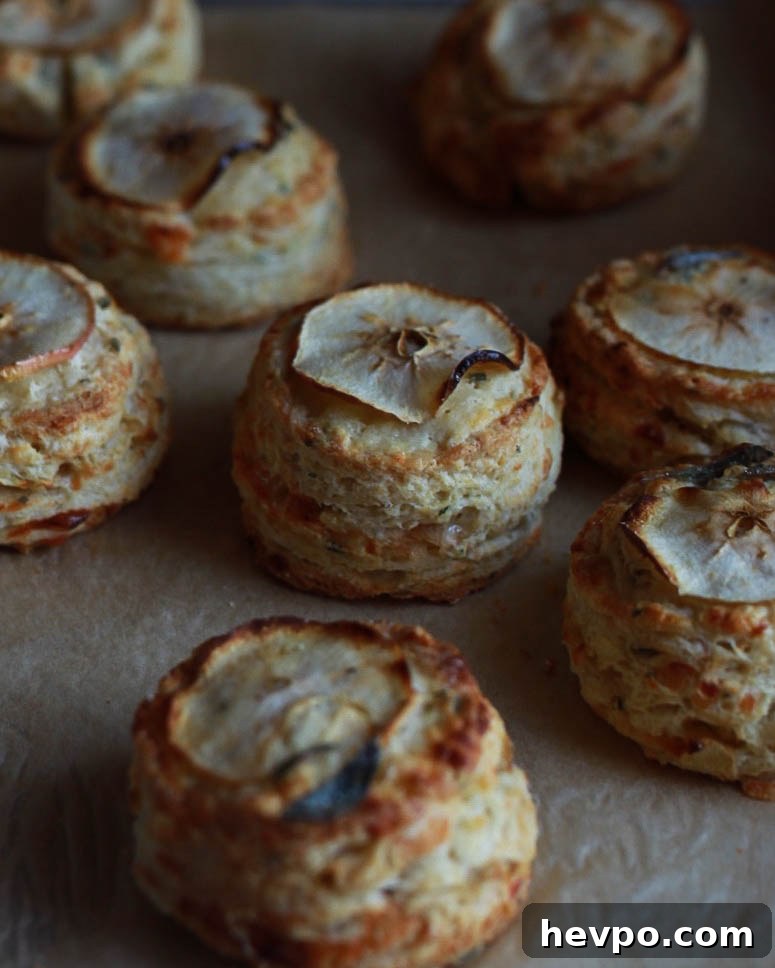
When I was a child, I was convinced fruit and cheese didn’t belong together. Cheese with crackers was the ideal snack; apples with cheese felt wrong. Over time my tastes changed. Now I can’t think of a healthier, more satisfying snack than a sharp wedge of cheese paired with a crisp apple. I also love combining apples and cheese in baked goods.
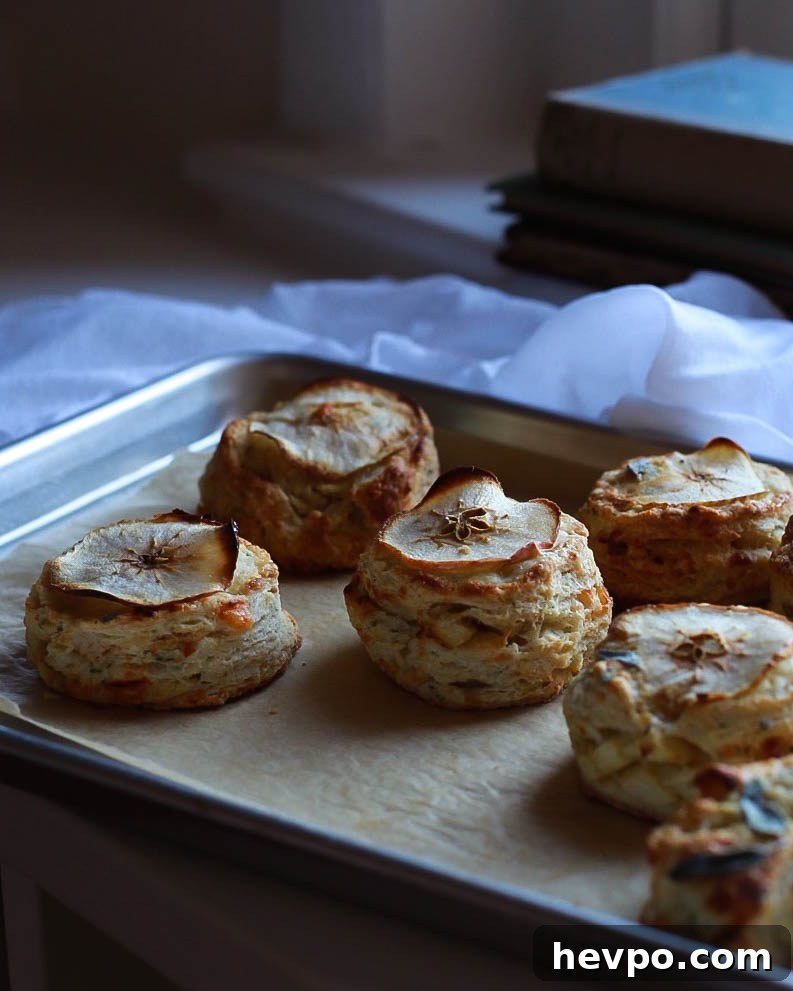
These apple, sage, and Gruyère scones began as a fridge-cleaning experiment. My first version was a savory take on a lemon cream scone recipe that uses whipped heavy cream. That batch was delicious, but the combination of butter, heavy cream, and shredded cheese made the scones a touch too rich for my liking. I revisited the idea and developed a buttermilk-based scone with autumnal flavors that feels lighter while still indulgent.
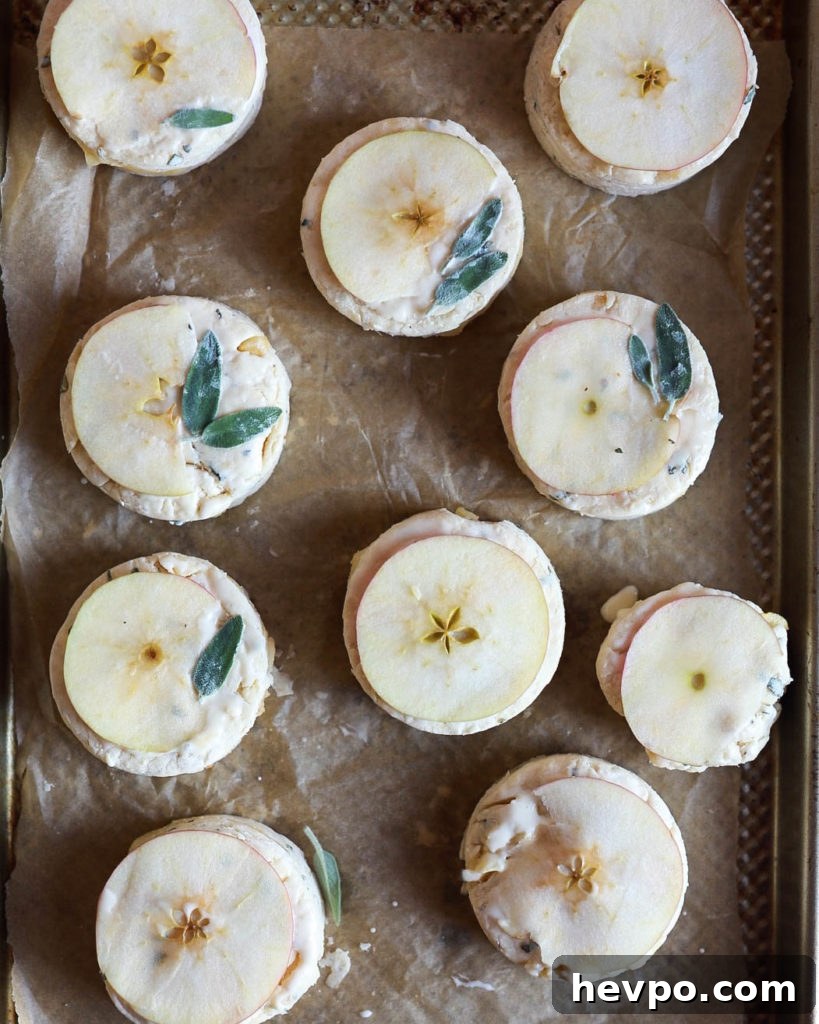
The result delivers everything I wanted: serious flakiness, a subtle tang from the buttermilk that balances the richness of butter and cheese, and a pleasing sweet-and-salty contrast. Sage adds an earthy note that complements the fruity apple and nutty Gruyère.
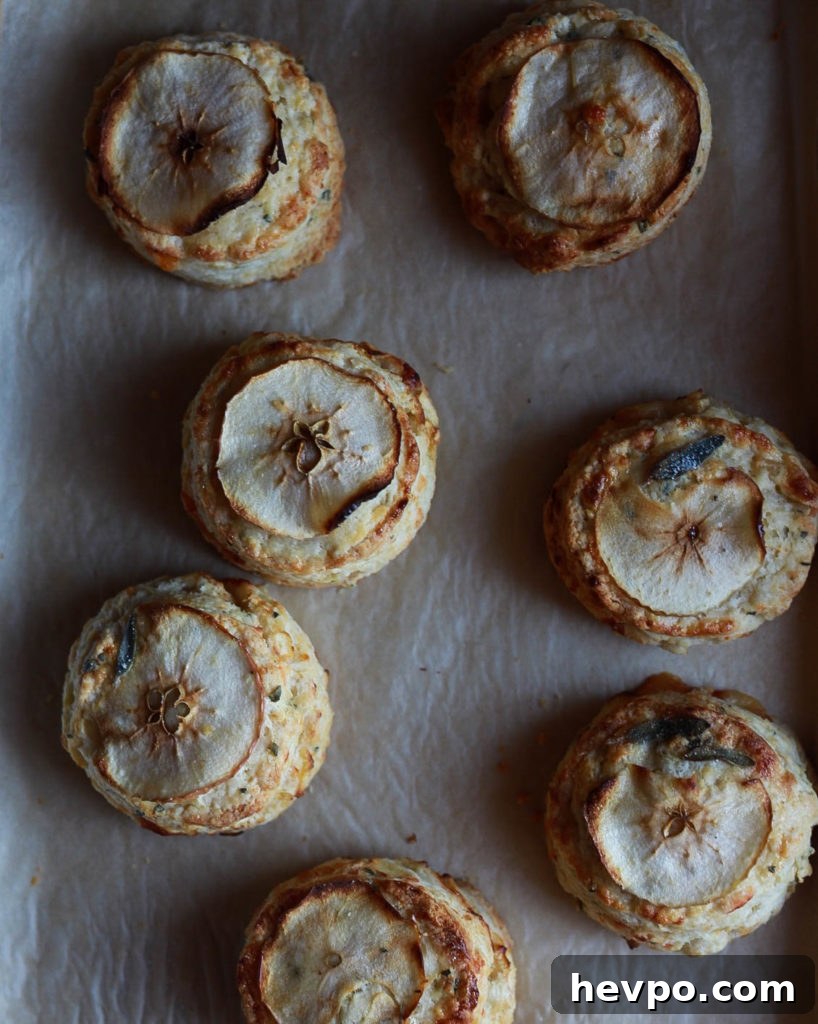
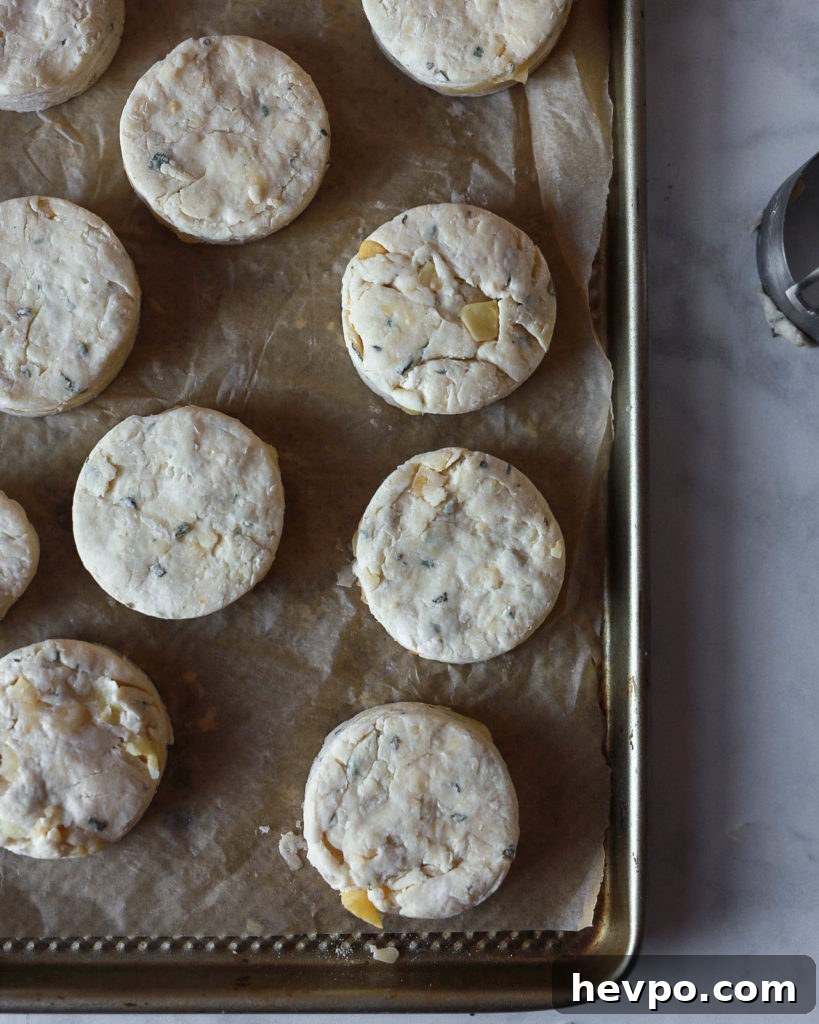
As with all scones, the most important points are: don’t add too much liquid, avoid overworking the dough, and keep the ingredients and the formed scones very cold up until they go into the oven. These steps preserve the butter pockets that create lift and layers.
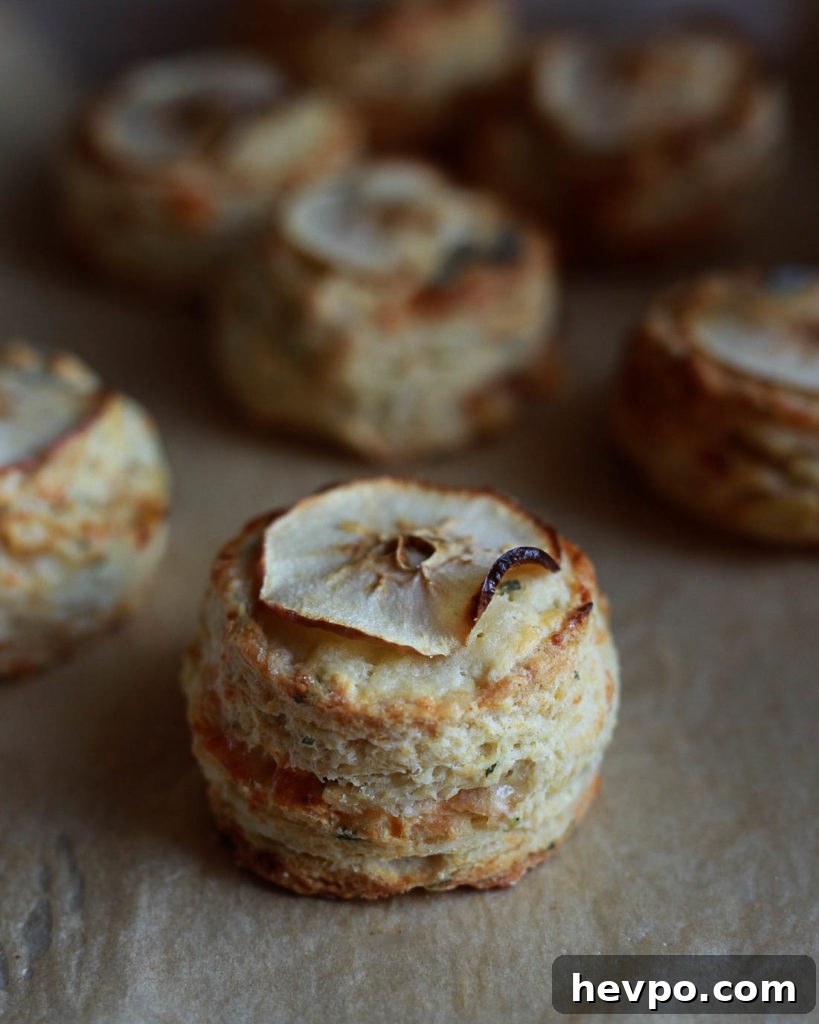

Apple, Sage, and Gruyère Scones
A flaky, sweet-and-savory buttermilk scone. Add more cheese if you prefer a richer result. This recipe is loosely adapted from a buttermilk scone in The Best Quick Breads by Beth Hensperger.
apple scones, buttermilk scones, cheese scones, scones
Ingredients
-
380
g
all-purpose flour -
2
tbsp
sugar -
1
tbsp
baking powder -
1/2
tsp
baking soda -
1/2
tsp
table salt or fine sea salt -
1/4
tsp
freshly ground black pepper
or to taste (optional) -
140
g (10 tbsp)
cold unsalted butter
cut into chunks -
70
g
Gruyere cheese
coarsely grated -
1
tbsp
chopped fresh sage -
1
cup
cold buttermilk -
2
smallish crisp apples
peeled, cored, and cut into 1/2 inch dice
To finish:
- buttermilk, heavy cream, and/or a lightly beaten egg
- thin slices of apple and/or small sage leaves
-
1/2
tsp
sugar
Instructions
-
Preheat the oven to 400 F.
-
Spread the diced apples on a parchment-lined baking sheet and roast for 10–15 minutes, until the pieces feel dry to the touch. Remove and cool completely.
-
In a large bowl, whisk together the flour, 2 tablespoons sugar, baking powder, baking soda, salt, and optional black pepper. Chill the bowl in the freezer for about 5 minutes.
-
Add the cold butter to the chilled flour mixture and cut it in with a pastry blender until the largest pieces are about pea-sized. Mix in the chopped sage and half the shredded Gruyère.
-
Make a well in the center and pour in the cold buttermilk. Stir with a wooden spoon or silicone spatula until the dough starts to come together, then finish gently with your hands. It’s fine if a few dry bits remain.
-
Turn the dough onto a lightly floured surface and gently knead into a cohesive mass. Roll into a rectangle about 9 by 12 inches with a lightly floured rolling pin. Scatter the cooled roasted apples and the remaining cheese over the dough, pressing lightly so they adhere.
-
Fold the dough into thirds like a business letter to encase the apples and cheese. Rotate the dough 90 degrees, then roll it out to about 6 by 12 inches and roughly 3/4 inch thick.
-
Use a bench scraper to transfer the dough to a parchment-lined baking sheet, freeze for 30 minutes, then increase the oven to 450 F.
-
Remove the dough from the freezer and cut out 8 scones with a 2.5- or 3-inch cutter, pressing straight down without twisting. Recombine scraps, roll, and cut two more scones. Place them on a baking sheet and brush the tops with buttermilk, cream, or a lightly beaten egg. Top each scone with a thin apple slice or a sage leaf and return to the freezer for 5 minutes.
-
Transfer the chilled scones to a fresh parchment-lined sheet, sprinkle the tops with 1/2 teaspoon sugar, then place them in the oven and immediately lower the temperature to 425 F.
-
Bake 22–25 minutes, until the edges are golden brown. Serve warm; these scones are best the same day.