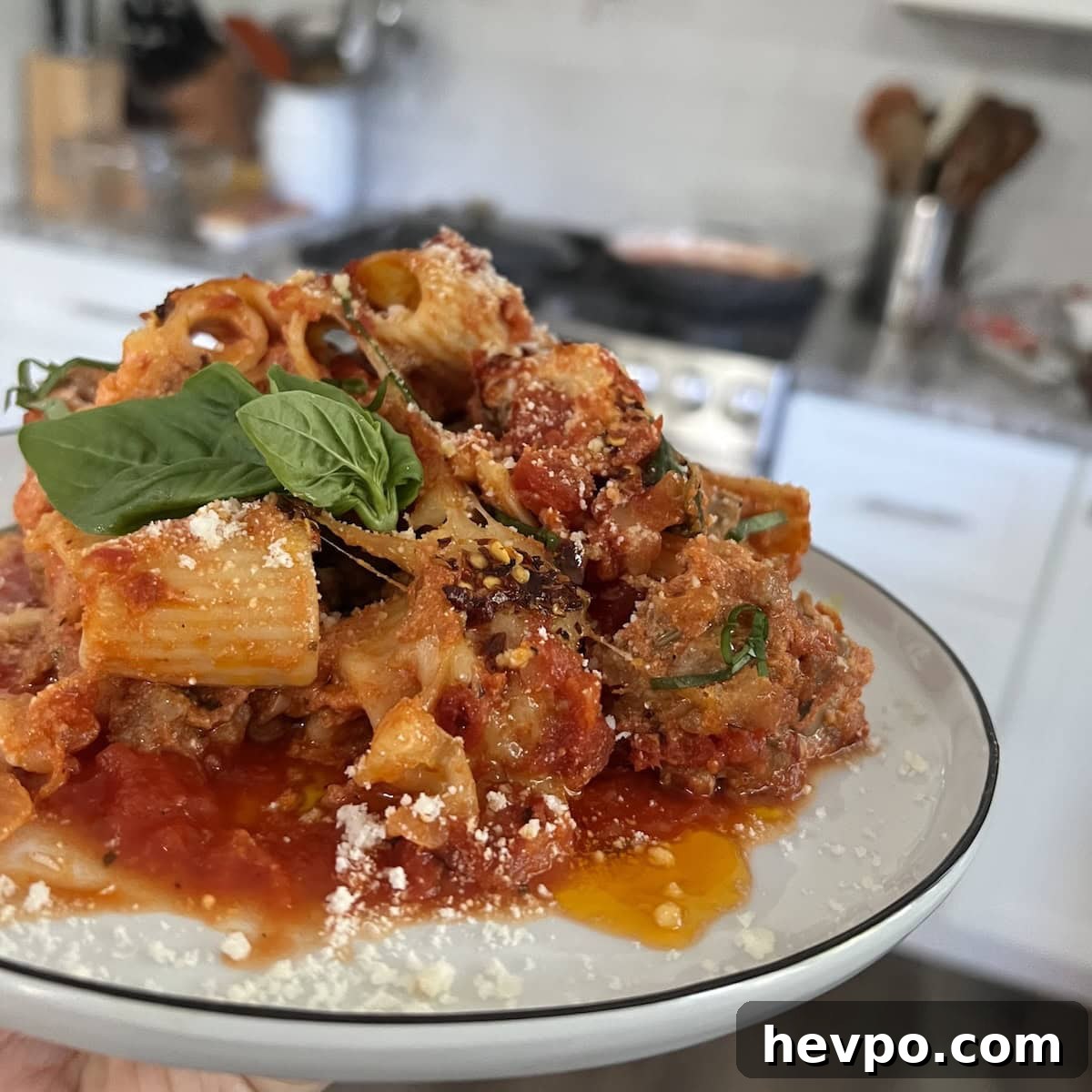
No layering required! Rigatoni al Forno is a warm, satisfying baked pasta perfect for Sunday dinner, holidays, or casual entertaining. Italian sausage and ground beef are browned with spices, then combined with three cheeses—creamy ricotta, melty mozzarella and sharp Pecorino Romano—plus tomato-basil sauce and chunky rigatoni. Baked until bubbly with slightly crispy edges, it’s always crowd-pleasing.
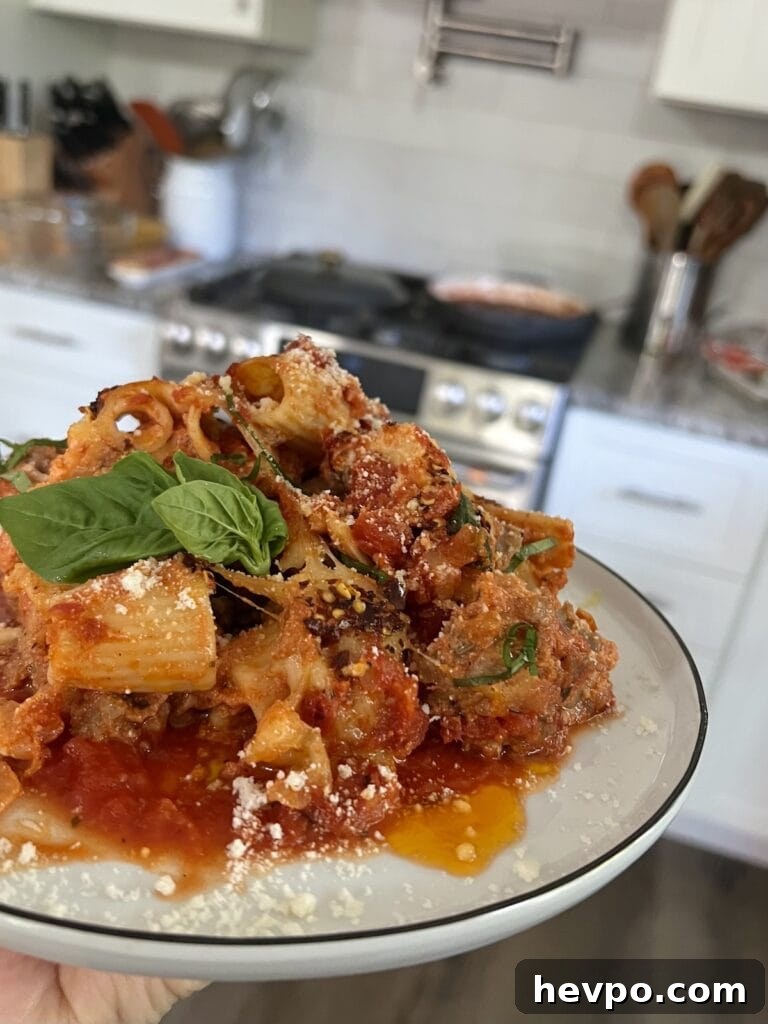
What Does Al Forno Mean?
Al Forno literally means “to the oven” and describes dishes that are finished in the oven. In practice it usually refers to oven-baked pasta such as lasagna, baked ziti and stuffed shells. These dishes are typically rich, include at least one cheese, and use short, sturdy pasta that holds sauce and filling.
Regional versions may include ingredients like hard-boiled egg, roasted eggplant, mortadella, or cured pork. This version of rigatoni al forno features sautéed Italian sausage, ground beef, ricotta, mozzarella, Pecorino Romano, tomato basil sauce, and spices for a balanced, comforting casserole.
If you don’t have time for a long-simmered ragù, a high-quality jarred tomato sauce works fine here, though homemade sauce is ideal. The meat is browned separately, then mixed with cheeses, sauce and cooked rigatoni before baking—simple and rustic.
Main Ingredient Notes
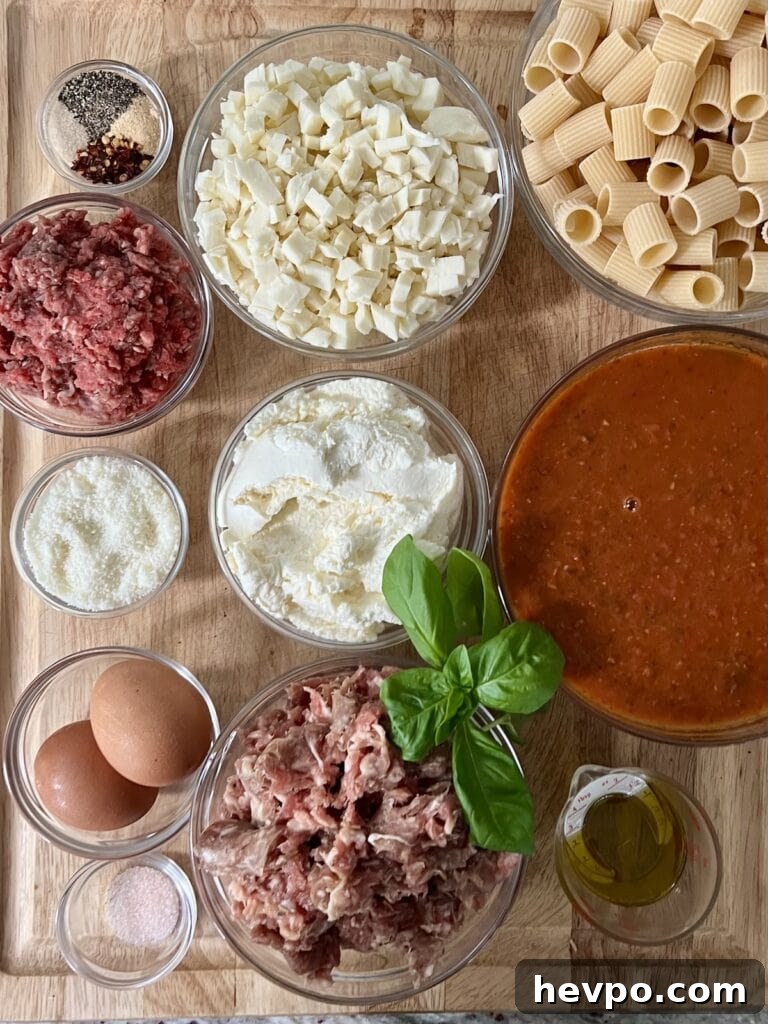
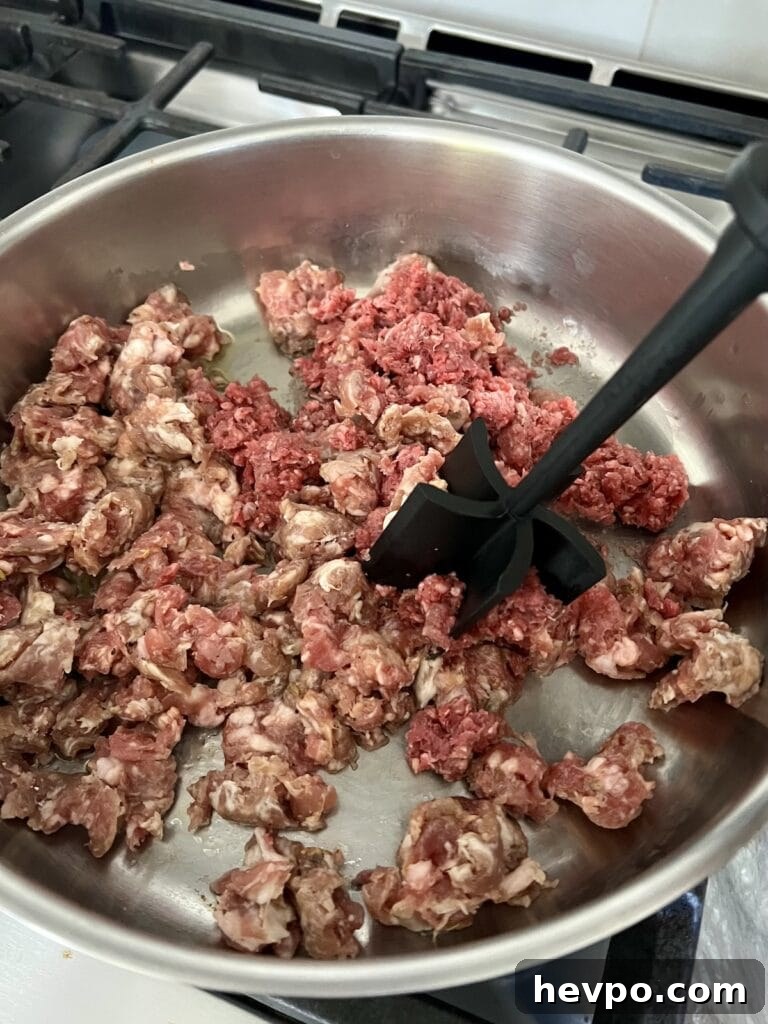
- Meat: This recipe uses both Italian sausage and ground beef. Because sausage brings fat and flavor, a lean ground beef (90/10 or 93/7) is a good choice, but any ground beef will work—just drain excess grease. Break up the meat well while browning for even texture.
- Cheeses: Ricotta provides creaminess (use whole milk/full-fat for best results), mozzarella gives a melty stretch, and Pecorino Romano adds sharpness. Grating or shredding fresh mozzarella from a block avoids theanti-caking coatings found on pre-shredded cheese.
- Tomato Sauce: Homemade tomato-basil sauce is preferred, but a jarred sauce you like will do. The recipe uses a generous amount of sauce because some will absorb into the pasta during baking.
- Pasta: Rigatoni is traditional, but any substantial short pasta—ziti, penne rigate, mostaccioli, or elicoidali—works well.
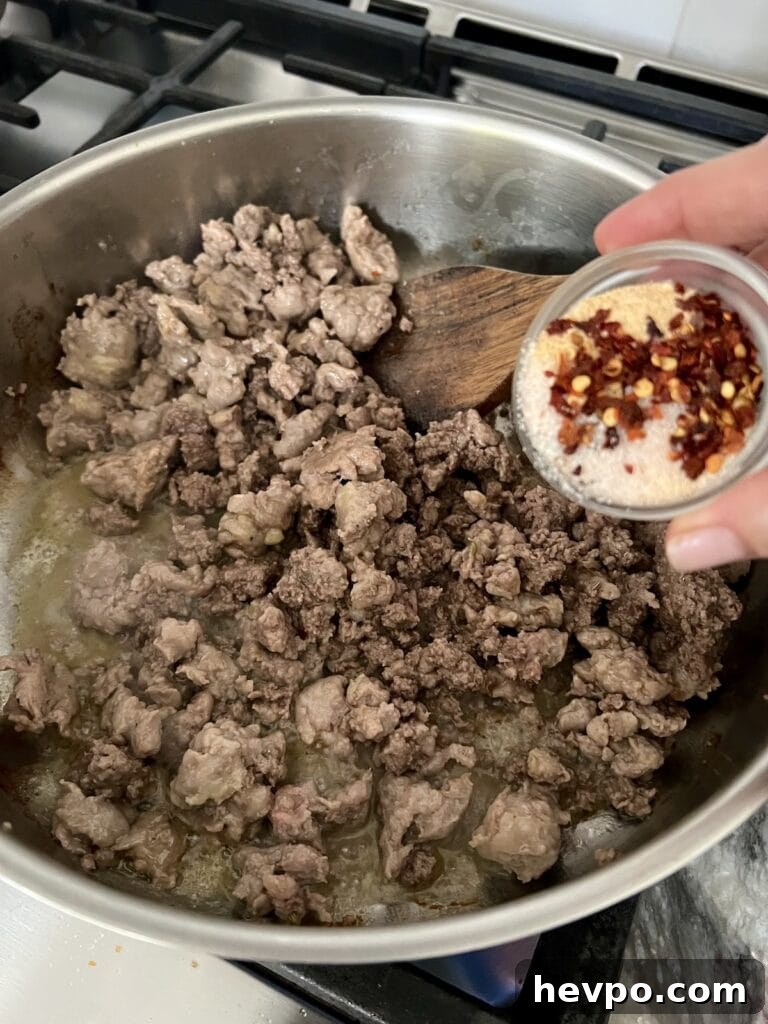
- Spices: Garlic powder, onion powder, salt, black pepper and a touch of red pepper flakes flavor the meat. If you prefer fresh garlic and onions, use them—just account for what’s already in your sauce.
- Eggs: Eggs bind the cheese mixture, helping stabilize the ricotta so the finished casserole slices neatly. The flavor remains essentially the same without eggs, though the texture will be looser.
How to Make Rigatoni al Forno
This recipe is designed to be straightforward—no tedious layering. Everything is mixed in a large bowl and baked. Start with your tomato sauce prepared or use a good-quality store-bought sauce. Double the sauce recipe if you like extra on hand for serving.
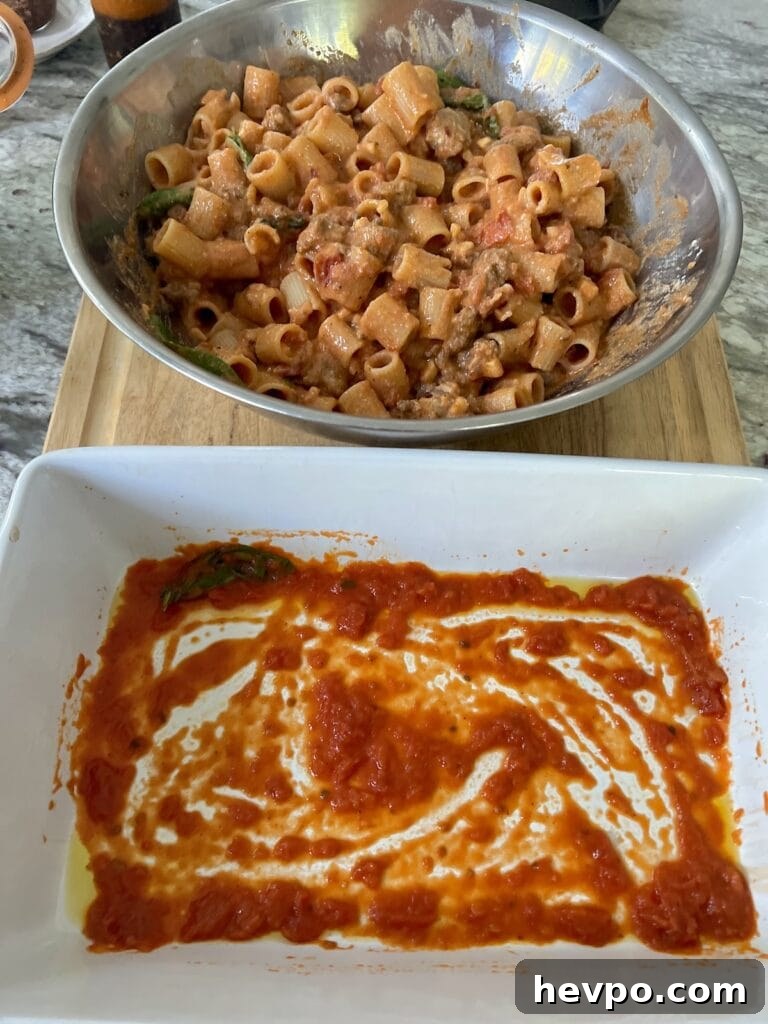
- Preheat oven to 350°F and place a rack in the center. Oil a 9″x13″ baking dish and spread a thin layer of tomato sauce on the bottom. Bring a large pot of salted water to a boil for the pasta.
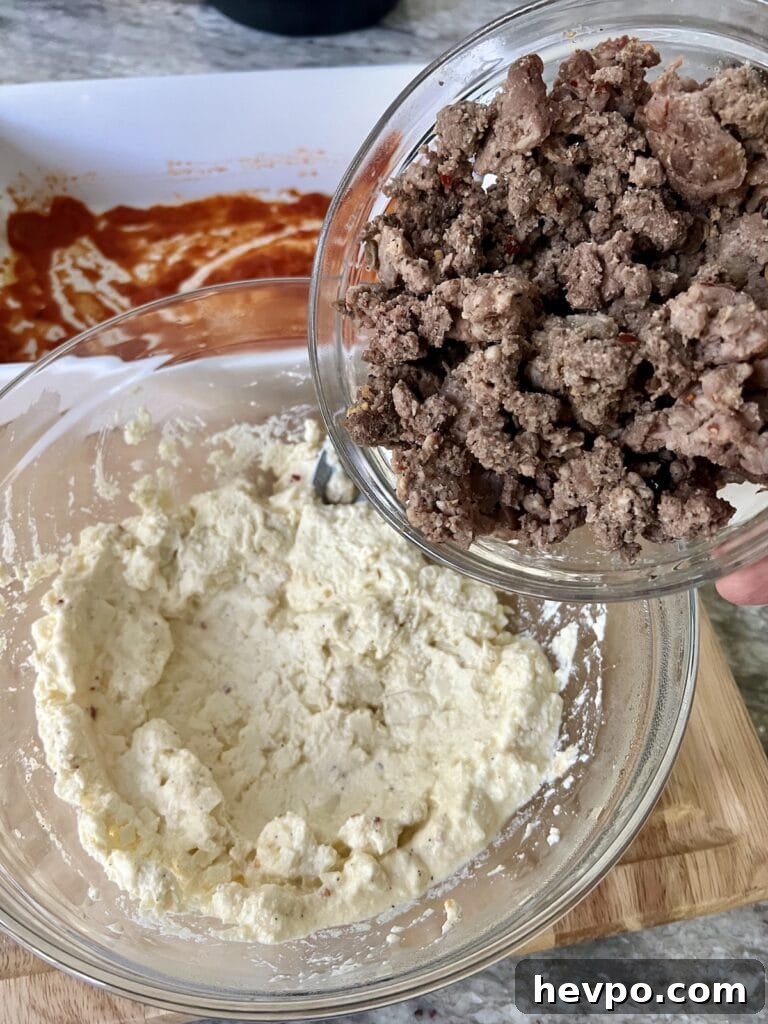
- Make the meat mixture: Heat olive oil in a large skillet over medium heat. Add Italian sausage and ground beef, breaking it up as it browns. Stir in the spices, let excess liquid cook off, then set aside to cool.
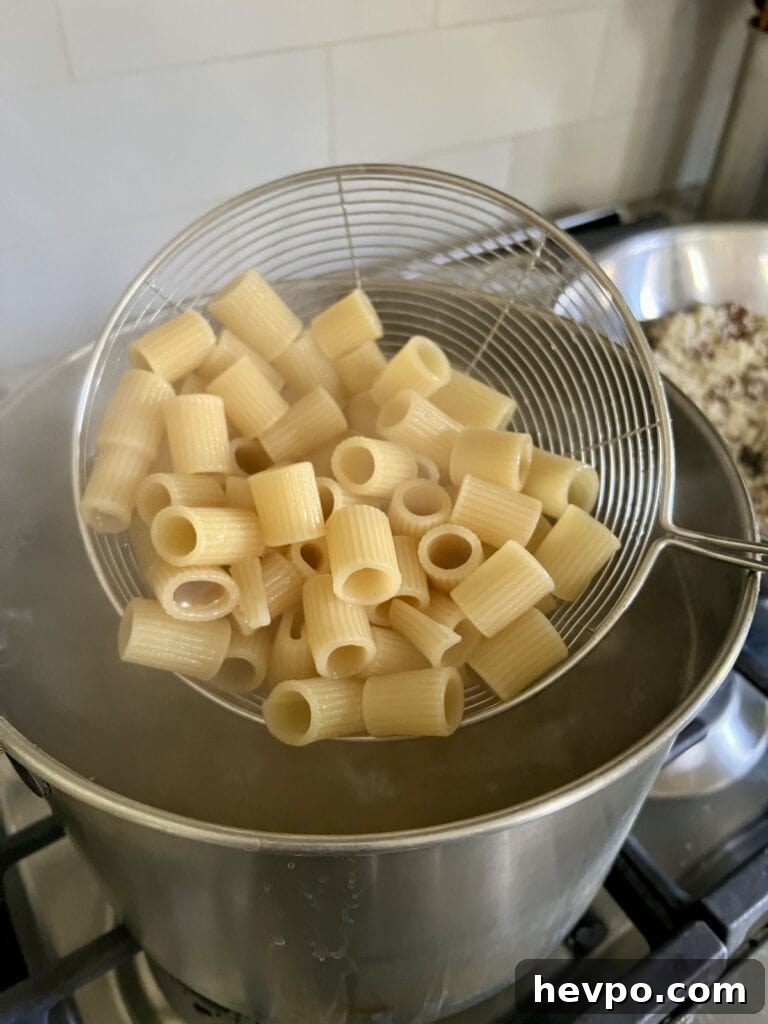
- Cook pasta: Add rigatoni to boiling water and cook until about three minutes less than the package directions—pasta should be slightly undercooked so it holds its bite after baking.
Pro-Tip
Drain ricotta briefly if watery. Undercook the pasta a bit so it finishes perfectly in the oven.
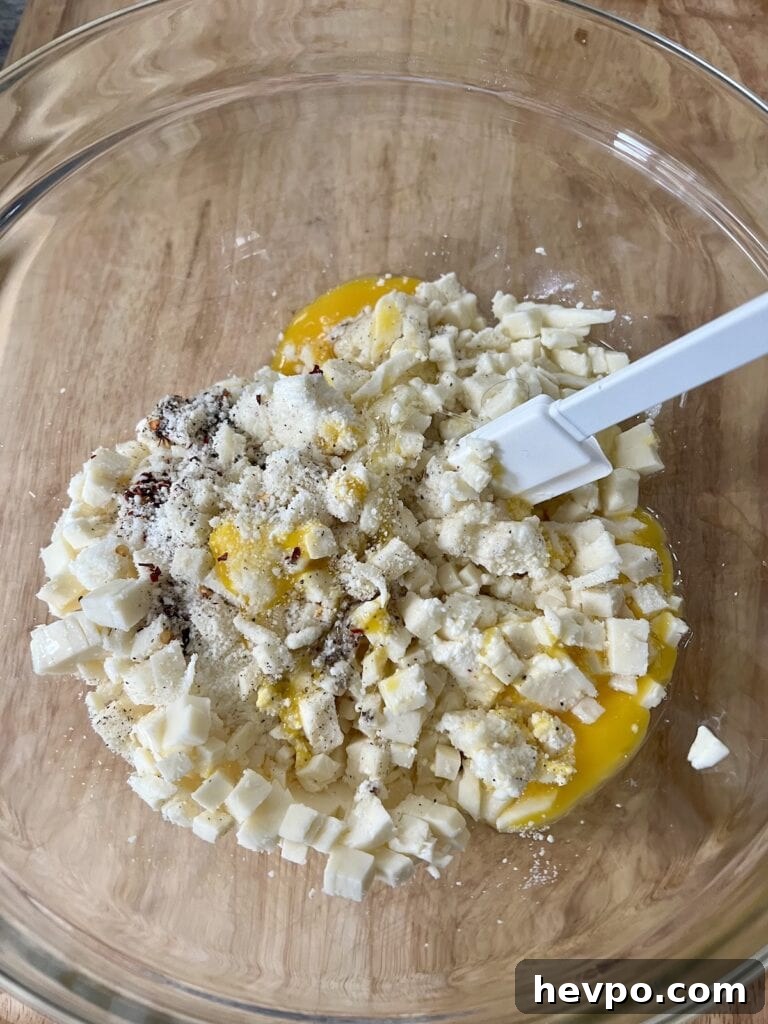
- Make the cheese mixture: While the pasta cooks, combine ricotta, mozzarella, grated pecorino, beaten eggs, pepper and red pepper flakes in a large bowl. Reserve about 3/4 cup of the mixture for the top.
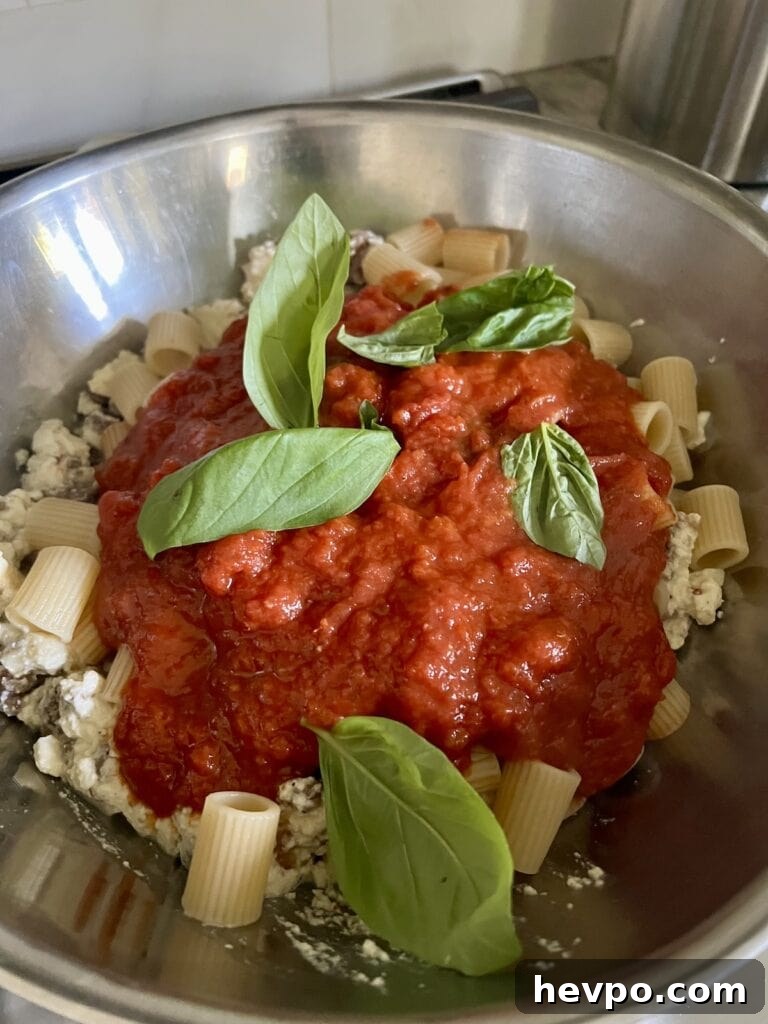
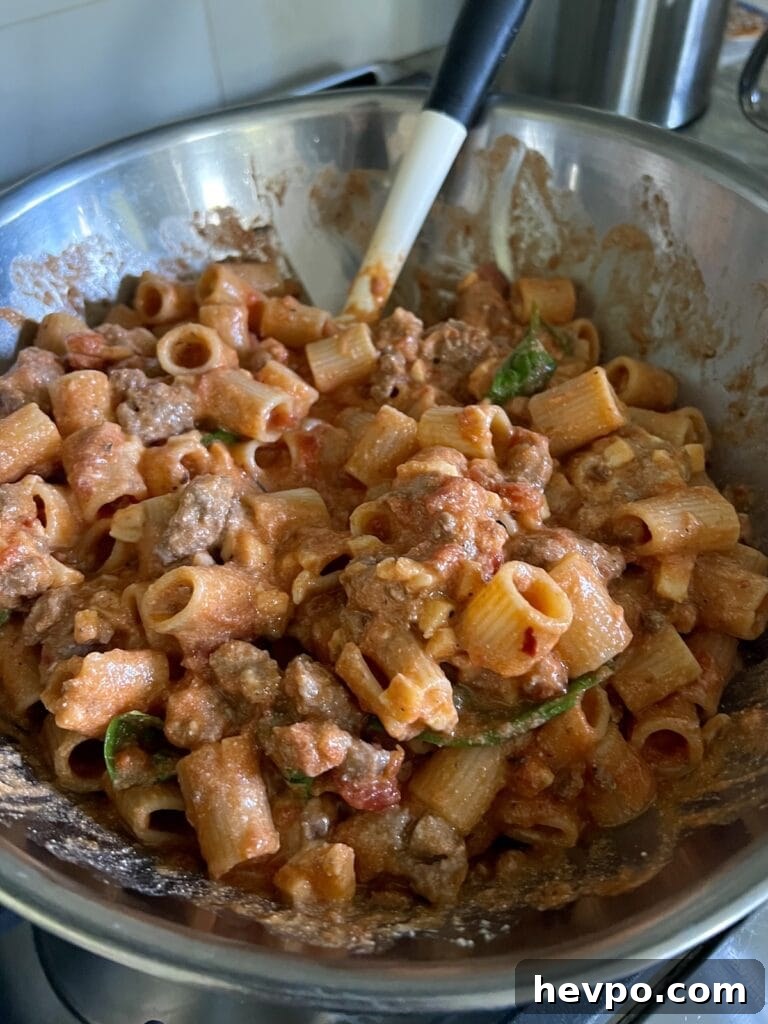
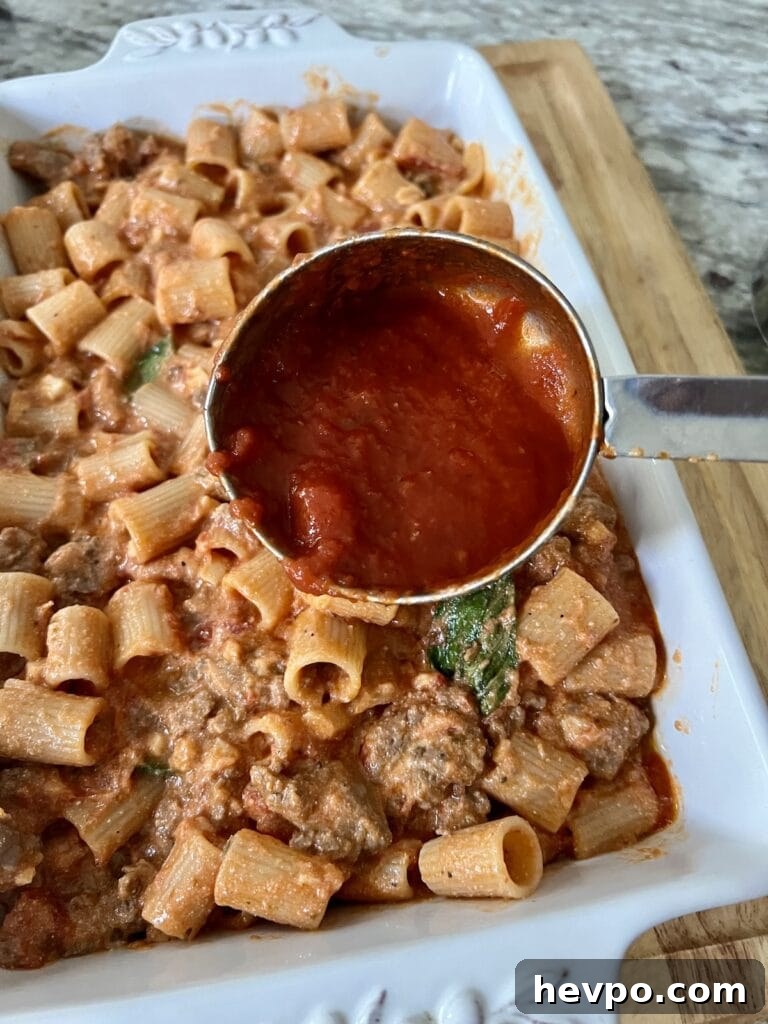
- Assemble the pasta: Drain pasta well and add it to the cheese mixture along with the cooled meat and about 3½ cups tomato sauce. Add 1 tablespoon olive oil and mix until the pasta is evenly coated. The mixture may seem saucy—sauce will be absorbed as it bakes. Transfer to the prepared baking dish, spread evenly, and scatter another 1/2 cup sauce on top.
Pro-Tip
If the pasta looks soupy before baking, don’t worry—much of the sauce will be absorbed during baking.
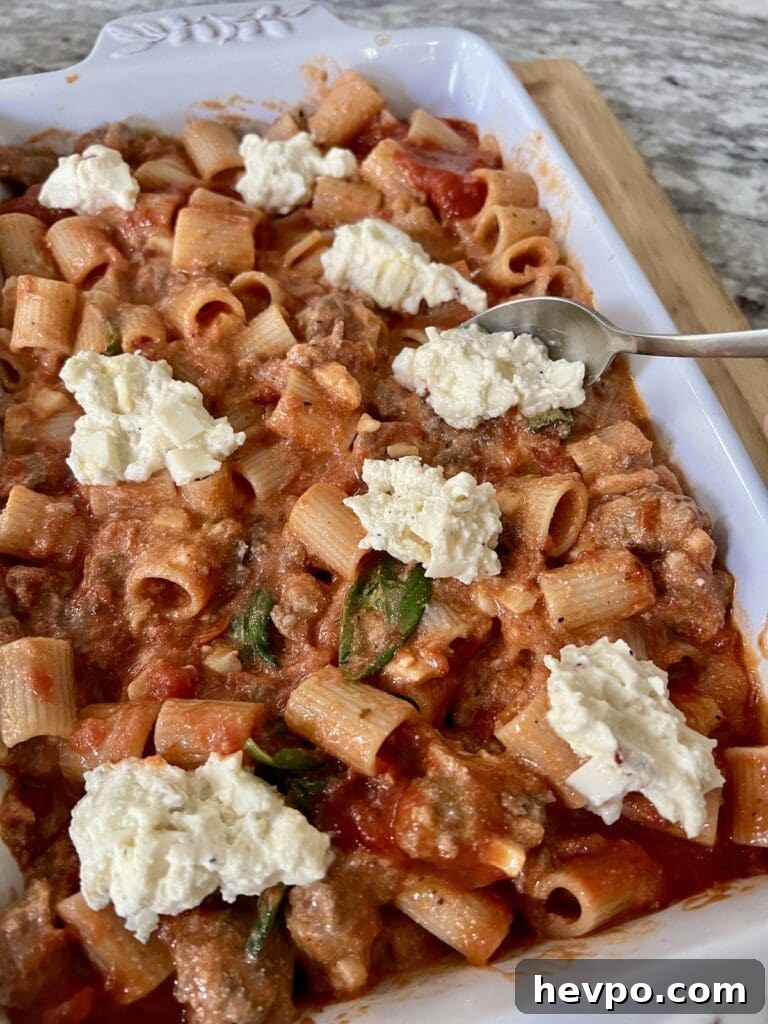
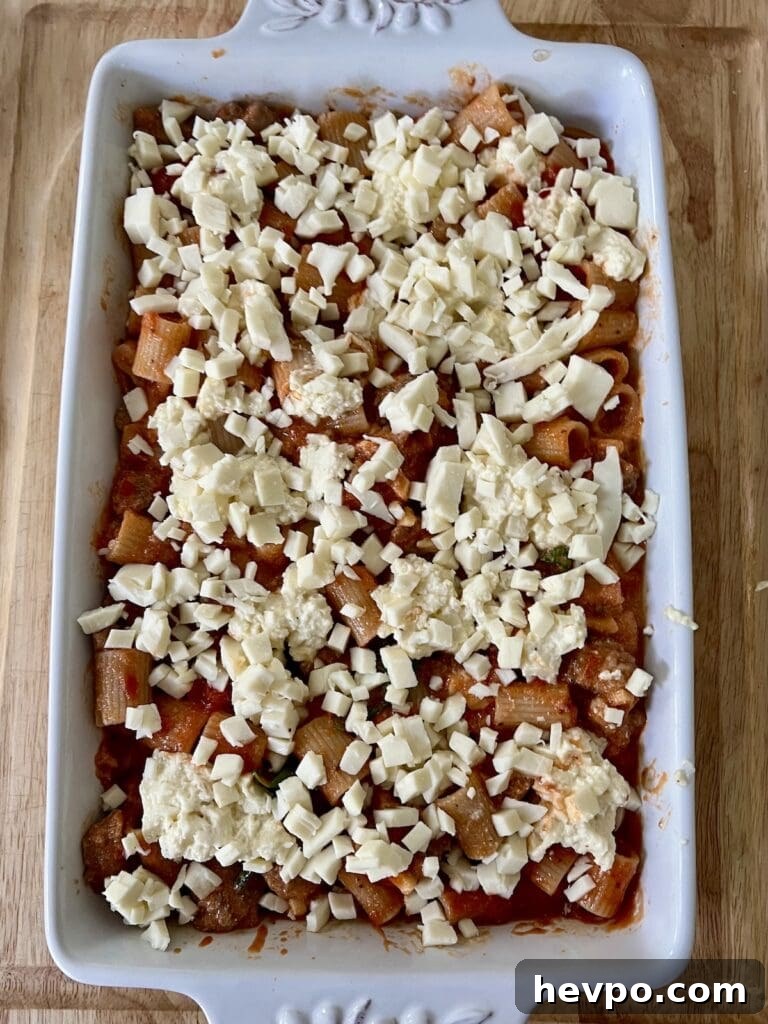
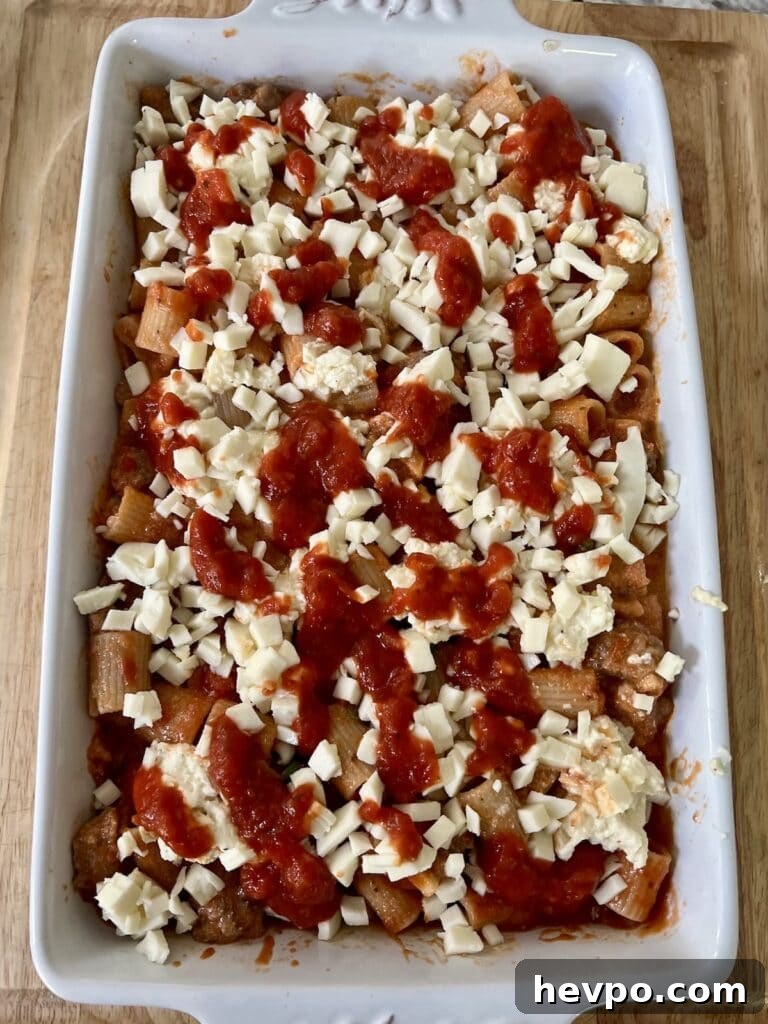
- Dot the top with the reserved ricotta mixture, sprinkle remaining shredded mozzarella, and add a bit more sauce if desired.
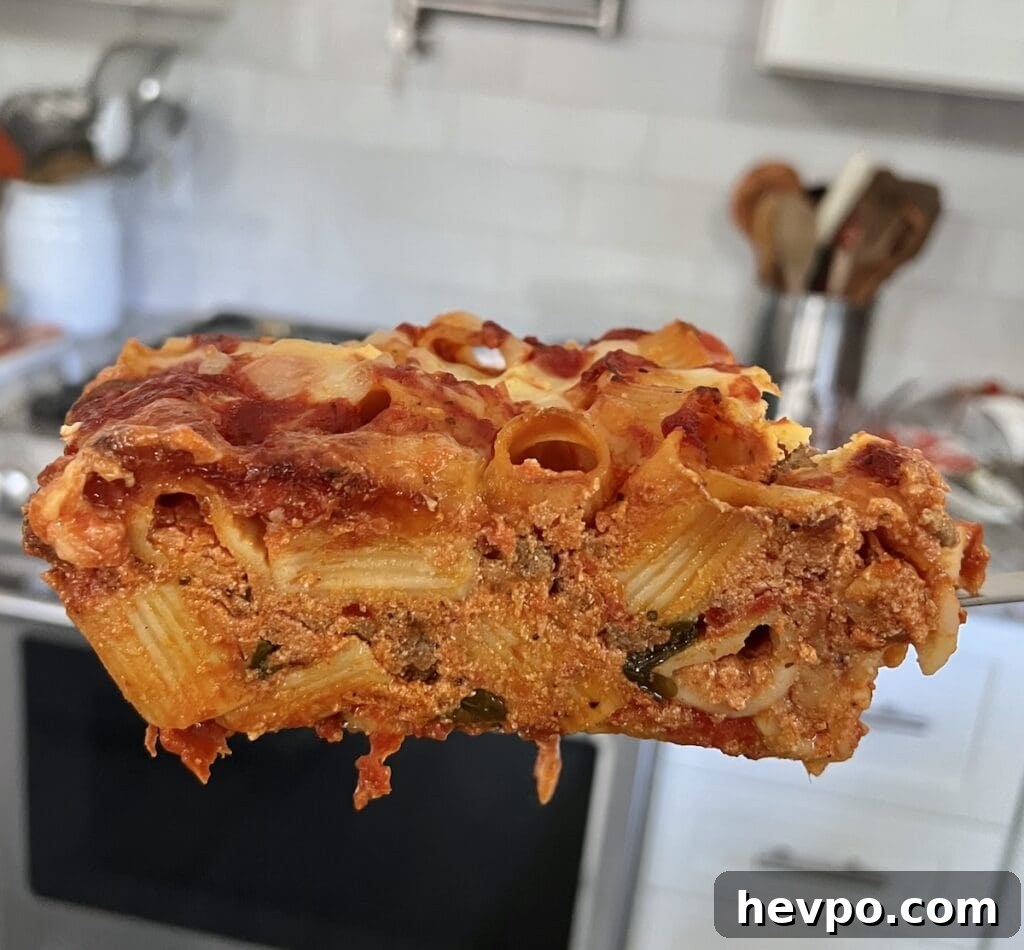
- Bake: Loosely cover with foil (avoid touching the cheese) and bake at 350°F for 50 minutes. Remove the foil and bake uncovered another 15–20 minutes until heated through, cheese is bubbly, and the top is lightly browned. Let rest 10 minutes before serving.
Pro-Tip
If unsure, a stem thermometer should read 165°F in the center when the dish is fully heated.
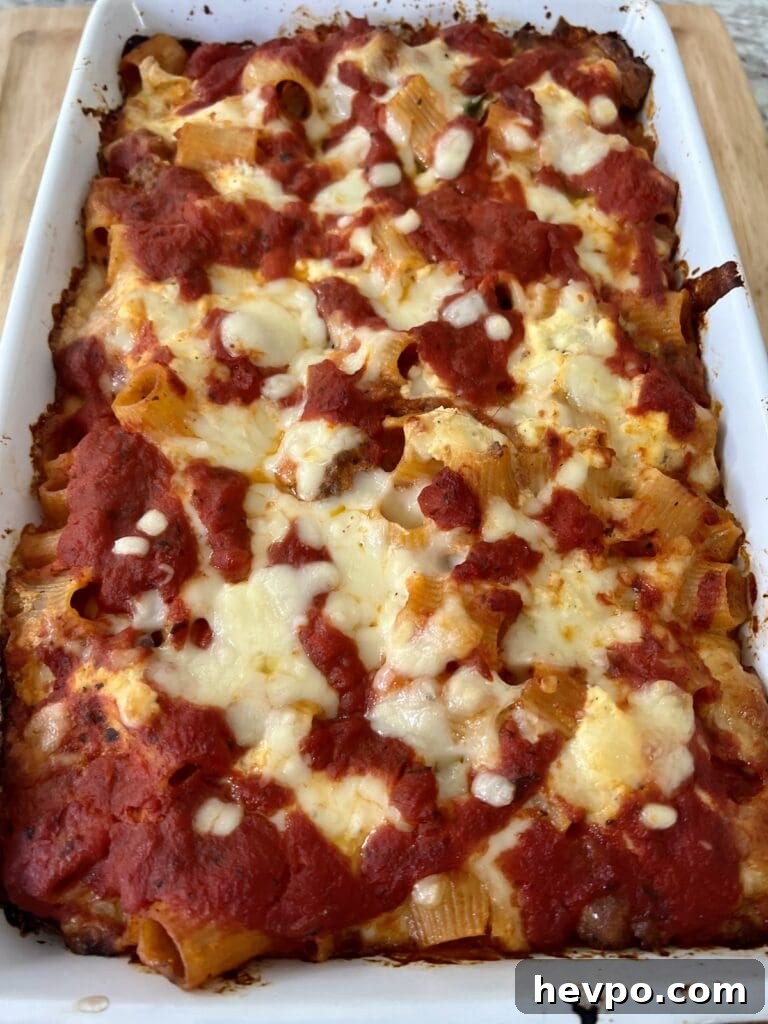
Baking an Assembled but Refrigerated Rigatoni al Forno
Remove plastic wrap, lightly cover with foil without touching the food, and bake at 350°F on the middle rack for about 1 hour. Uncover and bake an additional 10–15 minutes until warmed through and the top is lightly browned.
Baking an Assembled but Frozen Rigatoni al Forno
Wrap the unbaked assembled dish tightly before freezing; it keeps up to 3 months. Thaw in the refrigerator overnight if possible, then let sit at room temperature about 30 minutes before baking. Follow the refrigeration instructions above.
If baking from fully frozen, remove outer wrap, cover with foil, and place in a 350°F oven for about 1½ hours. Uncover, check internal temperature with a thermometer, and continue baking uncovered in 15-minute intervals until the center reaches 165°F. If the top browns too quickly, recover with foil while the interior finishes heating.
Reheating a Fully Cooked Frozen Baked Pasta
Remove coverings, lightly re-cover with foil and reheat in a 350°F oven. Thawed dishes will reheat faster; frozen ones may take an hour or more. Use a stem thermometer to ensure the center reaches 165°F.
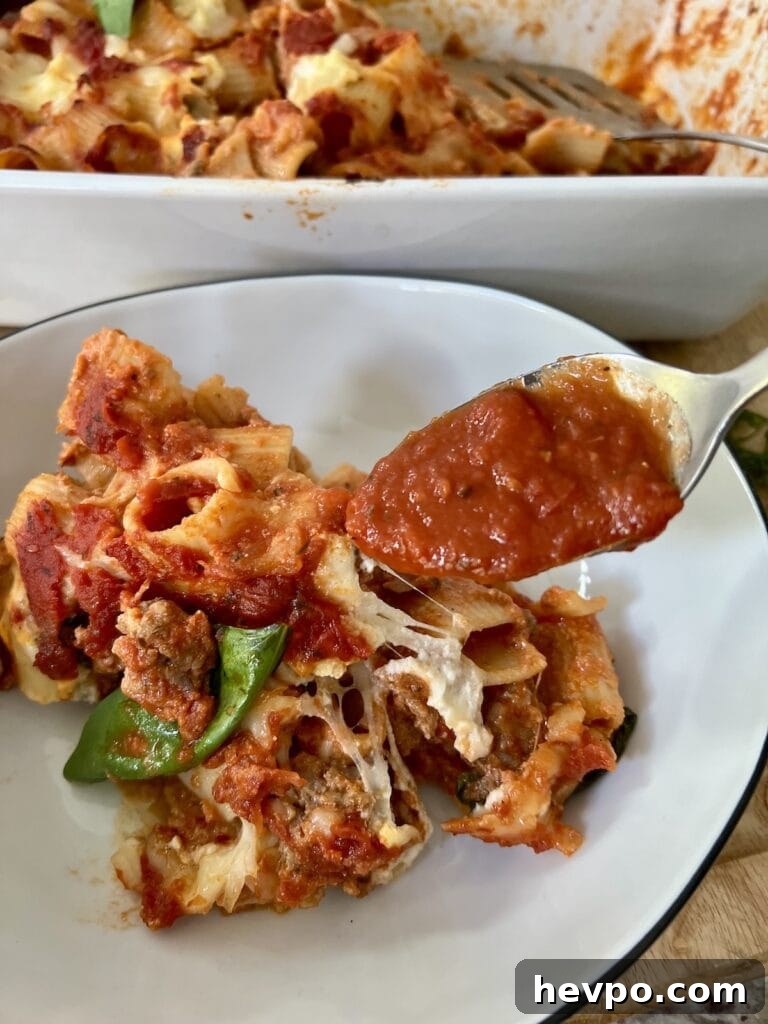
Ricotta is a versatile ingredient that appears in many pasta dishes. In this recipe it brings creaminess and balance to the meaty, cheesy filling.
Frequently Asked Questions
Both are oven-baked pastas with similar cheeses and sauce, but this al forno includes a rich meat mixture of Italian sausage and ground beef. Baked ziti is often meatless or features different vegetables such as spinach, depending on the recipe.
Yes. Replace ricotta with 8 ounces of room-temperature cream cheese and increase the shredded mozzarella to compensate for texture and richness.
If you mix hot pasta immediately with sauce and cheese, oil isn’t necessary. If the pasta was cooked earlier and will sit before assembly, toss lightly with olive oil to prevent sticking.
Yes—cover loosely for most of the bake to prevent burning, then uncover for the last 15 minutes to brown the top.
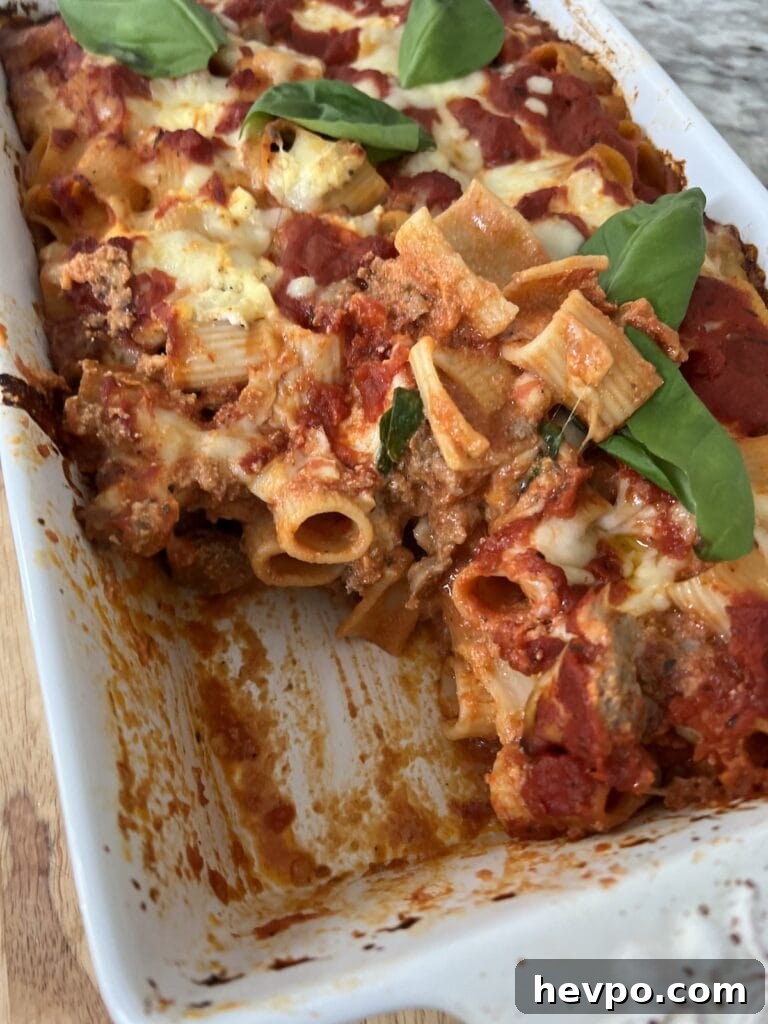
Substitutions and Variations
- Meatless option: Use a meatless baked ziti or add roasted vegetables and spinach in place of meat.
- Use leftovers: Shredded leftover pot roast, brisket or pork shoulder can replace the sausage and beef—just chop and mix in.
- Add greens: Fold in 2–4 cups drained, cooked spinach once the meat is browned.
- Cheese swap: Parmesan can substitute for pecorino if needed.
- More heat: Use an arrabbiata sauce for a spicier dish.
- Sicilian twist: Add diced roasted eggplant and use ricotta salata in place of pecorino.
- Extra richness: Use vodka sauce or fold a bit of béchamel into the mixture for a creamier result.
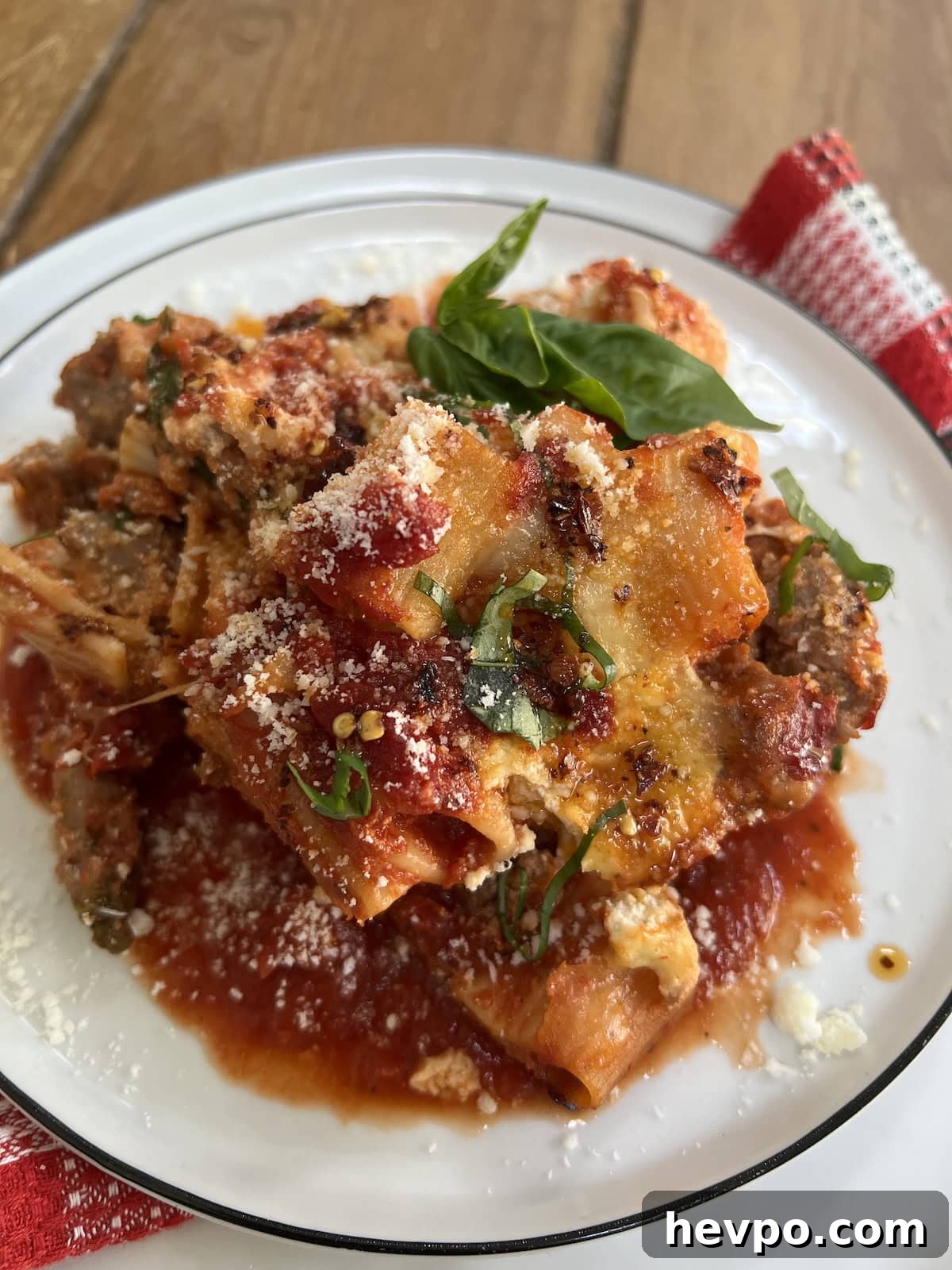
Top Tips for Rigatoni al Forno
- Ricotta: Use full-fat whole milk ricotta and drain excess liquid if needed.
- Mozzarella: Shred from a block to avoid anti-caking additives.
- Tomato sauce: Use a sauce you enjoy—poor sauce will lead to a poor casserole.
- Make ahead: Assemble in the baking dish, then cover and refrigerate or freeze. Thaw before baking if possible for shorter cook time.
- Serve with: A simple green salad and garlic bread, or sautéed greens like broccoli rabe, and offer extra warmed sauce and grated cheese at the table.
- Storage: Refrigerate leftovers in an airtight container up to four days. Reheat in a 350°F oven, in a covered skillet with a splash of water over medium-low heat, or in the microwave.