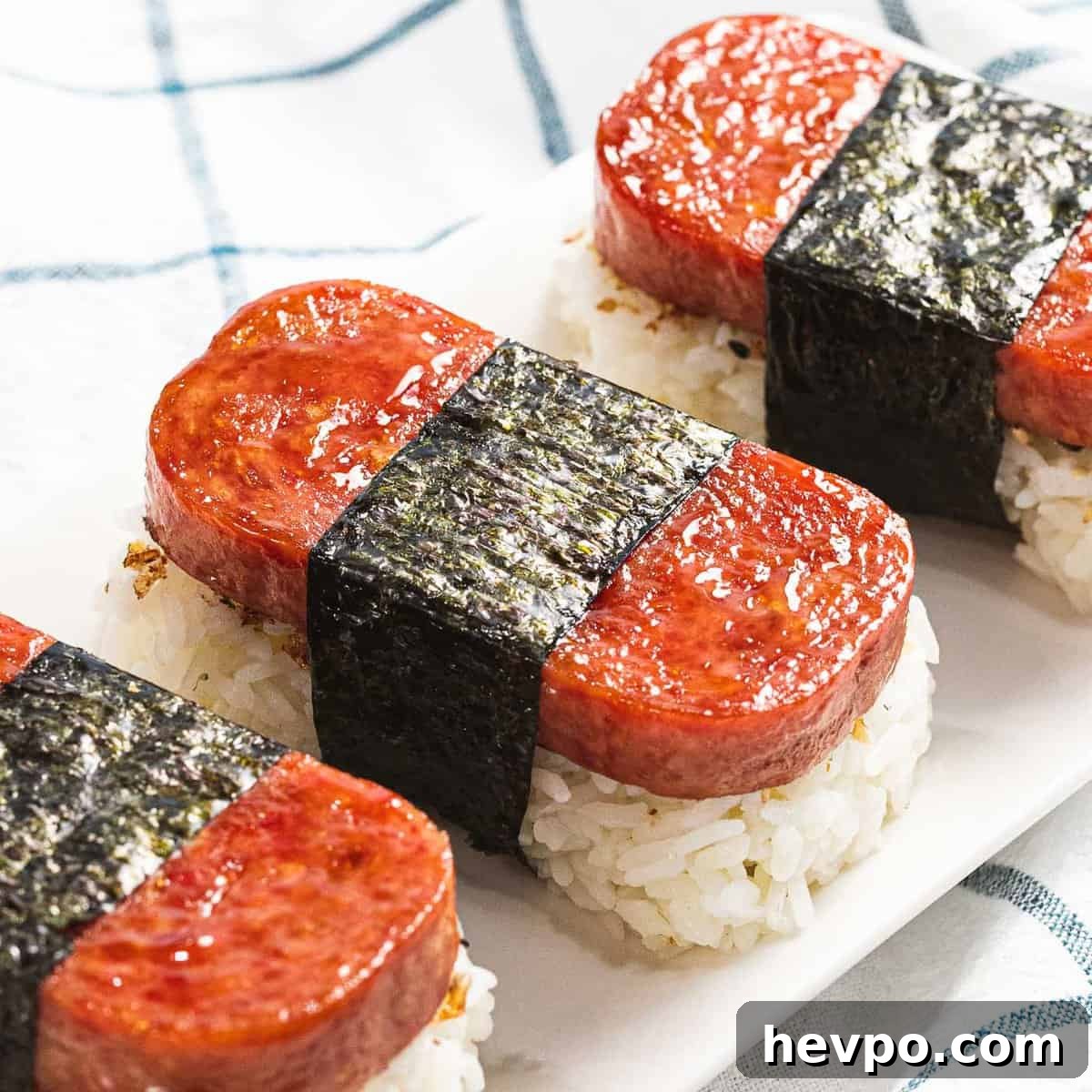
Spam musubi is a simple snack or light lunch made from rice topped with pan-fried Spam and wrapped in nori seaweed. For extra flavor, brush with sweet-savory teriyaki-style sauce, sprinkle with furikake, or add a slice of tamagoyaki (Japanese rolled omelet).
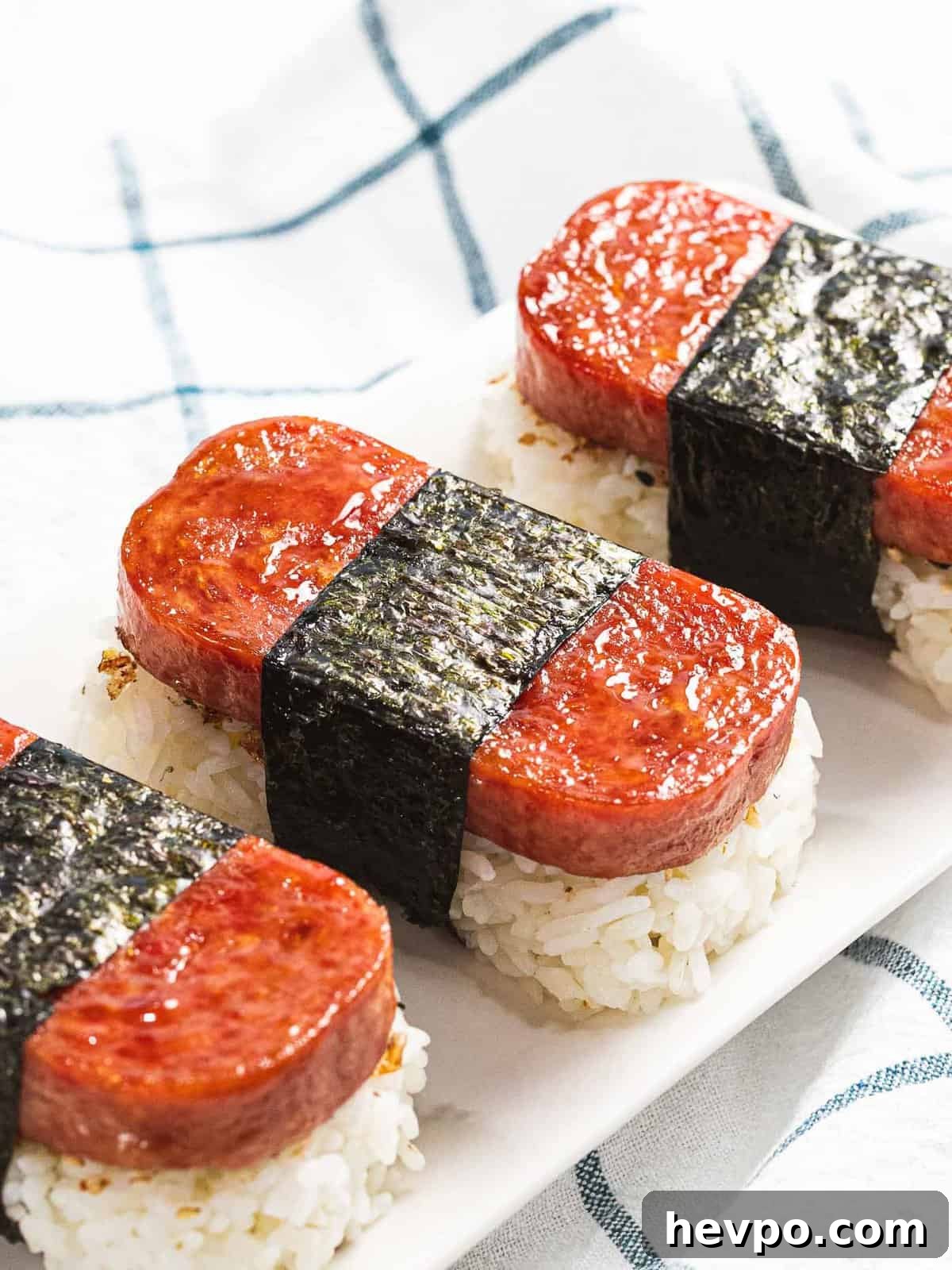
Savory, salty, and satisfying, spam musubi is perfect for using up day-old rice and comes together in about 10 minutes with just a few ingredients: Spam, cooked rice, and nori. It works well as a portable lunch, an after-school snack, or a late-night bite while strolling through Hawaii.
If you enjoy spam musubi, you might also like other rice snacks like onigiri, yaki onigiri (grilled rice balls), or Korean jumeokbap.
What is spam musubi?
Spam musubi is a straightforward Hawaiian snack made by placing a pan-fried slice of Spam on a compacted block of warm rice and securing it with a strip of nori. It likely originated in Hawaii after World War II when canned Spam became widely available, and it quickly became a popular, convenient staple sold in convenience stores and cafés across the islands.
Ingredients
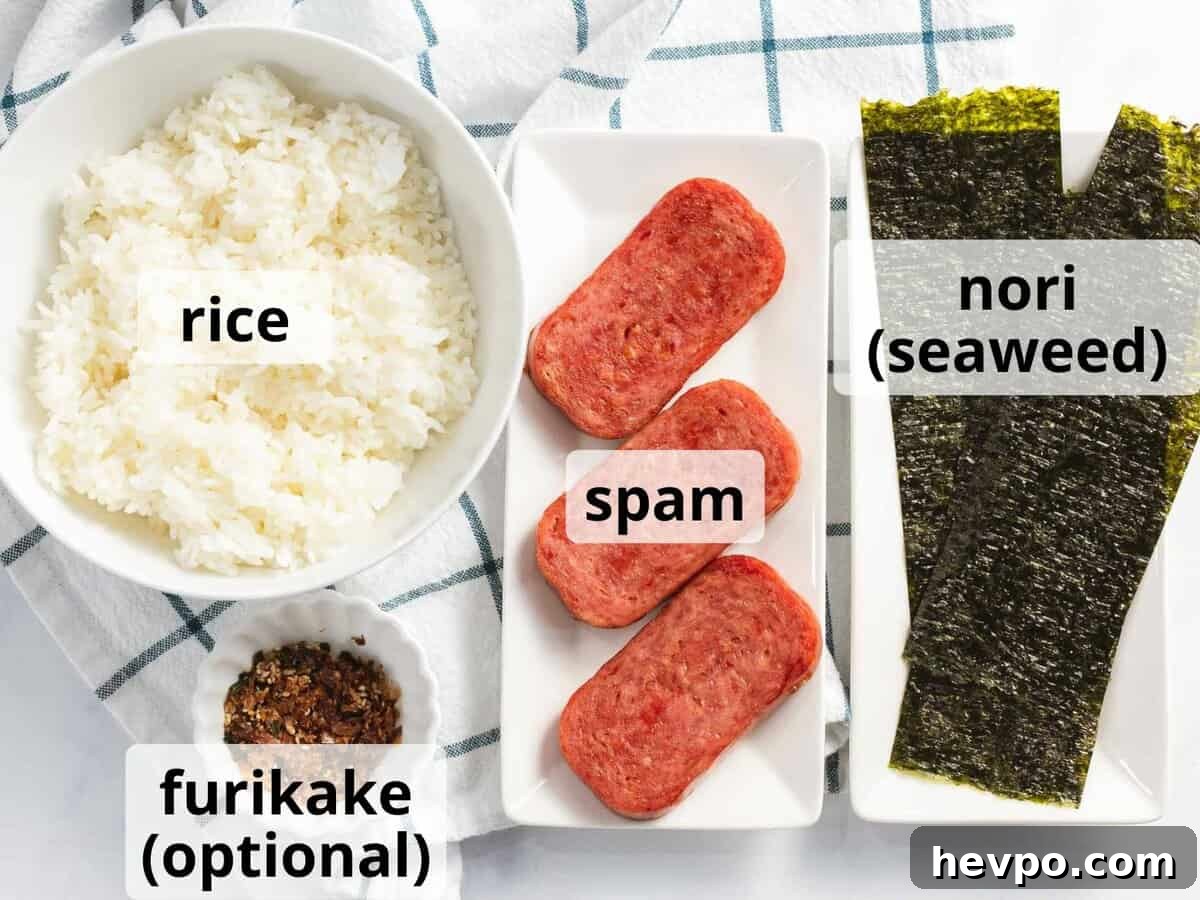
- Spam – Any variety works. Choose low-sodium or lite if you want less salt. Slice 1/3 to 1/2 inch thick.
- Cooked rice – Short or medium-grain rice (such as sushi rice) holds together best. Long-grain rice is too loose.
- Nori – Sheets of dried seaweed, cut into 2–3 inch strips to wrap the musubi.
- Furikake (optional) – A Japanese rice seasoning made with toasted sesame seeds and seaweed flakes; it adds extra flavor and texture.
How to Make Spam Musubi
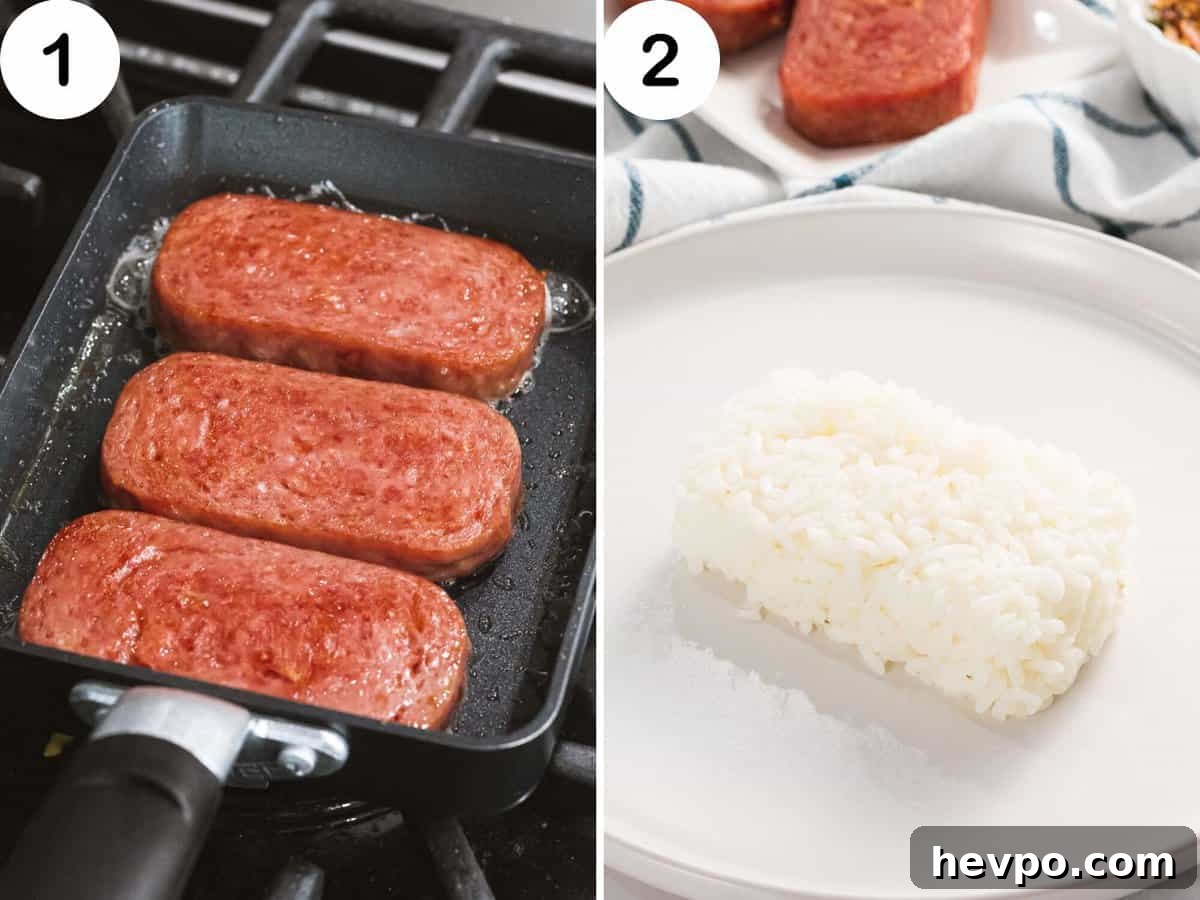
- Pan-fry the Spam slices in a small amount of oil over medium-high heat until the edges are crispy. For a glazed finish, make a quick sauce by adding equal parts soy sauce, sugar, and mirin to the pan during the last 2 minutes of cooking and let it reduce until it coats the Spam.
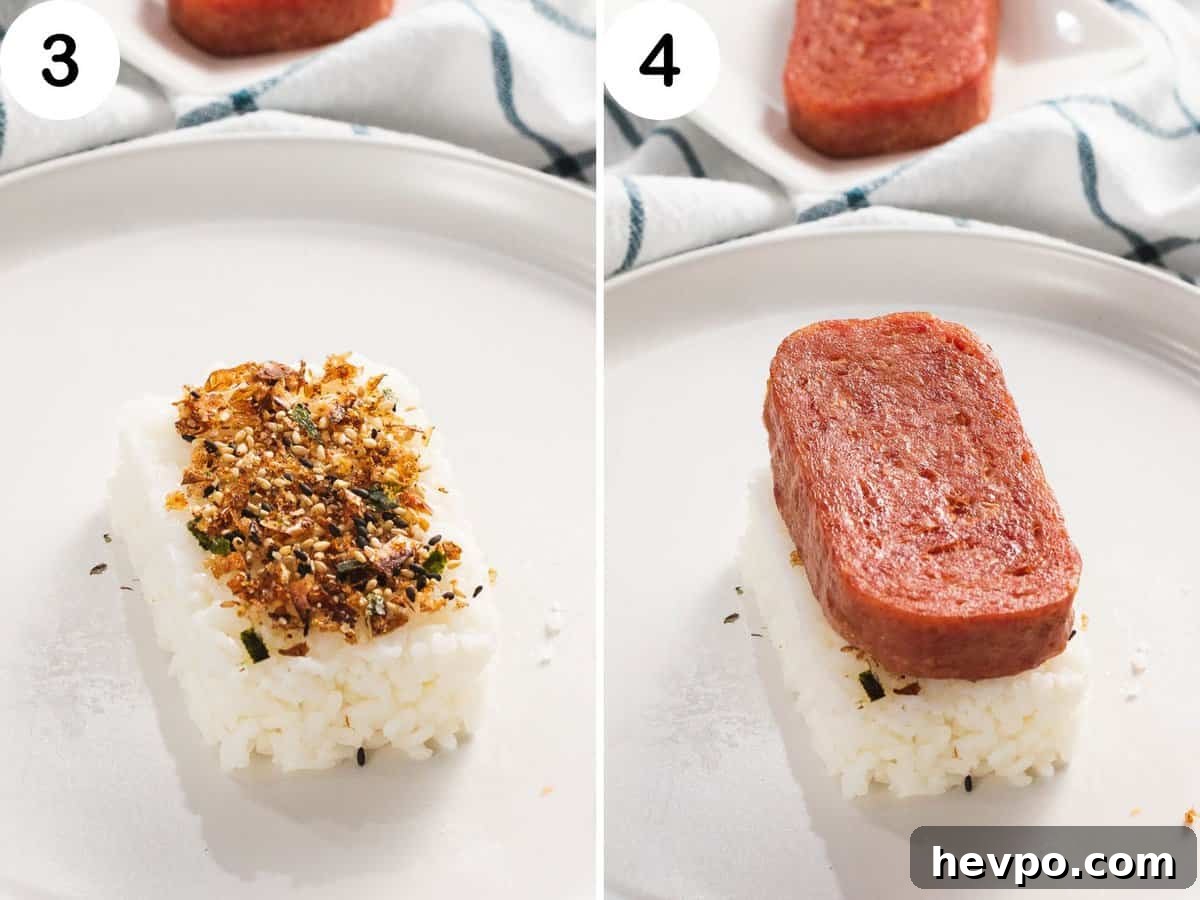
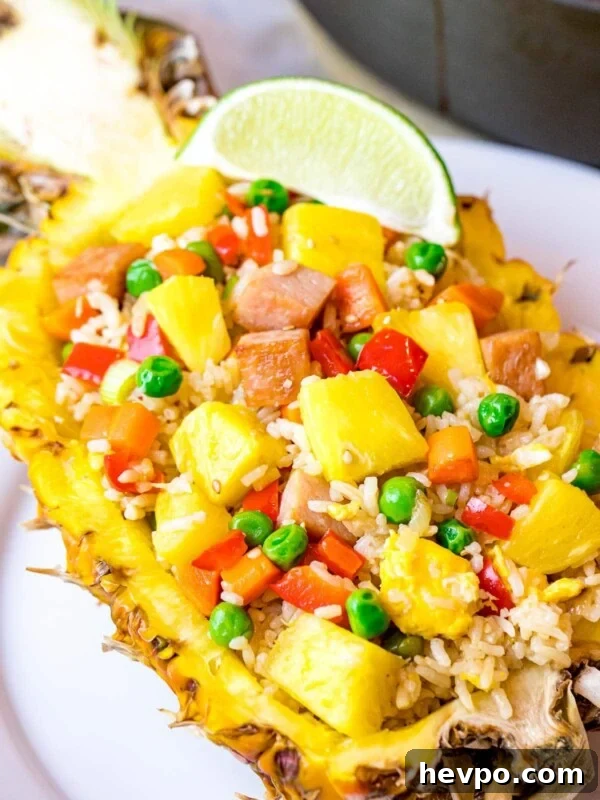
- Press the cooked rice into a rectangular shape using a musubi mold, a cleaned Spam can lined with plastic wrap, or the back of a spoon. Firmly pack about 1/2 cup of rice (adjust for desired size) to form a compact base. If using, sprinkle furikake over the rice.
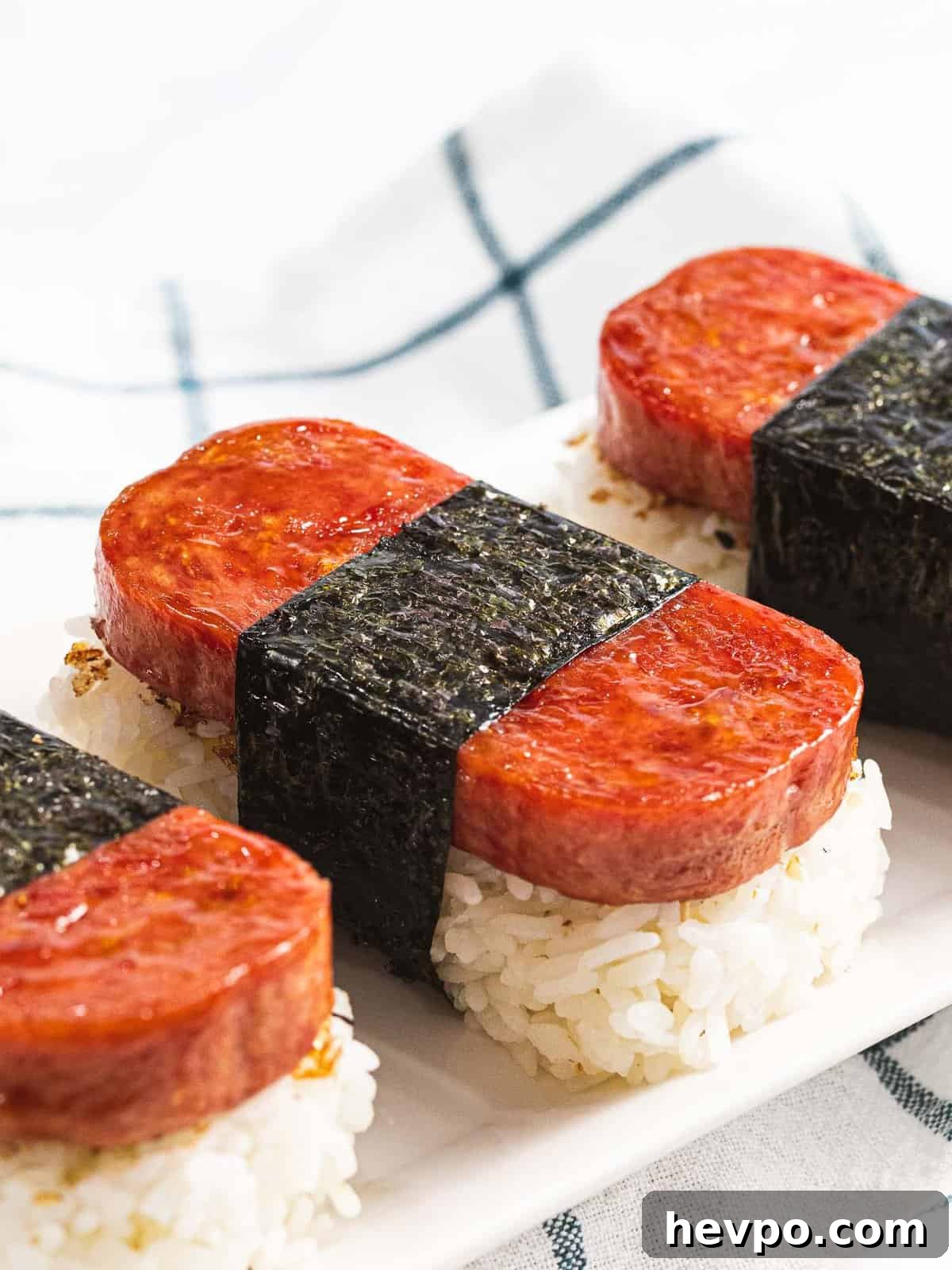
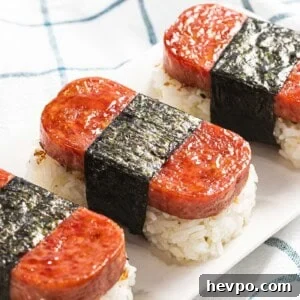
- Place a fried slice of Spam on top of the rice, then wrap a strip of nori around the rice and Spam, sealing the seam side down. If you made the sauce, brush any remaining glaze over the Spam before serving.
Variations
- Spam and Egg Musubi – Layer a slice of tamagoyaki or a fried egg between the rice and Spam for added richness.
- Avocado or Cheese – Add a thin slice of cheese under the Spam or top with avocado for a creamy contrast.
- Extra seasoning – Sprinkle toasted sesame seeds or additional furikake for crunch and umami.
More Hawaiian Recipes
- Loco Moco
- Hawaiian Pineapple Fried Rice
- Butter Mochi
More Spam Recipes

Asian Recipes
Easy Spam Fried Rice

Asian Recipes
Kimchi Fried Rice with Spam
Main Dishes
Hawaiian Pineapple Fried Rice
Spam Musubi
Equipment
- Musubi mold (optional)
Ingredients
- 3 slices Spam, sliced 1/3 inch thick
- 3 pieces nori, cut 2 to 3 inches wide
- 1 1/2 cups cooked short or medium-grain rice, packed
- 1 tablespoon furikake (optional)
Teriyaki Spam Musubi Sauce (Optional)
- 2 teaspoons soy sauce
- 2 teaspoons sugar
- 2 teaspoons mirin (or sake/white wine)
Instructions
- Pan-fry Spam: Heat a skillet over medium-high heat and fry the Spam slices in a little oil until browned and slightly crispy. For the optional glaze, add soy sauce, sugar, and mirin to the pan in the last 2 minutes and allow the sauce to reduce and coat the Spam.
- Form rice layer: Place about 1/2 cup cooked rice into a musubi mold or a cleaned Spam can lined with plastic wrap. Press firmly to compact the rice to about 1 2/3 inches high (adjust to preference). Sprinkle furikake over the rice if using. Repeat to make three musubi.
- Assemble: Lay a slice of cooked Spam on each rice block. Wrap a strip of nori around the rice and Spam with the seam side down. Brush any remaining sauce over the Spam, then serve.
Notes
- Spam: Low-sodium Spam is a good choice if you prefer less salt. Thinner slices or a bit more rice can also balance saltiness.
Leftovers: Store in an airtight container in the refrigerator for up to 3 days.
Reheat: Microwave in 20-second intervals until warmed through.
Nutrition
Calories: 215 kcal, Carbohydrates: 28 g, Protein: 7 g, Fat: 8 g, Sodium: 673 mg (approximate values).
Nutrition information is an approximation.
Like this? Leave a comment below!
Musubi and onigiri both refer to rice balls. The terms are often used interchangeably, though usage can vary by region.