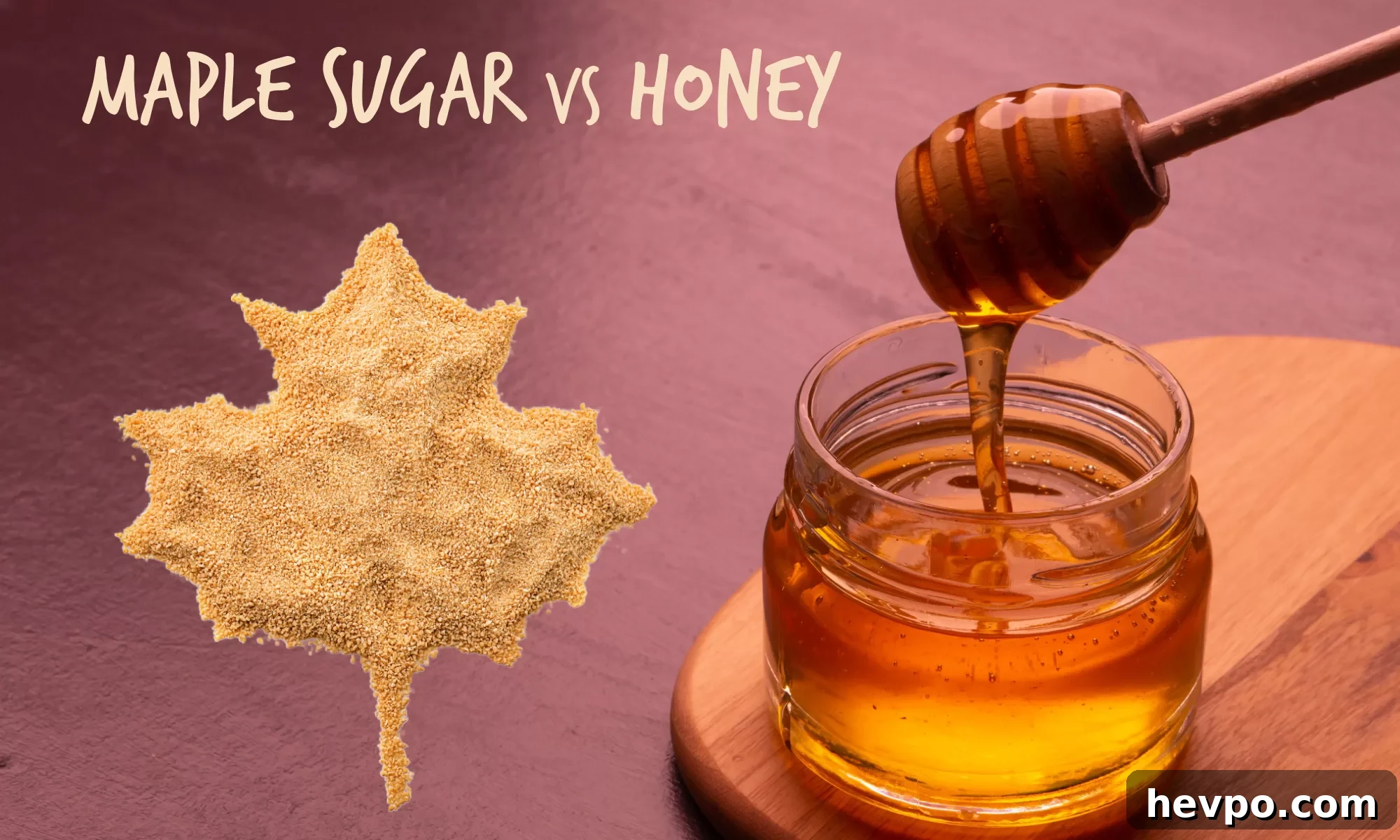
When choosing natural sweeteners, honey and maple sugar are two popular options that each offer distinct flavors and uses. Honey is made by bees from flower nectars and provides a range of nutritional components, while maple sugar comes from the boiled sap of maple trees and concentrates maple’s characteristic taste. Both are valued by cooks and bakers, and understanding their differences can help you pick the right sweetener for a recipe or diet.
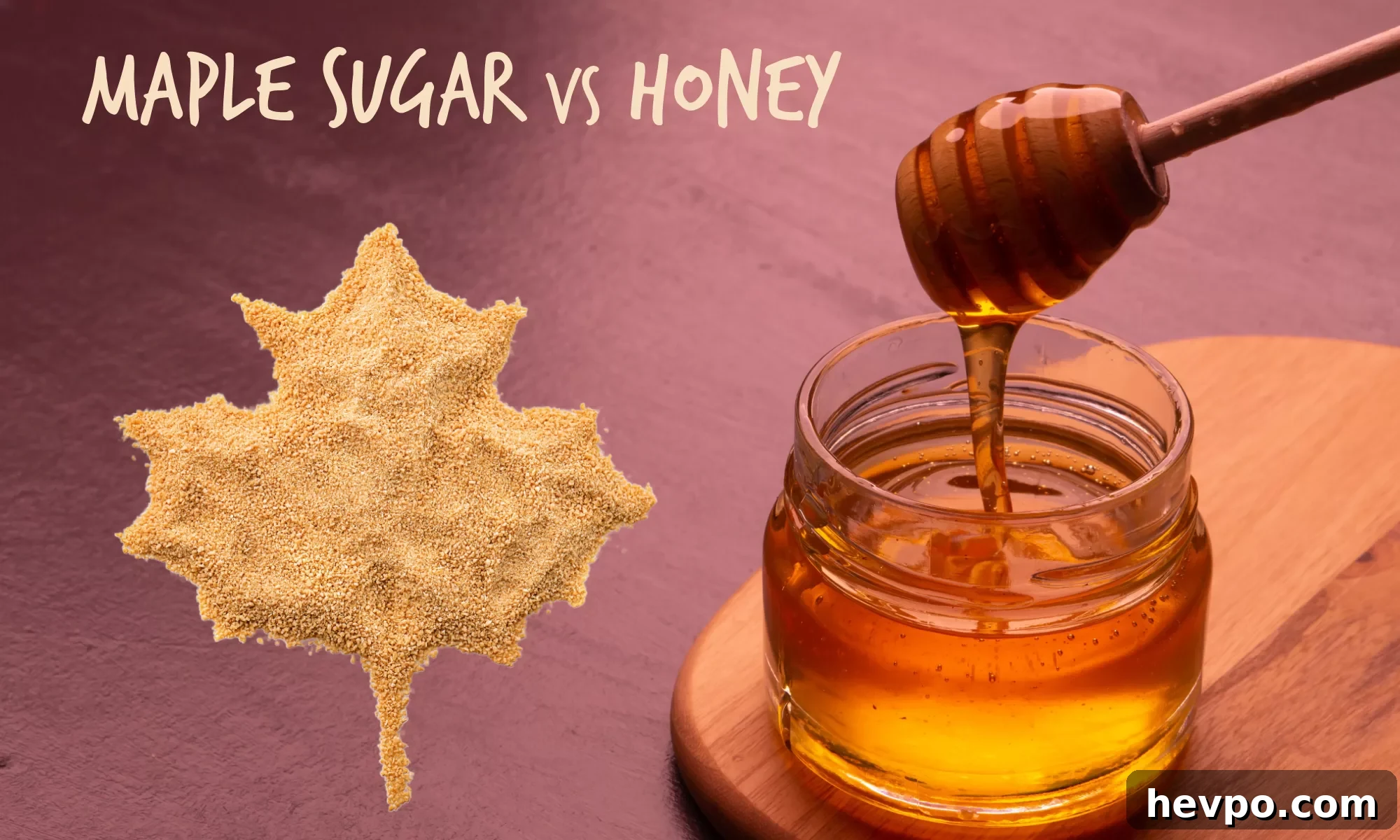
Comparing Maple Sugar vs Honey
| Maple Sugar | Honey | |
| Substitution ratio | 1 cup sugar: ½ – ¾ cup honey | ½ – ¾ cup honey: 1 cup sugar |
| Gluten-free? | Yes | Yes |
| Keto-friendly? | No | No |
| Paleo-friendly? | In moderation | Raw and unpasteurized varieties |
| Common Allergens | Maple | Honey, some pollens |
| Pantry shelf life (unopened/sealed) | 1–2 years | Indefinite |
| Best for baking | Any recipe that calls for brown or granulated sugar | Flaky sweet pastries and dense honey cakes |
Differences Between Maple Sugar And Honey
Honey is produced by bees from flower nectar and contains sugars like fructose and glucose, water, trace vitamins and minerals, and various bioactive compounds. It has antibacterial, anti-inflammatory, and antioxidant properties and is traditionally used as a home remedy for coughs and as a topical aid for minor wounds and burns. The floral source of nectar influences honey’s aroma and flavor, creating many varieties from mild to robust.
Maple sugar is made by boiling maple sap longer than is needed for maple syrup until the liquid evaporates and leaves a granulated sugar. It concentrates the maple flavor in a dry form and can be used as a direct substitute for cane sugar or brown sugar in many recipes. The final product retains the characteristic caramel and woodsy notes of maple.
Taste and Culinary Uses
Honey’s flavor varies widely with nectar source and can include fruity, floral, smoky, nutty, or earthy notes. Its liquid form makes it useful for dressings, glazes, sauces, beverages, and recipes where a syrupy sweetener enhances texture or mouthfeel.
Granulated maple sugar is sweeter than white cane sugar and carries the unmistakable maple profile—caramel, vanilla, and woodsy elements. It works well as a one-to-one swap for granulated sugar in baking, blends smoothly in dry mixes, and is excellent on oatmeal, in beverages, or sprinkled over baked goods. It can also be used in rubs or glazes where a maple accent is desired.
Are Maple Sugar and Honey Substitutes for Each Other?
Maple sugar and honey can often be substituted for one another, but adjustments are needed because honey is liquid and slightly sweeter. A common guideline is 1 cup maple sugar = ½–¾ cup honey. When substituting honey for maple sugar, reduce added liquid in the recipe; when replacing honey with maple sugar, add a bit of liquid (about ¼ cup) and consider adjusting baking times or temperatures to account for moisture differences.
Nutritional Profile And Health Benefits
Typical nutrition comparisons show that honey (about 1 tbsp) contains roughly 60 calories and 17 g total carbohydrates (all sugars), with a glycemic index around 58. A small serving of maple sugar (2 tsp) provides about 30 calories and 8 g total carbohydrates, with a glycemic index similar to maple syrup (around 54).
Honey supplies phytochemicals, flavonoids, and polyphenols that contribute antioxidant and antimicrobial effects. Maple sugar and other maple products contain antioxidants and trace minerals such as manganese, zinc, calcium, and potassium. Both are nutritionally preferable to refined white sugar in that they provide minor beneficial compounds, but they remain concentrated sources of sugar and should be used in moderation.
Diet Suitability
Honey is not considered vegan by most definitions because it is produced by bees. It is not keto-friendly due to its high carbohydrate content and is not acceptable on Whole30. Raw, unprocessed honey is sometimes included in paleo-style eating as a natural whole food, while processed or pasteurized honey is less commonly recommended.
Maple sugar is vegan and can be used as a natural dry sweetener in paleo-friendly cooking when used sparingly, though it is not suitable for keto or Whole30 plans. Both sweeteners are caloric and carbohydrate-rich, so they are generally incompatible with strict low-carb diets.
How to Store Maple Sugar and Honey
Store honey in a sealed glass jar or another airtight container at room temperature; honey is shelf-stable and may crystallize over time, which does not indicate spoilage. Keep granulated maple sugar in a cool, dry place in a tightly sealed container to prevent moisture absorption and clumping.
Price and Availability
Honey is widely available and typically less expensive than maple sugar. Maple sugar is produced in smaller quantities and tends to be pricier, reflecting its production process and regional availability.
Environmental Impact
Both honey and maple products can be produced sustainably. Small-scale beekeeping has relatively low greenhouse gas emissions and limited reliance on heavy machinery. Maple syrup and maple sugar production supports forested landscapes that sequester carbon, and healthy maple stands offer positive environmental benefits. The overall footprint depends on farming practices, scale, and regional factors, but both options can be environmentally responsible when sourced from conscientious producers.
Maple Sugar vs. Honey: The Ultimate Verdict
Both honey and maple sugar are natural sweeteners with unique flavors and culinary roles. Choose honey when a liquid, floral or syrupy sweetness is desired; choose maple sugar when you need a dry, maple-flavored granulated sweetener. Nutritionally and environmentally, each has advantages and limitations. Ultimately the best choice depends on your recipe, dietary preferences, and flavor goals—both are excellent options to keep in the pantry.
FAQs
They differ: honey supplies some B vitamins and specific phytochemicals, while maple products provide higher levels of certain minerals such as manganese, zinc, calcium, and potassium. Neither is a health food in large amounts, but both offer minor nutritional benefits over refined sugar.
Maple products contain antioxidants and unique compounds found in sap and syrup. In moderation, maple sugar is a natural alternative to refined sugar and contributes small amounts of minerals and antioxidants, but it remains a concentrated sugar and should be consumed sparingly.
Yes—maple sugar can often replace granulated sugar in a one-to-one swap in many recipes, though flavor will reflect maple notes and minor adjustments may be needed depending on the recipe.