[Note: This is Part 1 of a 2 part series on the 1890 census.]
The 1890 census is often called the “black hole” of genealogy research.
How many researchers have lost track of relatives because the 1890 population schedules were largely destroyed after the Commerce Department fire of 1921?
I’m raising my hand, too.
A bit of background first…
Contrary to popular belief, the 1890 census was not completely burned; it sustained extensive water damage while firefighters battled the blaze. The damaged records were stored for years, but the combination of water, paper and time caused them to deteriorate beyond repair. The result: most of the 1890 census population schedules were ruined.
That said, the loss of the 1890 population census does not have to stop your genealogy research.
Remnants and fragments of the 1890 census did survive.
According to the National Archives (NARA), portions of six types of 1890 census records remain. These include:
- Small parts of the population schedule — over 6,100 individuals are preserved across ten states.
- Schedules of Union Army veterans and their widows.
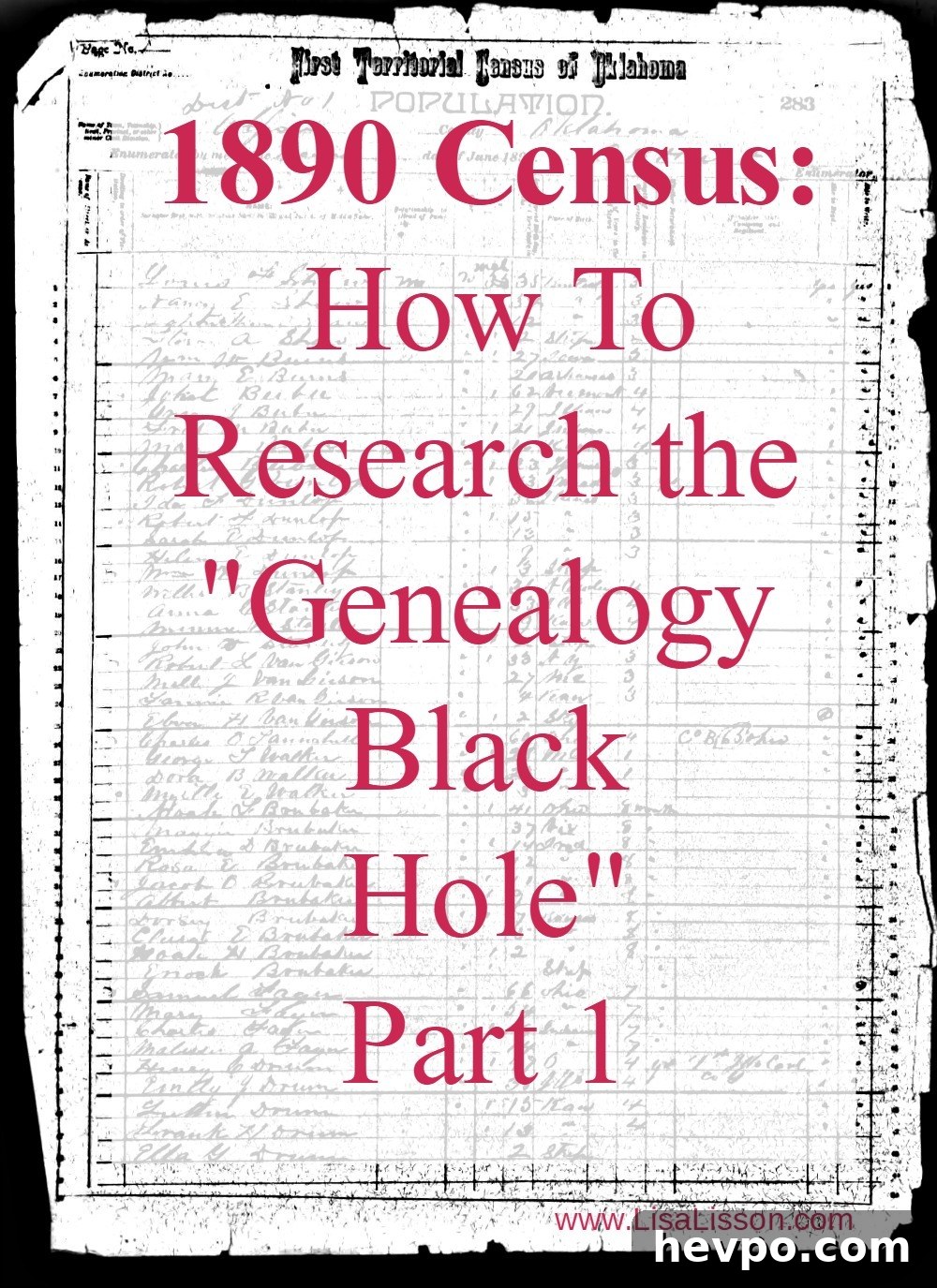
- Schedules for the Oklahoma territories.
- Selected listings of African Americans in Delaware.
- Statistics on Lutheran congregations.
- Tabulated statistics derived from the 1890 census prepared for government reports.
The first four categories are the most valuable for family historians. The statistical reports are useful for historical context but rarely provide the personal details genealogists need.
NARA provides detailed descriptions of what survives in each category on its website.
Where do you find these 1890 census remnants?
Surviving population fragments and the Civil War veterans schedules are available on FamilySearch (free) and on Ancestry (subscription). Many public libraries provide free access to Ancestry Library Edition—check with your local library and bring your library card.
Example: 1890 population census from Cleveland County, North Carolina.
The 1890 population schedule has a distinctive layout compared to other census years, which some researchers find easier to read. It asks many of the same core questions as other censuses, but there are a few useful particulars to note.
If you locate an ancestor on the 1890 population schedule, pay special attention to line 8, which indicates whether the person married within the year — a helpful clue for narrowing a marriage date. Line 9 asks women how many children they have had and how many are still living — a potential source for identifying children not listed elsewhere.
The Civil War veterans census of 1890.
The Civil War veterans and widows schedules are particularly useful because they often include regiment and service details, physical descriptions, disabilities, pensions, and remarks. These notes can provide unique clues. For example, a veteran might be listed as having lost an eye or marked as “gone from the state,” which helps establish both health and location details at the time.
In some entries the remarks section records that an individual was “gone from the state” while still appearing on the schedule for a county—this tells you where the person had lived previously even if they were absent in 1890.
Selected listings of African Americans in Delaware
The Delaware listings identify African American residents by name and location. These fragments can be a significant resource for African American family researchers seeking 1890-era evidence.
These Delaware entries are available through Ancestry and on microfilm via FamilySearch.
Schedules for the Oklahoma territories
Oklahoma territory schedules survive in larger batches than most other population fragments. The handwriting can be difficult to decipher, but if your family lived in Oklahoma in the 1890s these records are worth checking. If you struggle to read faded or cramped handwriting, basic image-editing tools can improve legibility.
I recognize that many researchers will not find their ancestors among the surviving 1890 fragments. Still, thorough searching of what remains is essential—those fragments sometimes reveal surprising connections or details.
If you do not locate ancestors in the surviving 1890 materials, the next post in this series will cover alternative strategies and sources for finding people in the 1890s without relying on the lost population schedules.
The 1890 census is not quite the genealogical “black hole” it’s often made out to be. Start by searching the surviving fragments, then return for Part 2 to explore research strategies that work around the loss.
Please note: this post contains affiliate links, which means I may earn a commission if you purchase a product or service through those links. This does not increase your cost. I recommend only products and services I use or believe will be helpful.
Have you searched the 1890 census remnants? Have you found an ancestor in these fragments? Leave a comment below and share your finds.
You might also be interested in:
- The 1890 Census – Part 2
- How to Use the Pre-1850 Census to Find Your Female Ancestors
- How to Make Sense of Those Tick Marks on the Pre-1850 Census Records
Pin for future reference!