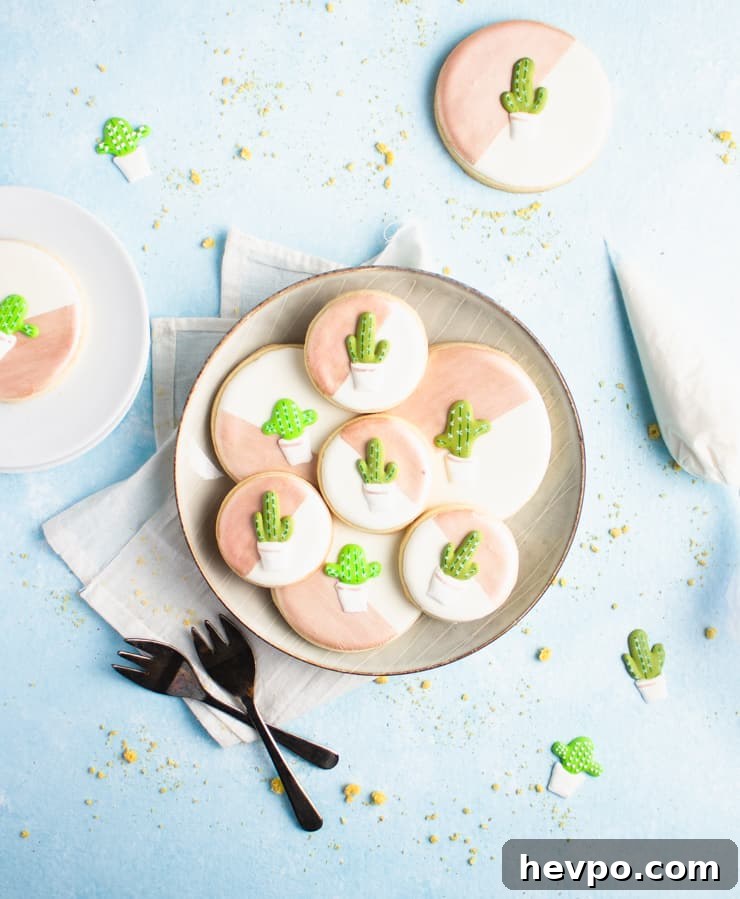
If you’re new to royal icing, this guide will walk you through the essentials. Below you’ll find a reliable royal icing recipe, explanations of common icing types and consistencies, answers to frequently asked questions, and practical troubleshooting tips to fix common problems.
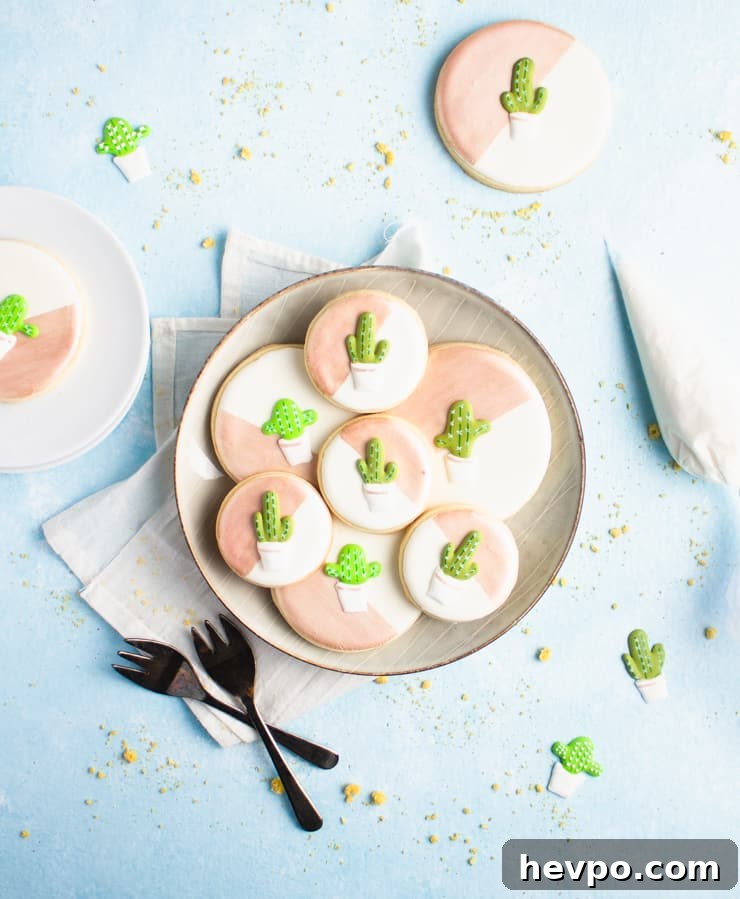
Disclaimer: Some links in the original post were affiliate links. Recommendations come from personal experience with the products mentioned.
Royal icing is the go-to medium for detailed cookie decorating. It can feel intimidating at first — should you use fresh egg whites or powdered substitutes? How do you store icing? What are consistencies and when do you use them? After years of decorating, the basics become straightforward. This post is designed to remove the guesswork and help you build confidence with royal icing.
[feast_advanced_jump_to]
Ingredients
Royal icing recipes generally use either fresh egg whites or powdered egg white substitutes (powdered egg whites or meringue powder). While pasteurized liquid egg whites can work, powdered substitutes are popular because they store longer, don’t require refrigeration, and tend to produce a very stable icing.
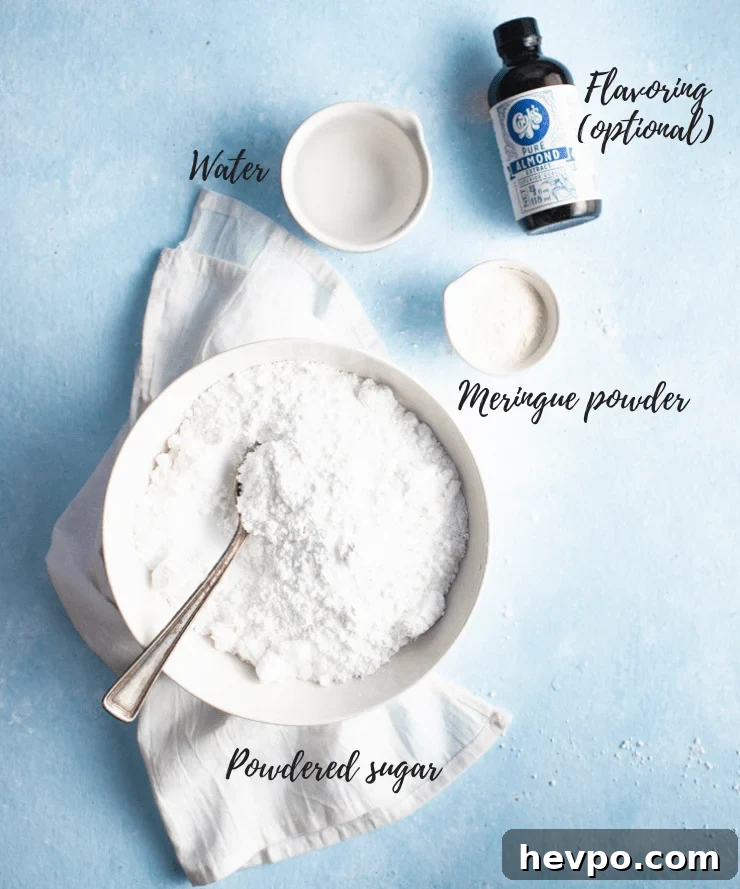
How to make royal icing with meringue powder:
- ¼ cup meringue powder or powdered egg whites
- ½ cup lukewarm water
- 1 lb powdered sugar
- Optional: 1 teaspoon extract (vanilla, almond, etc.)
Yield: This batch will cover about two dozen cookies.
Powdered egg white vs. meringue powder
Powdered egg whites are simply dried egg whites. Meringue powder is a blended product that can contain starches, stabilizers, flavorings and powdered egg white. Many bakers prefer meringue powder for its stability and convenience, but both options make excellent royal icing.
Watch the process
How to make royal icing
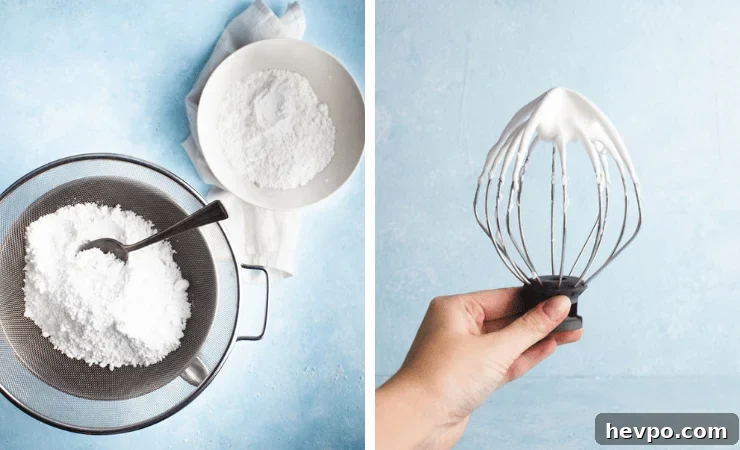
Combine the meringue powder (or powdered egg whites) and lukewarm water in the bowl of a stand mixer. Lukewarm means slightly warm to the touch.
Fit the mixer with a whisk attachment and whip on high until the mixture is frothy. Scrape the sides periodically to ensure all powder dissolves.
Pro tip: Lightly mist the sides of the bowl with water before scraping. This helps dissolve any clinging powder and prevents lumps.
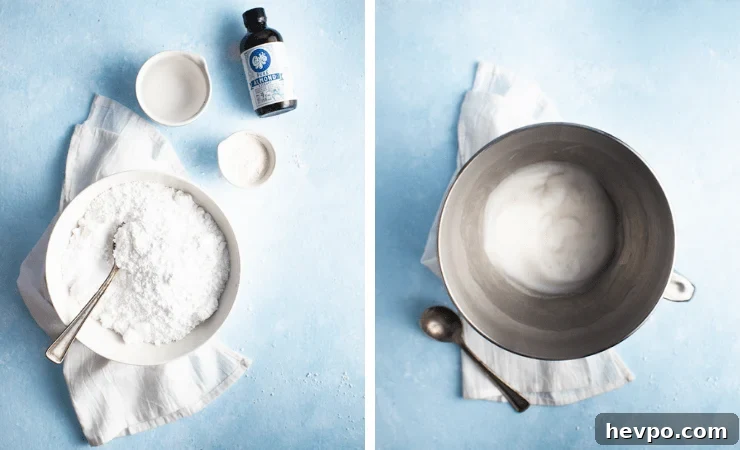
Sift the powdered sugar, add it to the bowl, and mix on medium speed. Stop every 2–3 minutes to scrape and, if needed, mist the sides again. If you want to add extract, stir it in during one of those stops.
Whip until you reach the consistency you need. The guide below outlines common consistencies and their uses. If you need multiple consistencies, whip the whole batch to the stiffest stage, then thin portions with a few drops of water until you reach the desired texture.
Icing consistencies
Different projects call for different consistencies. Below are the main types and when to use them.
Basic consistencies and uses:
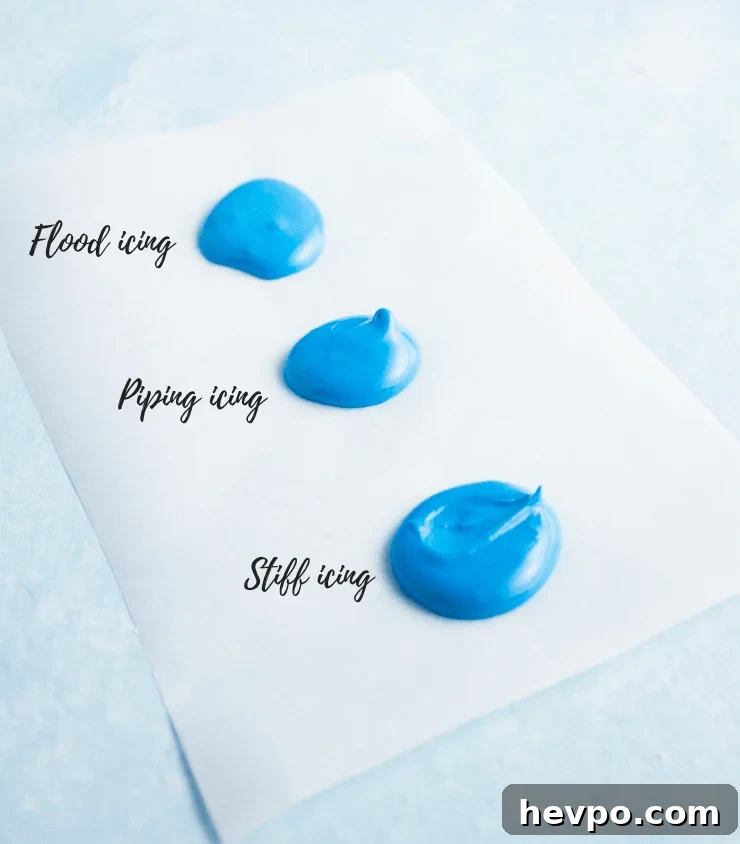
Stiff icing
Thick, holds a firm peak and spreads like a dense frosting.
Uses: piping three-dimensional flowers, succulents, fine details that need structure.
Piping icing
Medium consistency that holds a soft peak and keeps its shape when piped.
Uses: outlining, lettering, borders and filigree work.
20-second icing
A medium-thin consistency favored by many decorators. “20-second” refers to how long it takes for a drizzled ribbon of icing to settle back into the surface — roughly 20 seconds.
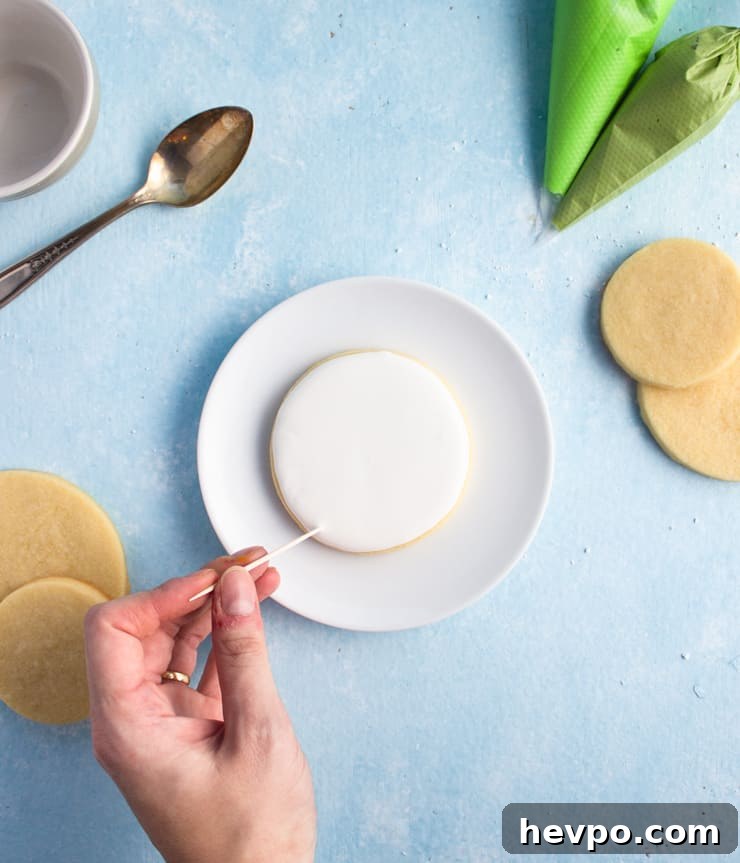
This icing sits between piping and flood: it spreads enough to level but still holds detail. Many decorators pipe an entire layer with this consistency, nudge it into place with a toothpick, and let it settle.
Uses: covering cookies, making transfers, building dimension, wet-on-wet techniques, and dipped cookies.
Flood icing
The thinnest icing used for filling outlined areas. Aim for about a 10–12 second consistency.
Uses: flooding outlined sections and wet-on-wet designs.

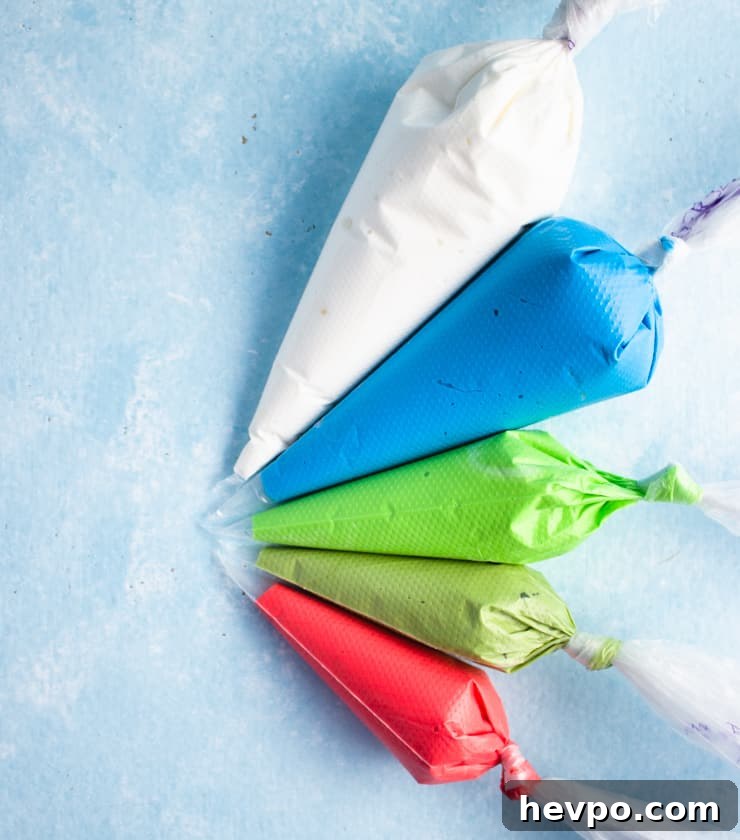
Coloring royal icing
Coloring royal icing is straightforward, but a few tips will make it easier and more consistent.
- Use gel food coloring: Gel pastes are highly pigmented and won’t thin your icing like liquid colorings can.
- Account for drying: royal icing darkens slightly as it dries, so mix colors a touch lighter than your target shade.
- Be careful with strong colors: Red and black can be challenging and often require highly concentrated gels. They also deepen as they dry.
- Make extra: mix more of each color than you think you’ll need — matching a dried color later is difficult.
Decorating with royal icing
Once your icing is ready, here’s a straightforward decorating workflow:
- Outline any shapes you want with a food-safe pen or with piping icing if that helps define the design.
- Fill piping bags and pipe the icing onto the cookies. For easy bag loading, place the bag inside a tall glass and fold the top over the rim to hold it open while you fill.
- Use a toothpick or quilling tool to coax icing into corners and pop small air bubbles. Gentle taps help the icing settle and even out.
- Let decorated cookies dry completely before stacking, packaging, or adding extra embellishments — typically 6–8 hours.
Troubleshooting
Removing lumps: If your icing has lumps, pass it through a fine mesh strainer or a clean pair of pantyhose stretched over a bowl. You can squeeze or drop the strained icing directly into a piping bag to minimize mess.
Preventing butter bleed: Butter bleed happens when fat from the cookie seeps into the icing and discolors it. Prevent it by cooling cookies completely on a rack (not on the baking sheet), leaving them to cool thoroughly — even overnight — and using a slightly thicker icing. Keep iced cookies in a cool environment while drying and storing.
Frequently asked questions
Royal icing works well on fondant-covered cakes. Avoid applying royal icing directly to buttercream because fat from the buttercream can leach into and discolor the royal icing. Dried royal icing should not be refrigerated.
Royal icing made with meringue powder or powdered egg whites stores at room temperature. Press plastic wrap directly onto the icing surface to prevent crusting. If stored for more than a few days, some water separation may occur — simply mix it back together before use. Stored this way, it will keep for about two weeks.
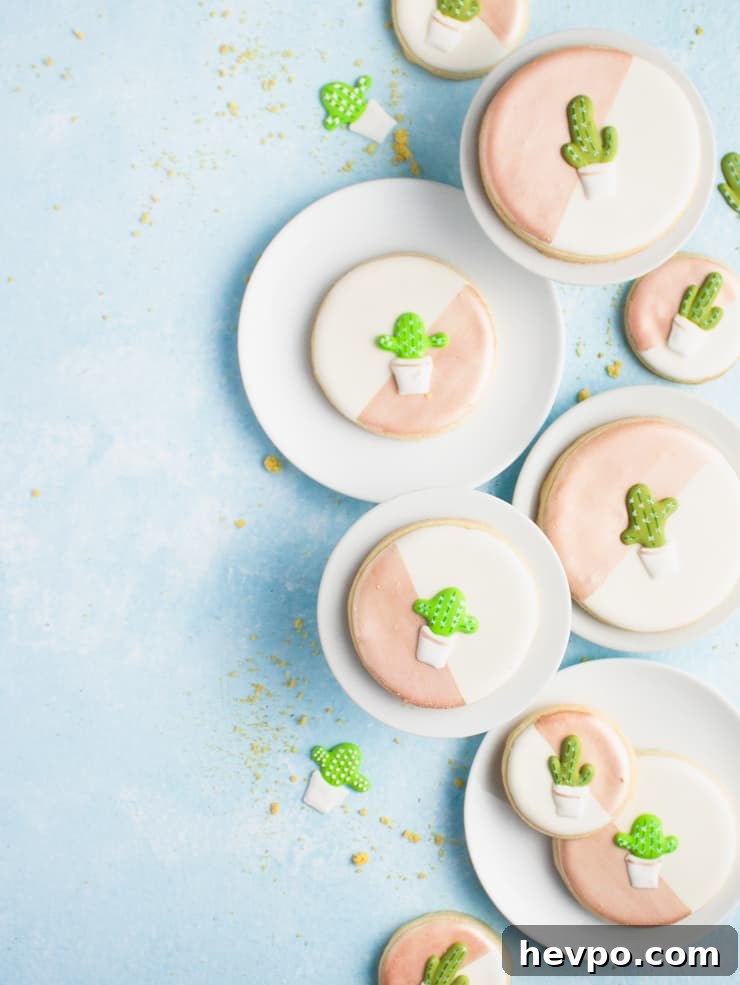
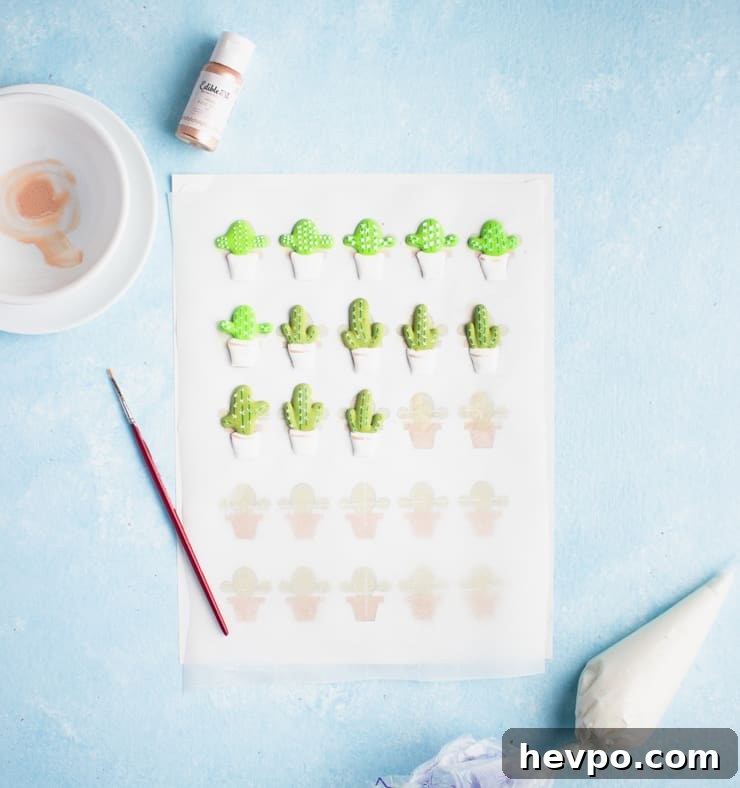
Royal icing transfers are decorations piped onto parchment or wax paper, left to dry, then transferred to cookies, cupcakes, or other treats. They are convenient for making decorations ahead of time and can be stored in a cool, dry place.
Ways to use royal icing
-
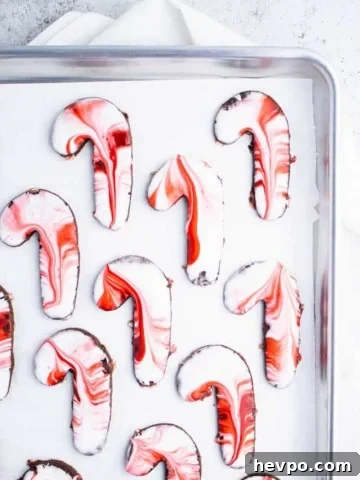
Chocolate Peppermint Sugar Cookies
-
Easy Heart Sugar Cookies
-
Halloween Treat Bucket Sugar Cookies
-
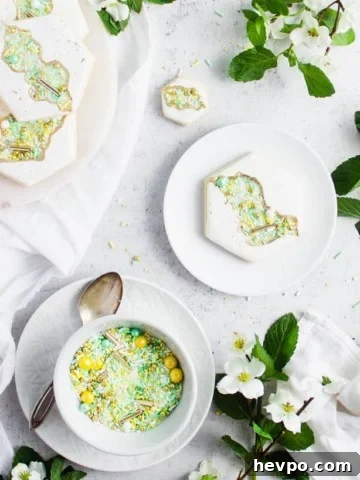
Fault Line Cookies


More resources
Here are a few additional topics to explore as you practice:
- A reliable sugar cookie recipe and tips for planning and troubleshooting cookie baking.
- Creative uses for leftover royal icing and how to store decorations.
- Lessons learned from years of cookie decorating to help avoid common mistakes.
- How to make custom cookie cutter shapes for unique designs.
Did you make this recipe? Leave a rating or comment if you found these tips helpful — feedback helps improve the guide.
Recipe
Royal Icing Recipe

5 from 15 reviews
This post contains a reliable royal icing recipe, a breakdown of consistencies, troubleshooting tips, and answers to common questions to help beginners get started decorating cookies.
- Author: The Simple, Sweet Life
- Prep Time: 10 minutes
- Total Time: 10 minutes
- Yield: Enough for 2 dozen cookies
- Category: Dessert
- Cuisine: American
Ingredients
Units
Scale
- ¼ cup meringue powder or powdered egg whites
- ½ cup lukewarm water
- 1 lb powdered sugar
- Optional: 1 teaspoon extract of choice
Instructions
- Combine the meringue powder or powdered egg whites with lukewarm water in the bowl of a stand mixer.
- Whip on high with a whisk attachment until frothy, scraping the sides as needed.
- Pro tip: Lightly mist the bowl sides with water before scraping to help dissolve any powder.
- Sift the powdered sugar and add it to the bowl. Mix on medium speed, stopping every 2–3 minutes to scrape the sides.
- If adding extract, do so during one of the stops and mix thoroughly.
- Whip until you reach the desired consistency.
- To create multiple consistencies, make the whole batch stiff, then thin portions with a few drops of water until you reach the required texture.
Notes
- Use gel food coloring: gels are highly pigmented and won’t thin the icing the way liquid colors can.
- Royal icing darkens as it dries: mix colors slightly lighter than desired.
- Strong colors: red and black often require concentrated gels and will darken as they dry.
- Make extra: it’s hard to match a dried color later, so prepare more than you think you’ll need.
- Outline guidance: draw outlines with a food marker if helpful, or pipe outlines before flooding.
- Bag loading tip: place the piping bag in a tall glass and fold the top over the rim for easier filling.
- Finishing tips: use a toothpick or quilling tool to nudge icing into place and pop air bubbles. Allow 6–8 hours to dry completely before packing.
- Prevent butter bleed: cool cookies completely on a rack, leave them to dry thoroughly, and use a thicker icing to reduce fat absorption.
Recipe adapted from established royal icing techniques and tested methods.
Nutrition
- Serving Size: 1 cookie worth (~⅔ oz)
- Calories: 77
- Sugar: 18.5g
- Sodium: 4mg
- Fat: 0g
- Carbohydrates: 19.5g
- Protein: 0.3g
- Cholesterol: 0mg
Update Notes: Originally published in 2013 and updated with step-by-step photos and tips in 2018.