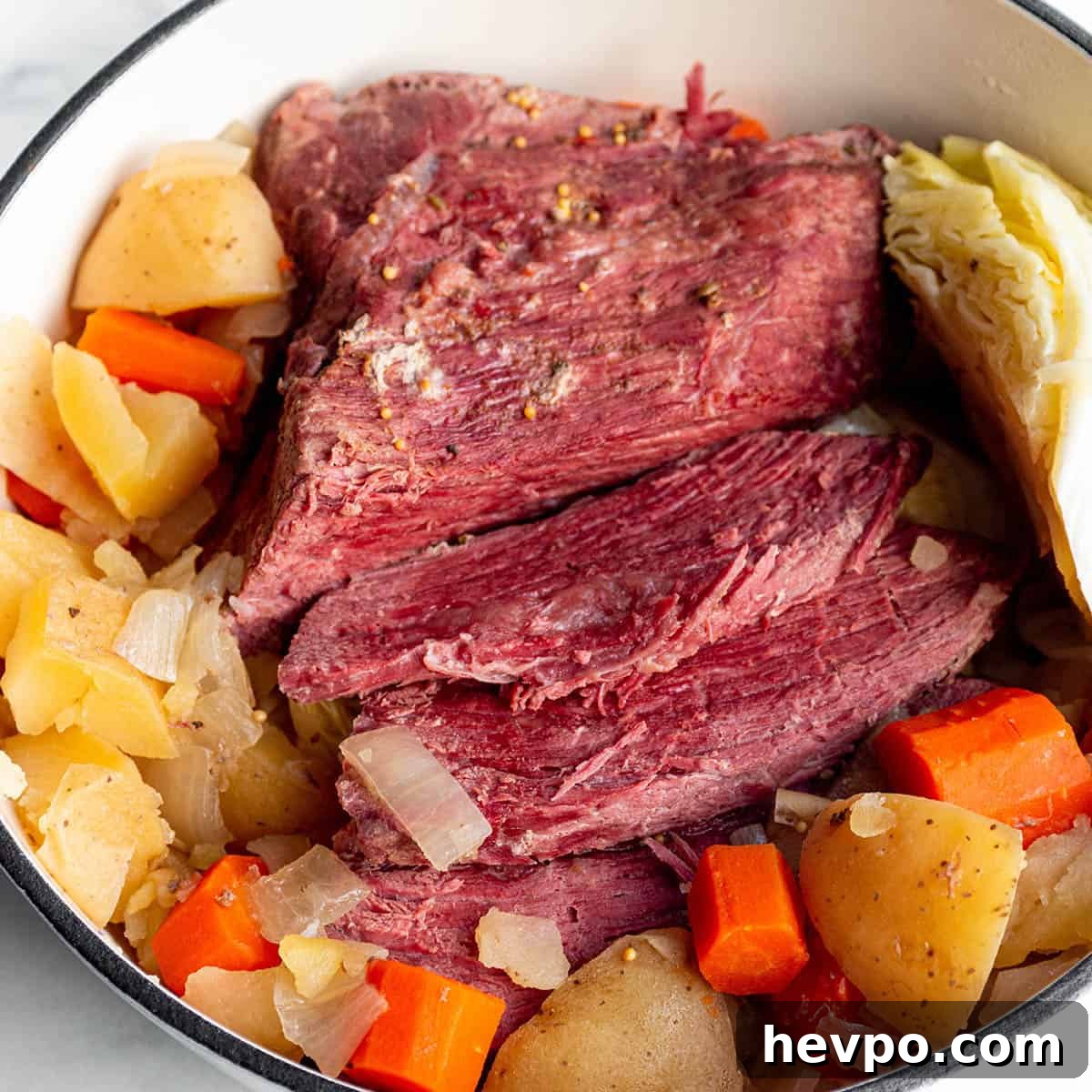
This Dutch Oven corned beef and cabbage is slowly cooked in the oven until melt-in-your-mouth tender, accompanied by large chunks of potatoes, carrots and wedges of cabbage. It’s a comforting, one-pot meal that’s perfect any time of year—not just Saint Patrick’s Day.
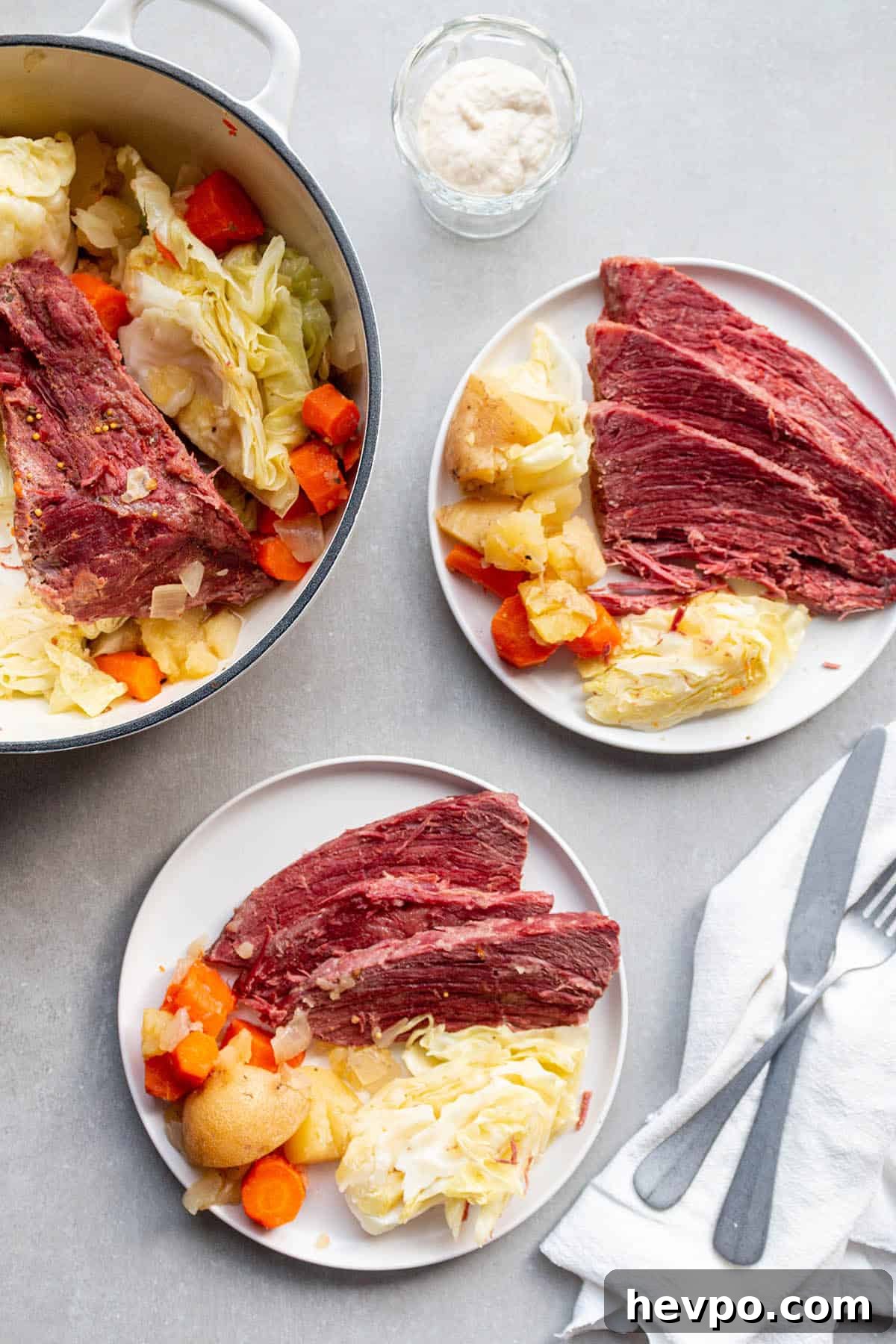
If you pass by Costco and see a corned beef brisket, don’t wait—this dish is simple to prepare and ideal for chilly fall and winter evenings. It’s very similar in comfort level to a good beef stew, and the cabbage-and-potato pairing makes for a classic, satisfying plate.
The brisket is simmered slowly in beef stock with hearty vegetables until everything is tender and full of flavor. Though many think corned beef and cabbage is an Irish tradition tied to Saint Patrick’s Day, the dish became popular in the United States and remains an American-St. Patrick’s Day staple.
Serve with a warm wedge of soda bread and a spoonful of horseradish for a complete meal. If you enjoy cooking with your Dutch oven, this recipe is an excellent use of that heavy pot and pairs well with other Dutch oven favorites.
🐄Ingredients
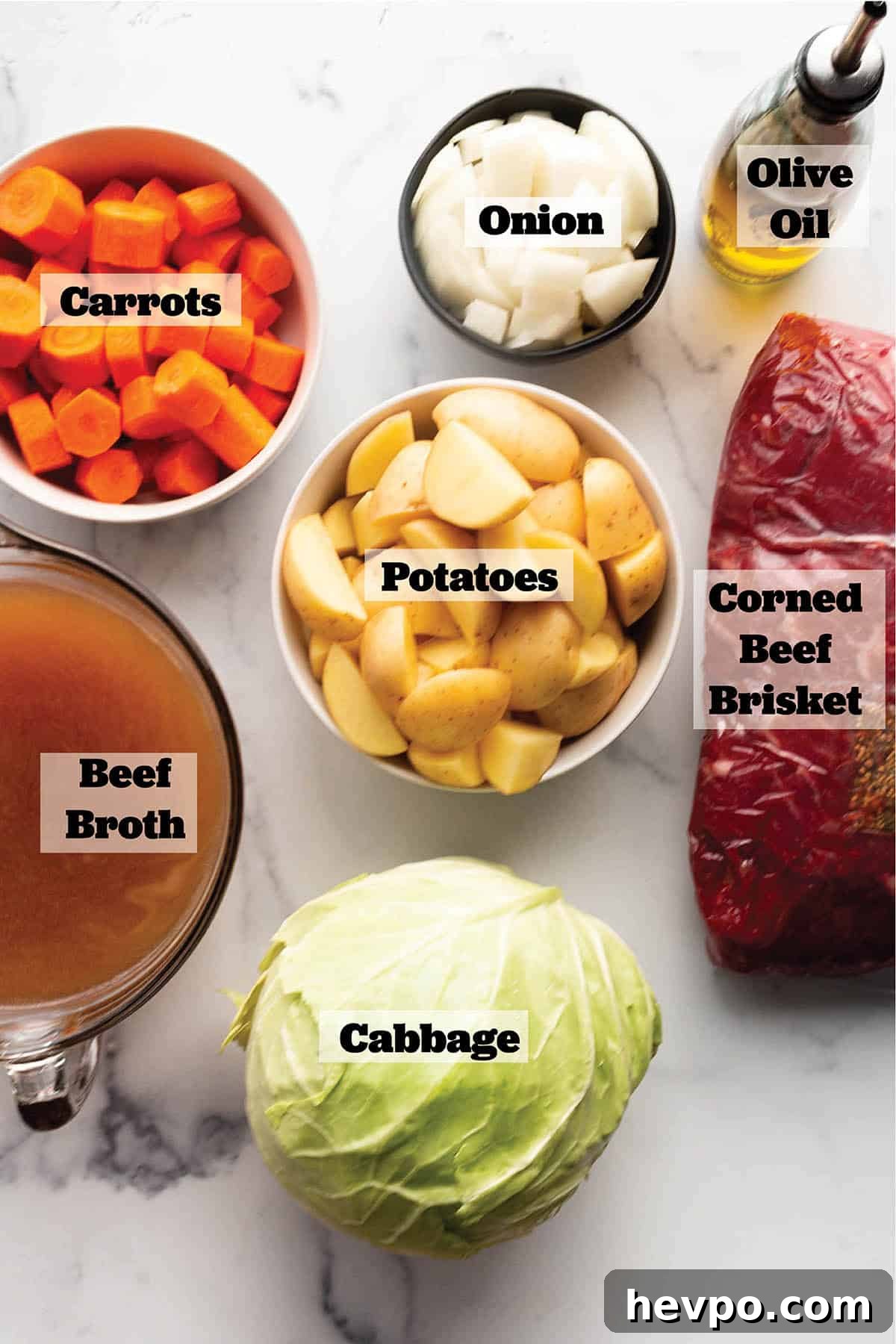
Potatoes: Yukon Golds are recommended. Cut small potatoes in half; medium or large potatoes into quarters so they cook evenly with the brisket.
Beef: A 3–4 pound corned beef brisket works well; the exact size isn’t critical—just ensure there’s enough liquid to cover the meat.
Beef stock: A good-quality beef stock makes a difference. You can use a high-quality broth or a concentrated alternative in a pinch. A flavorful stock yields a richer cooking liquid for the vegetables and meat.
Full ingredient amounts are shown in the recipe card below.
🔪How to Make
The secret to this recipe is using a large Dutch oven that can go from stovetop to oven. A 7-quart (or larger) pot is ideal.
Step 1: Preheat the oven to 300°F (150°C).
Step 2: Remove the corned beef from its packaging, rinse under cold water and pat dry to remove excess curing liquid—this helps reduce overpowering saltiness.
Step 3: Chop potatoes, carrots and onion into large chunks. Cut the cabbage into wedges and set everything aside.
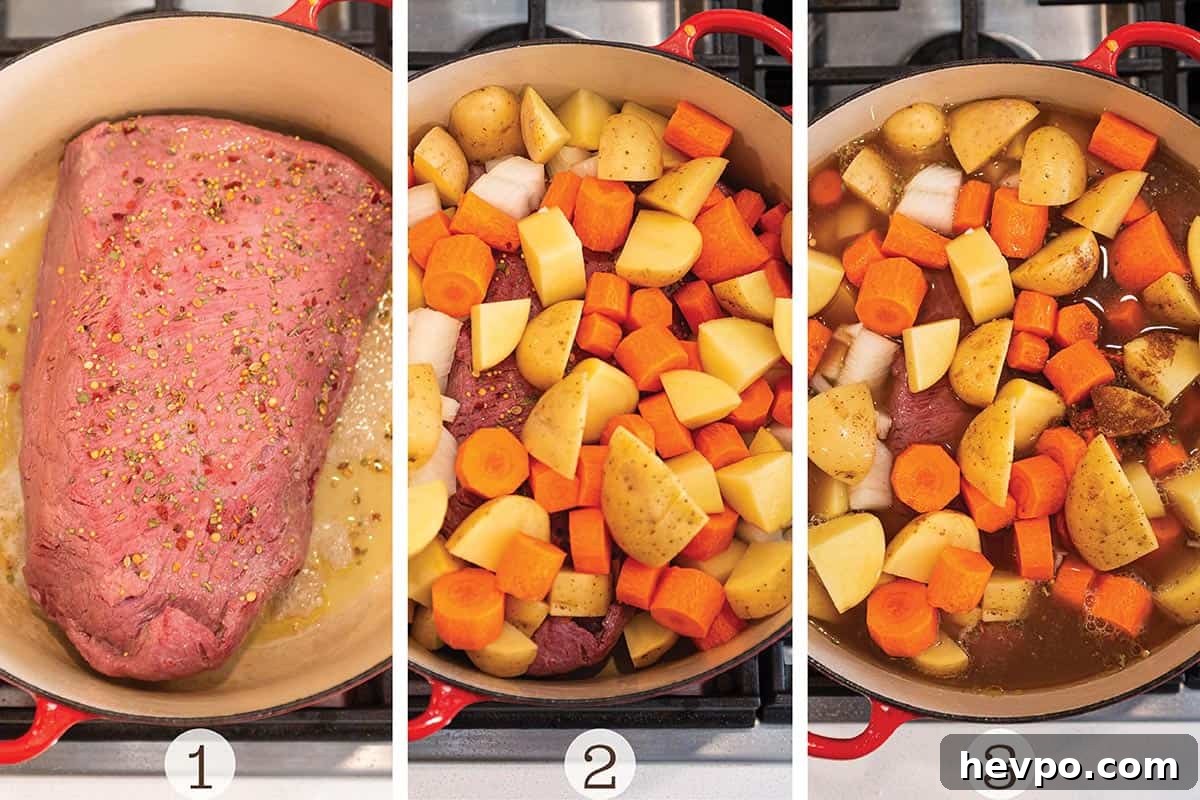
Step 4: Heat 1 tablespoon olive oil in the Dutch oven over medium heat. Sear the brisket 1–2 minutes per side until lightly browned. Place the brisket fat-side up in the pot and sprinkle the included seasoning packet over the top.
Step 5: Pile the prepared vegetables and potatoes on top of and around the brisket. Arranging veggies over the meat helps keep it submerged in liquid during cooking.
Step 6: Add beef stock until the brisket is completely covered. Bring the pot to a low simmer on the stovetop.
Step 7: Cover the Dutch oven with its lid and transfer it carefully to the preheated oven. Bake until the internal temperature of the brisket reaches 180–205°F (82–96°C). The meat becomes fall-apart tender as it approaches the higher end of that range. Plan on 2.5–3 hours of cooking time.
Step 8: Remove the Dutch oven from the oven and transfer the brisket to a plate; tent with foil and let rest for about 20 minutes.
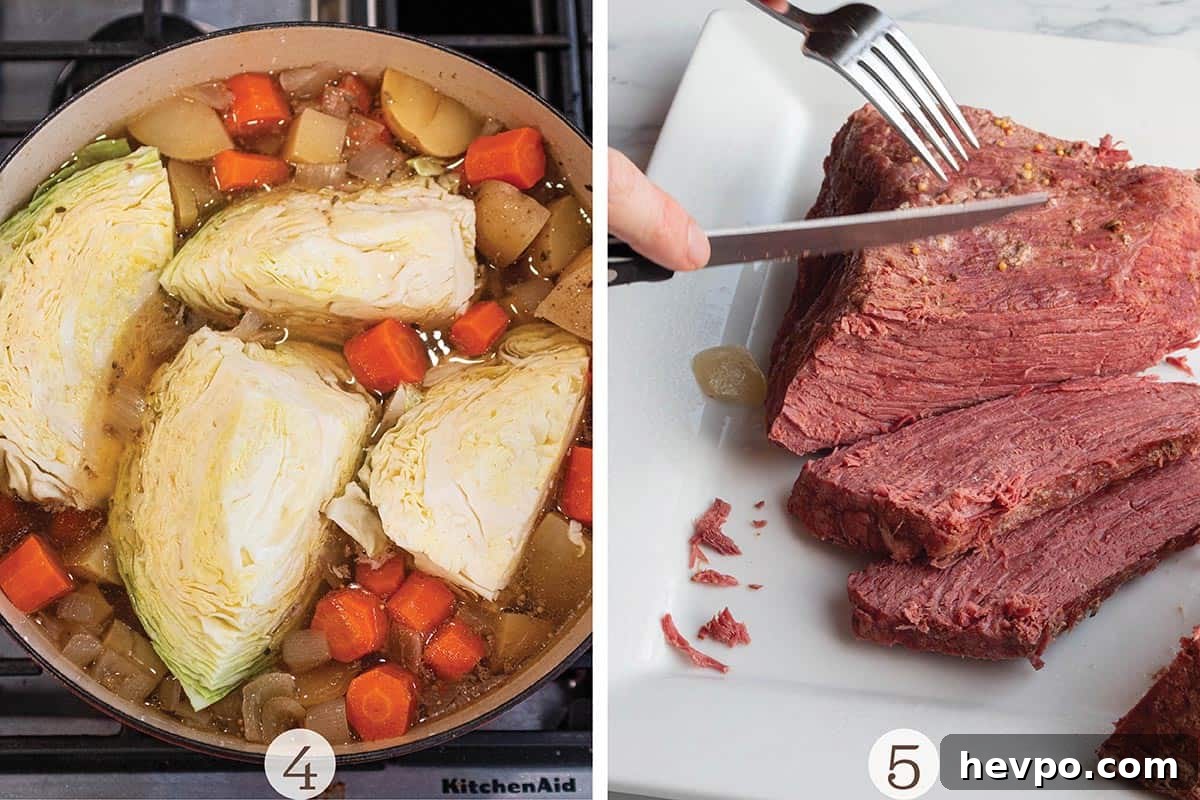
Step 9: While the brisket rests, place the cabbage wedges into the hot cooking liquid. Return the uncovered pot to the oven for 20 minutes, or simmer on the stovetop, until the cabbage is tender.
Step 10: Remove the cabbage and vegetables from the stock, slice the brisket against the grain and serve warm. Accompany with soda bread and your favorite condiments.
❓Recipe FAQs
Yes. Baking a corned beef brisket in a Dutch oven submerged in beef stock helps keep the meat moist and tender while it slowly cooks.
Rinsing the curing brine off the brisket is recommended to reduce excess salt. Pat the meat dry before searing or placing it in the pot.
Although the meat is technically safe at lower temperatures, corned beef becomes tender and easy to shred when cooked to around 180–205°F. The closer it gets to 200–205°F, the more tender it becomes, but avoid going significantly past that range.
🥘Other Dutch Oven Recipes
-
Dutch Oven Potatoes
-
Overnight Sourdough Bread
-
Dutch Oven Chili
-
Dutch Oven Chicken Noodle Soup




Did you make this recipe? If you enjoyed it, please leave a 5-star rating in the recipe card and share a comment below to let me know how it turned out. I love hearing from readers!
*Follow along on Instagram, Pinterest or subscribe to receive new recipes by email.
📋Recipe
Dutch Oven Corned Beef and Cabbage
Equipment
- Large Dutch oven (7 quart or larger)
Ingredients
- 1 Tablespoon olive oil
- 3–4 pound corned beef brisket
- 1 pound carrots, cut into large chunks
- 1.5–2 pounds Yukon Gold potatoes, halved or quartered
- 1 large yellow onion, cut into big chunks
- 6 cups beef stock, or enough to cover the brisket
- 1 medium head cabbage, cut into 8 wedges
Instructions
- Preheat oven to 300°F (150°C).
- Rinse the corned beef under cold water and pat dry to remove the curing liquid.
- Chop potatoes, carrots and onion into large chunks; cut cabbage into wedges.
- Heat the Dutch oven over medium heat and add the olive oil.
- Sear the brisket 1–2 minutes per side, then place fat-side up and sprinkle the seasoning packet over the meat.
- Pile the vegetables and potatoes on and around the brisket and add beef stock until the meat is fully submerged.
- Bring the pot to a light simmer on the stove.
- Cover and transfer the Dutch oven to the oven. Bake until the brisket’s internal temperature is 180–205°F (about 2.5–3 hours). The meat will be most tender near 200–205°F.
- Remove the brisket and tent with foil; rest 20 minutes.
- Add the cabbage wedges to the cooking liquid and return the uncovered pot to the oven for 20 minutes, or simmer on the stovetop until tender.
- Remove the cabbage and vegetables, slice the brisket against the grain and serve warm.
Notes
The brisket is done when it is fork-tender and easy to slice, typically between 180 and 205°F. Watch the temperature so it doesn’t go well beyond that range.
Potatoes: Small Yukon Golds can be halved; medium or larger should be quartered so they cook in step with the brisket.
Beef: A 3–4 pound brisket is a convenient size; adjust stock quantity as needed to keep the meat submerged.
Beef stock: Use the best quality stock you can for richer flavor; a good vegetable stock can be substituted if needed.
Nutrition
Did you try this recipe?
Leave a comment and rating below to let others know how it turned out.