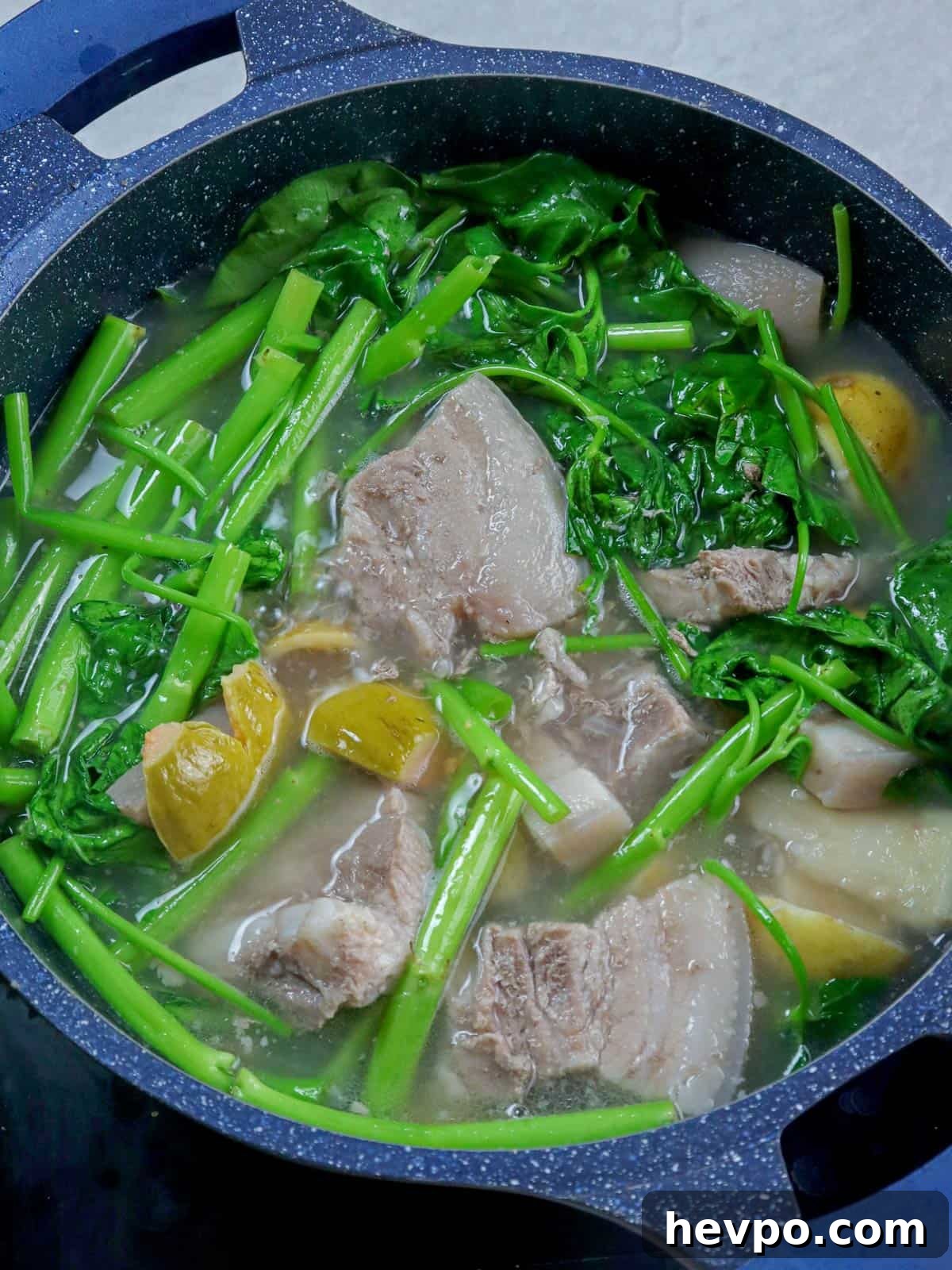
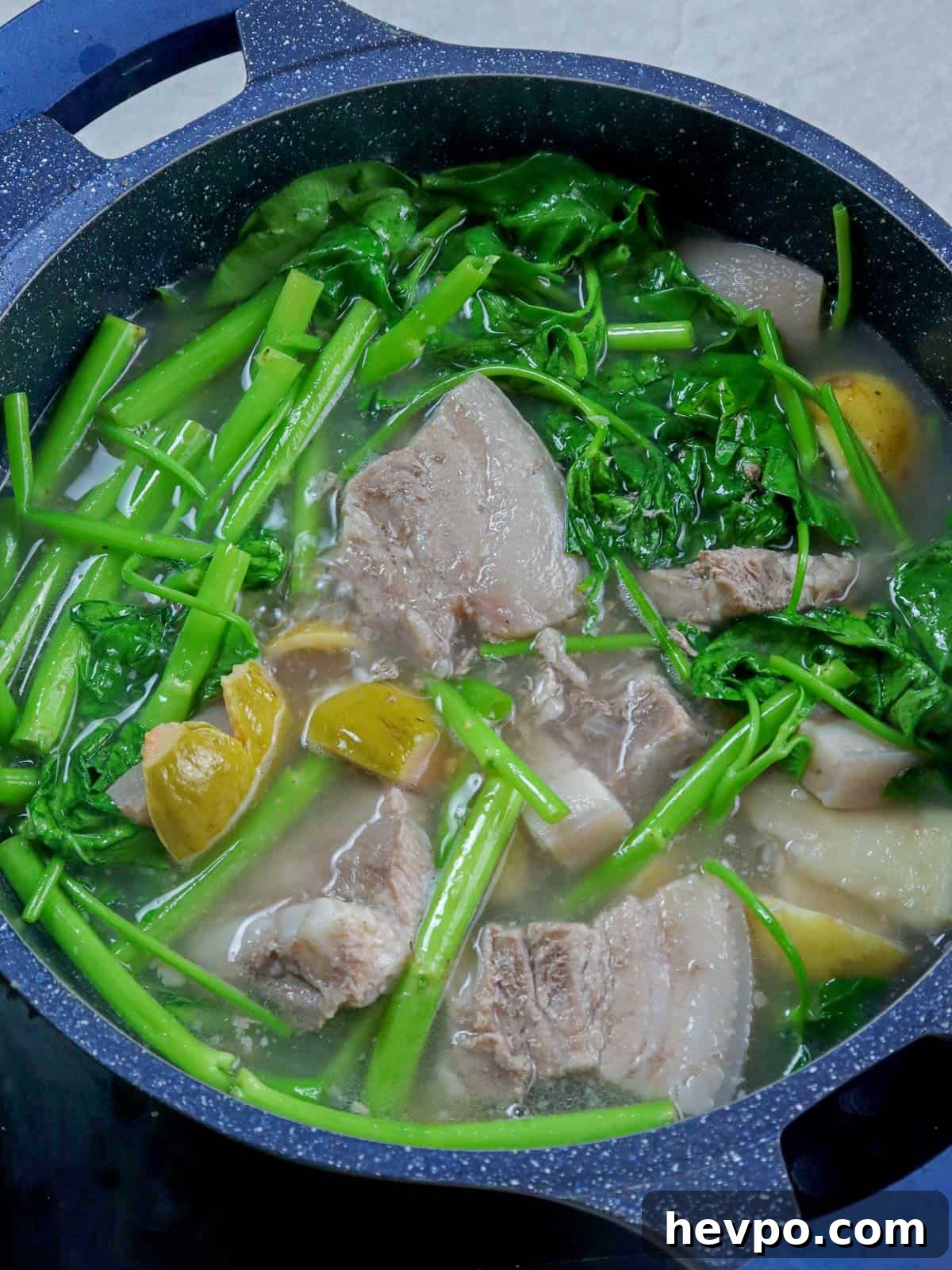
Pork Bulanglang is a refreshing sour soup made with pork belly, guava, kangkong, and gabi. This Kapampangan version of sinigang sa bayabas is comforting, flavorful, and perfect with steamed rice.
We moved from Southern California to Texas late last year. We enjoy the slower pace and friendly culture, but finding familiar ingredients for the blog has been a challenge.
The nearest Asian supermarket is about 20 miles away and doesn’t carry the same selection I was used to in SoCal. For example, after six months in Texas I still haven’t found sitaw.
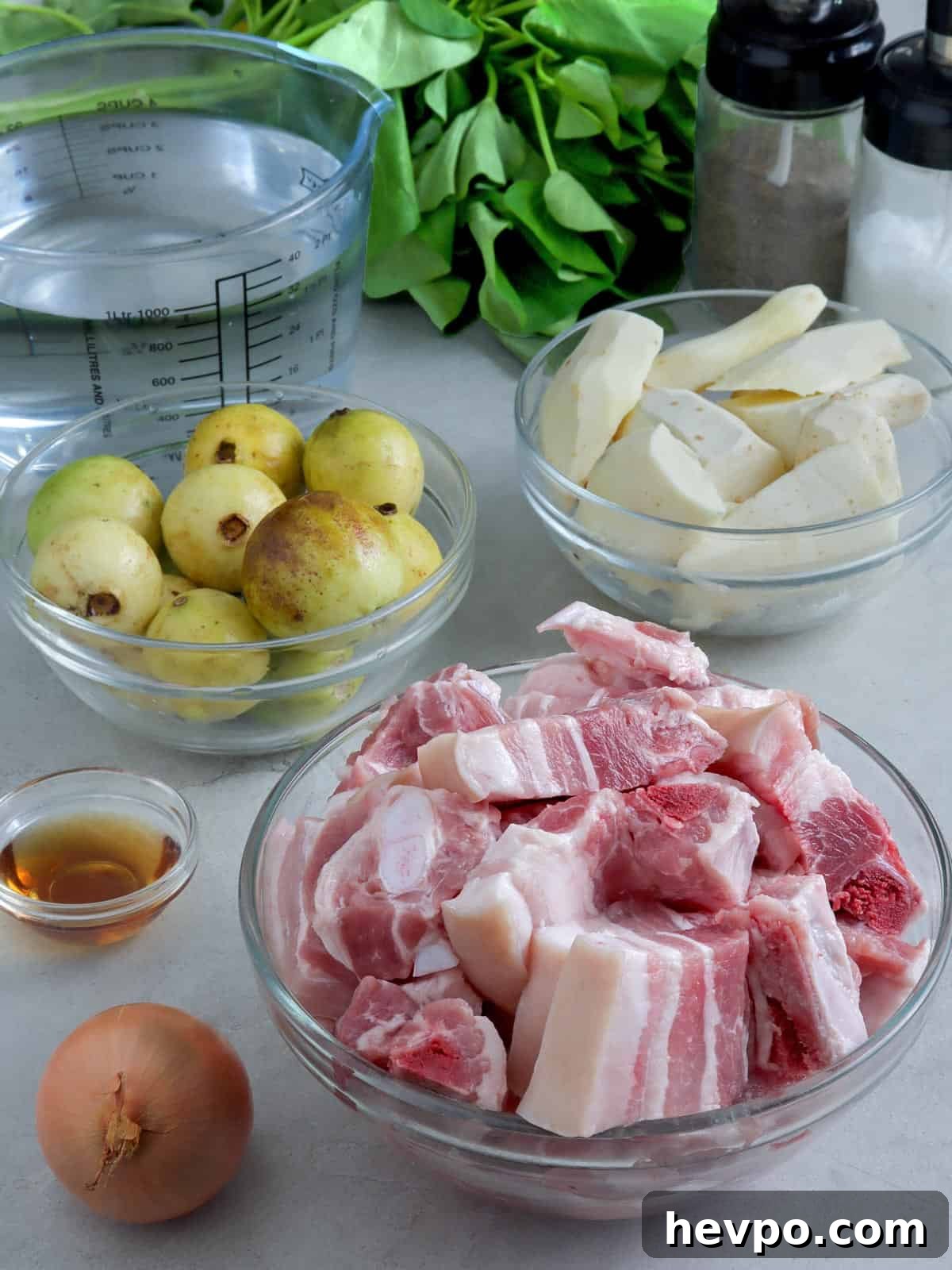
On the upside, tropical fruits are abundant here thanks to the subtropical climate. Supermarkets are full of papaya, star fruit, dragon fruit, mango, and plenty of guava.
When a Kapampangan sees piles of ripe guavas, the natural response is to make pork bulanglang.
In many parts of the Philippines, bulanglang refers to boiled vegetables flavored with fermented fish or bagoong. In Pampanga, however, bulanglang is the local name for sinigang sa bayabas — a guava-based sour soup. It can be made with pork, shrimp, or milkfish and traditionally includes kangkong, puso ng saging, and gabi.
Unlike tamarind-based sinigang, which has a sharp tang, Kapampangan bulanglang is gentler. The guava gives the broth a mild sourness with a hint of sweetness that balances the savory pork. It’s equally satisfying on a cool rainy day or served chilled on a hot afternoon, and it pairs perfectly with steamed rice.
Ingredient notes
- Meat – Pork belly with ribs is ideal because it provides a good balance of fat and meat. Swap with pork shoulder for a leaner option or spare ribs for a richer flavor.
- Guava – I prefer small Mexican cream guavas with thin pale-yellow skin and creamy white flesh. Other varieties may have harder seeds or firmer flesh; those may need peeling and longer cooking to extract flavor.
- Vegetables – Kangkong (swamp spinach) and gabi are traditional choices. Some versions also include puso ng saging for added texture.
Cooking tips
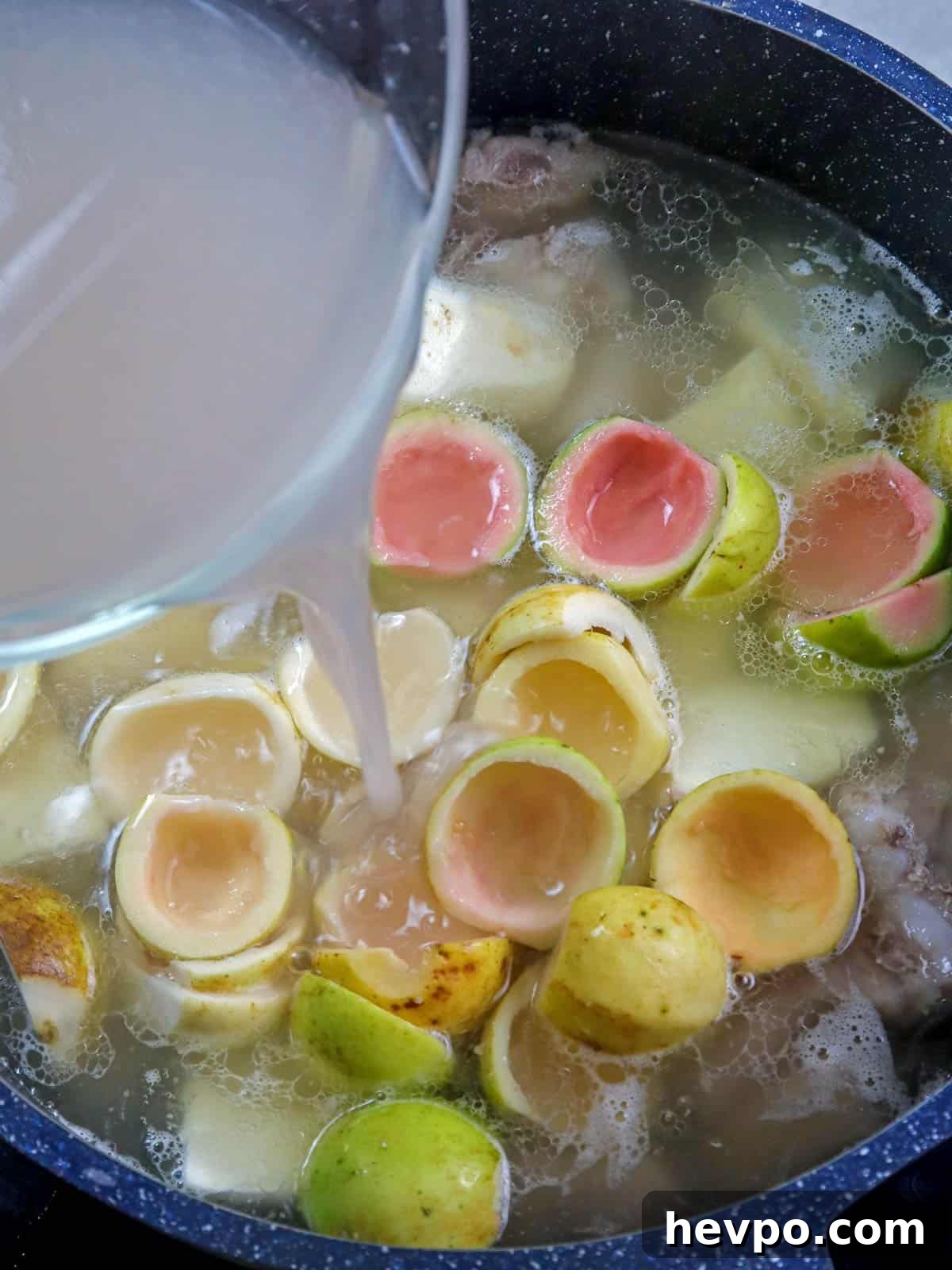
- Scoop the guava seeds into a bowl with about a cup of water, mash with the back of a spoon, then strain through a fine-mesh sieve. Discard the seeds and add the extracted juice to the pot to capture flavor without the gritty texture.
- Use a mix of almost-ripe and slightly green guavas to balance sourness and sweetness in the broth.
How to serve and store
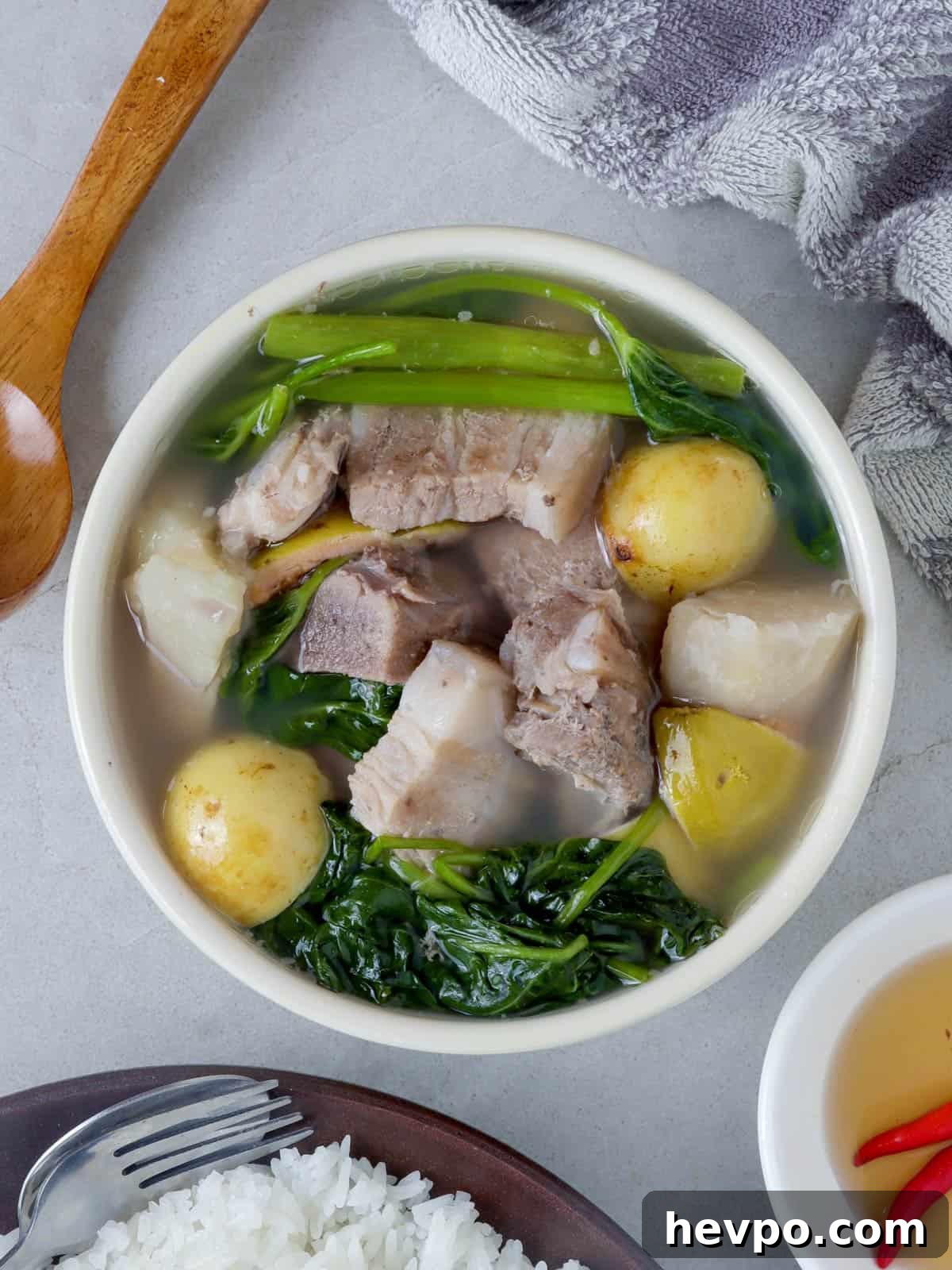
- Serve Kapampangan Bulanglang na Baboy piping hot as a main dish with steamed rice and a side of spiced fish sauce if desired.
- Store leftovers in an airtight container in the refrigerator for up to 3 days.
- Reheat gently on the stove or in the microwave in short intervals until hot, stirring occasionally.
More pork recipes
Pork Menudo
Inihaw na Liempo
Bicol Express
Pork Bulanglang
Ingredients
- 2 pounds pork belly, cut into 2-inch cubes
- 7 cups water
- 1 onion, peeled and quartered
- 1 tablespoon fish sauce
- 1 bunch kangkong
- 1 pound (about 10 to 12 pieces) fresh guava
- 8 pieces gabi, peeled and cut into 2-inch chunks
- salt to taste
Instructions
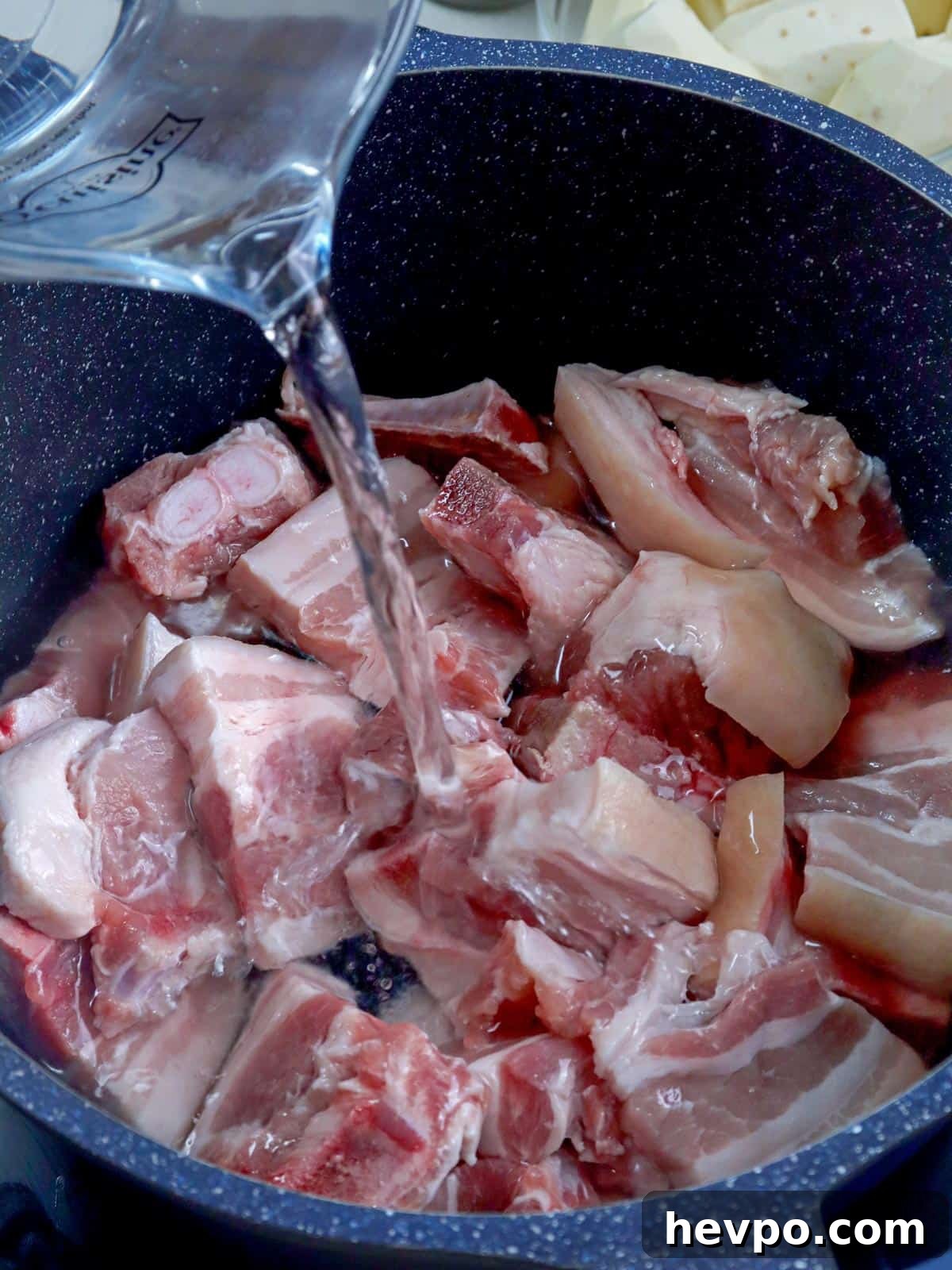
- In a pot over medium heat, combine pork and water. Bring to a boil, skimming any scum that rises to the surface.
- When the broth clears, add the onions and fish sauce.
- Lower the heat, cover, and simmer for about 1 to 1½ hours or until the pork is tender. Add more water in ½-cup increments if needed to keep about 6 cups of broth.
- Meanwhile, halve the guavas and use a small spoon to scoop out the seeds.
- In a bowl, combine the guava seeds with 1 cup of water. Mash with the back of a spoon to extract pulp, then strain through a fine-mesh sieve. Reserve the guava juice and discard the seeds.
- Trim about 2 inches from the kangkong stalks and discard. Cut the kangkong into 3-inch lengths, separating the sturdier stalks from the leaves, wash thoroughly, and drain.
- Add the gabi, sliced guava, and reserved guava juice to the pot. Cook about 5 minutes or until the gabi is tender.
- Season with salt to taste.
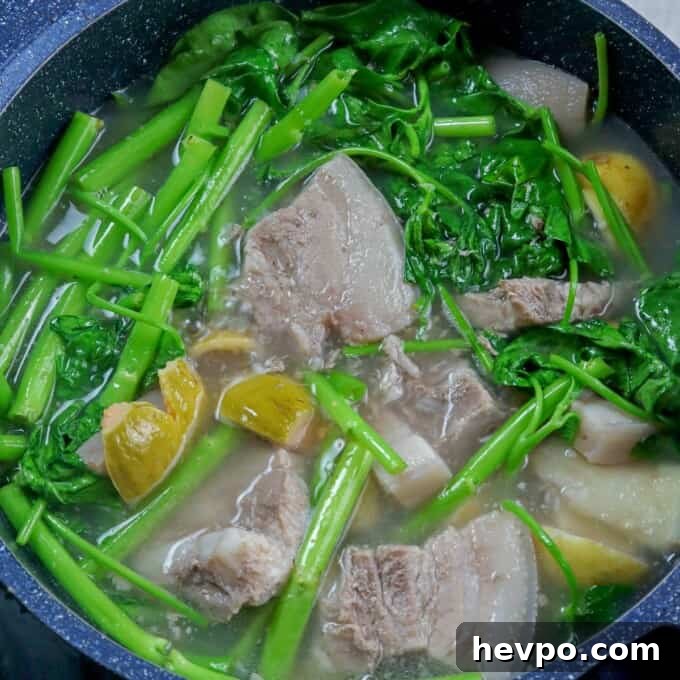
- Add the kangkong, starting with the sturdier stalks, then the leaves. Cook for 1 to 2 minutes more. Serve hot.
Notes
Video
Nutrition Information
Carbohydrates: 13 g,
Protein: 17 g,
Fat: 81 g