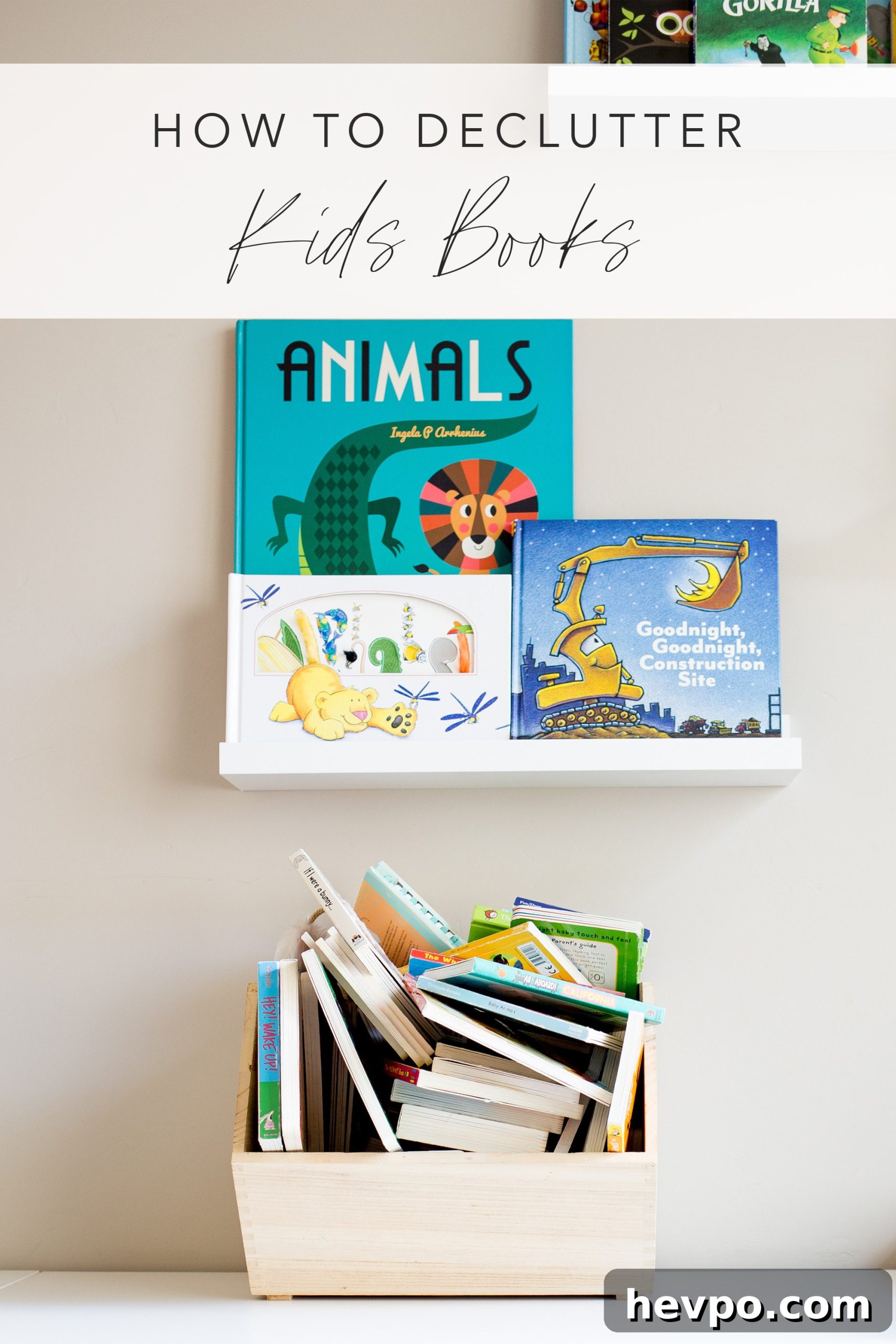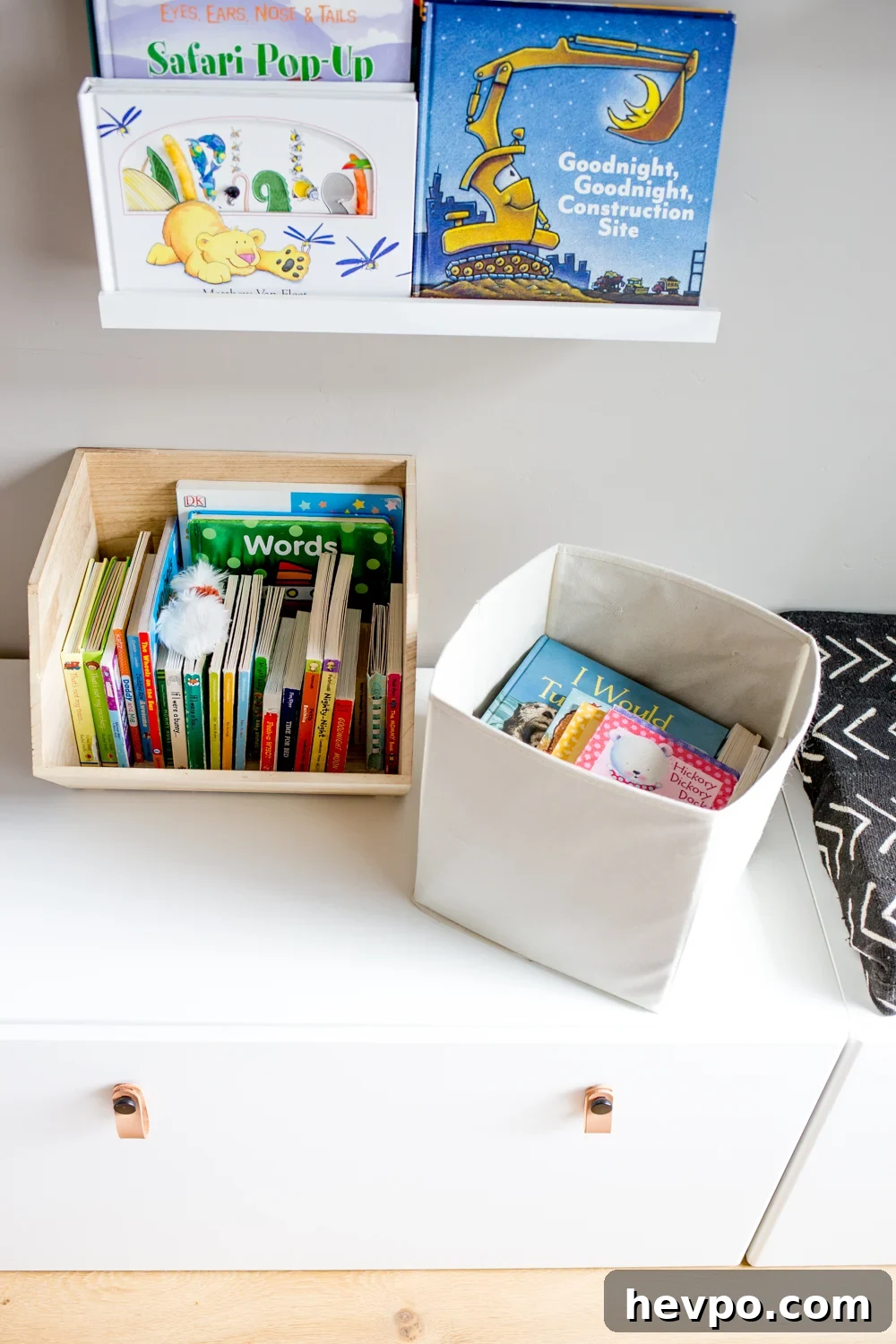
Feeling overwhelmed by your children’s books? Here’s how to tell when it’s time to downsize the collection and a simple, practical process we used to declutter ours.
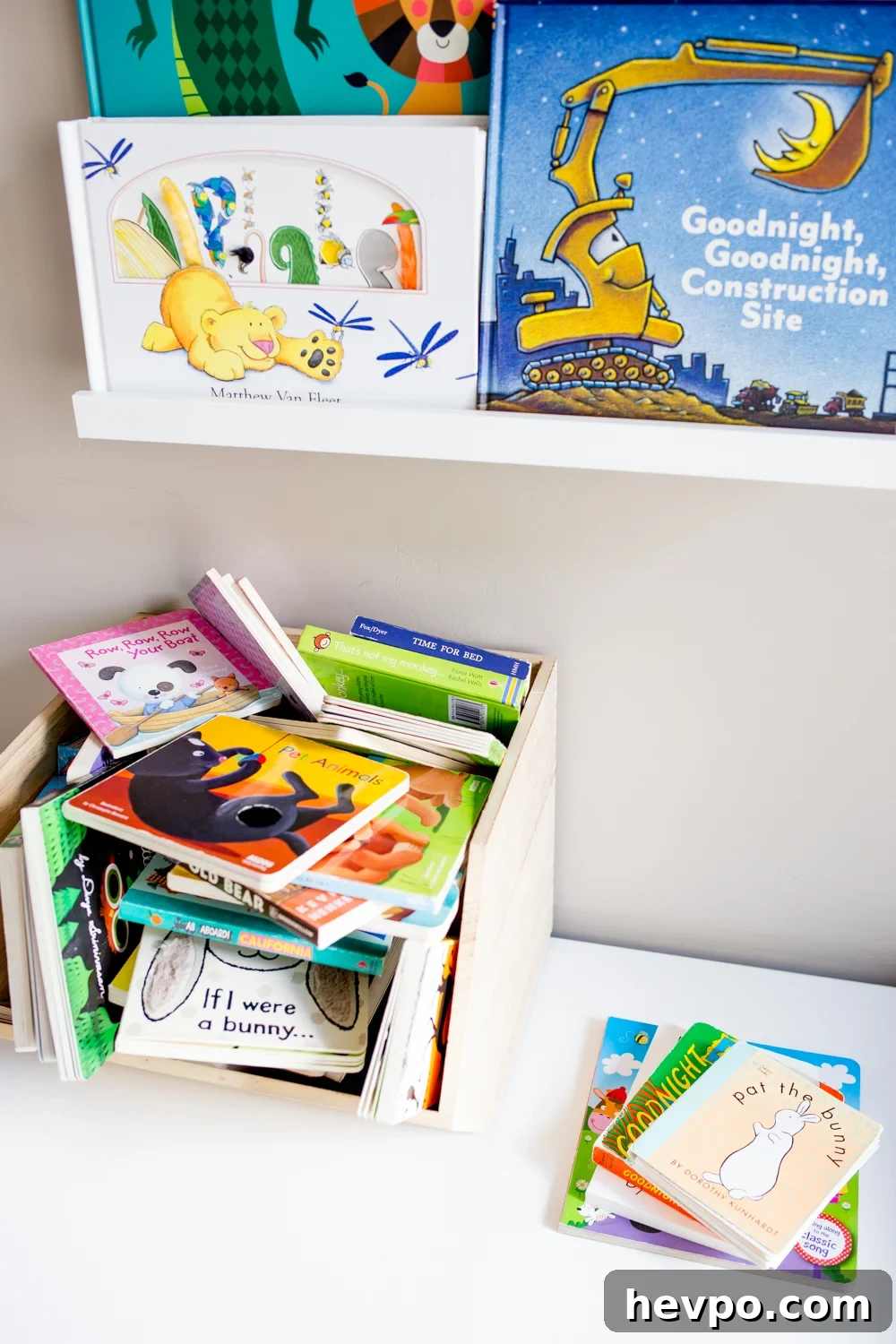
Table of Contents
What is it about books that makes us want more? Sometimes it’s a genuine love of stories and illustrations. Other times we assume more books equal a richer environment. With children’s books, I’ll admit I have hoarding tendencies — beautiful artwork and imaginative plots are hard to resist, and one-click shopping makes it too easy.
Over the past year I’ve made a conscious effort to buy far fewer books. Regular trips to the library helped a lot: rotating titles keep things fresh for the kids, and borrowing teaches them how to care for books and return them on time. Yet despite that, our home collection began to feel out of control.
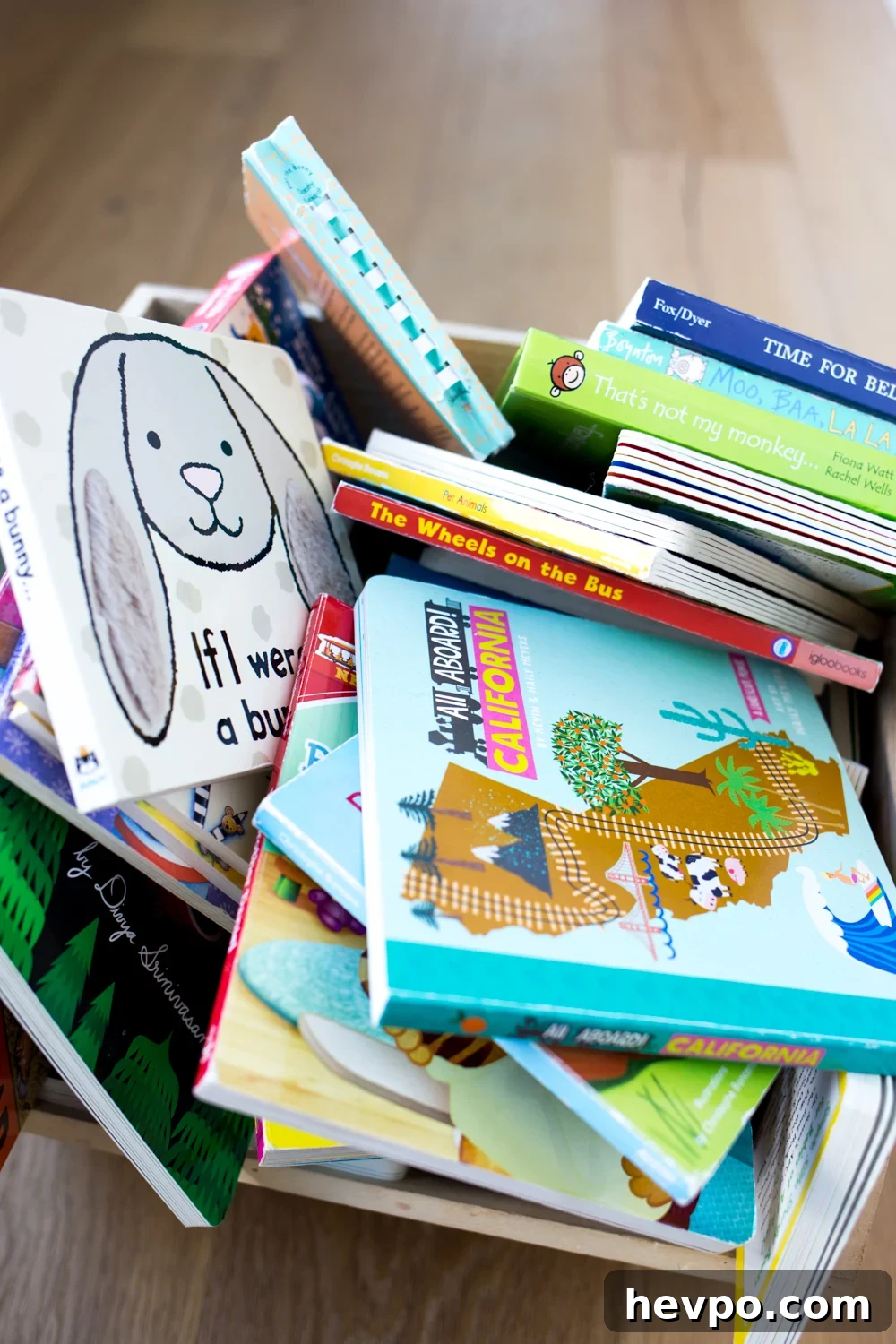
Exhibit A: Overstuffed shelves and books spilling out of bins.
When the collection reaches that state, it’s rarely because the children are reading every title. Instead, the books often become props — shields in imaginative play, stepping stones for “lava,” or towers to topple. And yet, when we sit down to read, we tend to reach for the same handful of favorites over and over: Corduroy, Curious George, Good Night, Good Night, Construction Site, and a few others.
Reading the same books repeatedly actually has strong literacy benefits for young children. The gains from reading together come from the ritual and shared time, not how many books you own. With that in mind, I grabbed a box and decluttered our collection while the toddlers napped one afternoon. Here’s the simple routine I used.
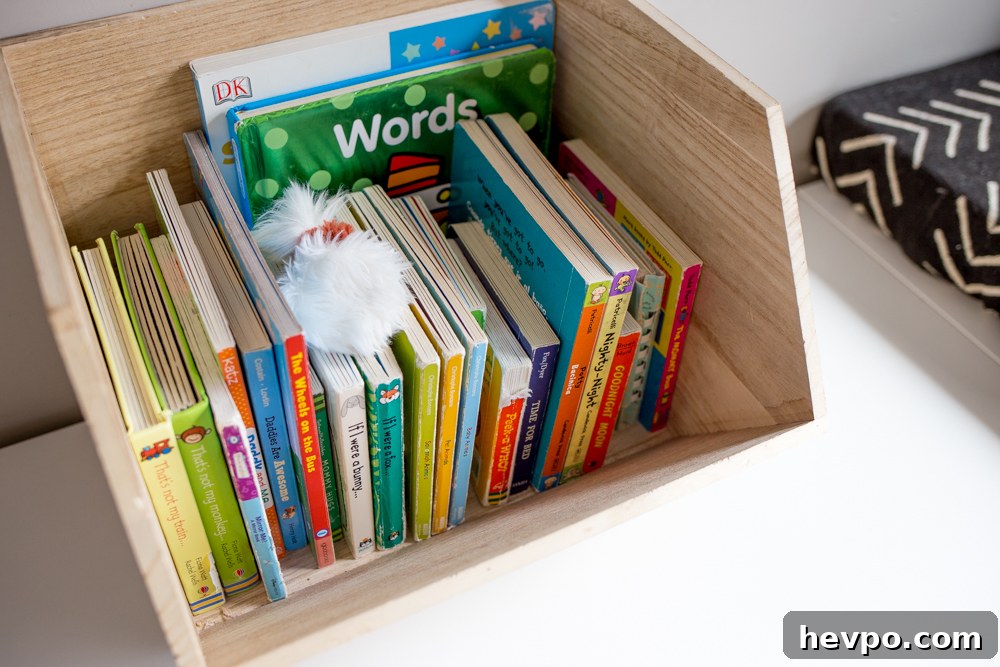
How We Declutter Kids Books
I like to start with quick wins. Pull every children’s book out of storage, shelving and bins. Remove exact duplicates, discard titles that are too worn to keep, and eliminate books my partner and I don’t enjoy reading together — life is short and story time should be enjoyable.
Sort the remaining books into three piles:
- Keep
- Unsure
- Give away
My “unsure” pile is usually the largest on the first pass, and that’s okay — it keeps the process moving. To decide, I ask a few practical questions:
Do we all enjoy reading this book? If not, it’s a strong candidate to go. Shared reading should be enjoyable for caregivers and kids alike.
How often do we read this book? Frequently read books stay; those rarely or never picked are better donated or recycled.
Is it available at the library? If you can easily borrow it, parting with a copy feels less risky.
Does this book hold real sentimental value? If a book is one-of-a-kind or deeply meaningful, keep it. If it’s only saved because it was a gift and it doesn’t add value to your life, consider letting it go.
After a couple of rounds, you’ll likely end up with a smaller, more manageable “keep” pile and a box of books to donate. The first time I did this, we removed over one hundred titles — duplicates, tattered books, and many that simply weren’t enjoyable. So far none of those donated books have been missed; if they are, we’ll borrow next time.
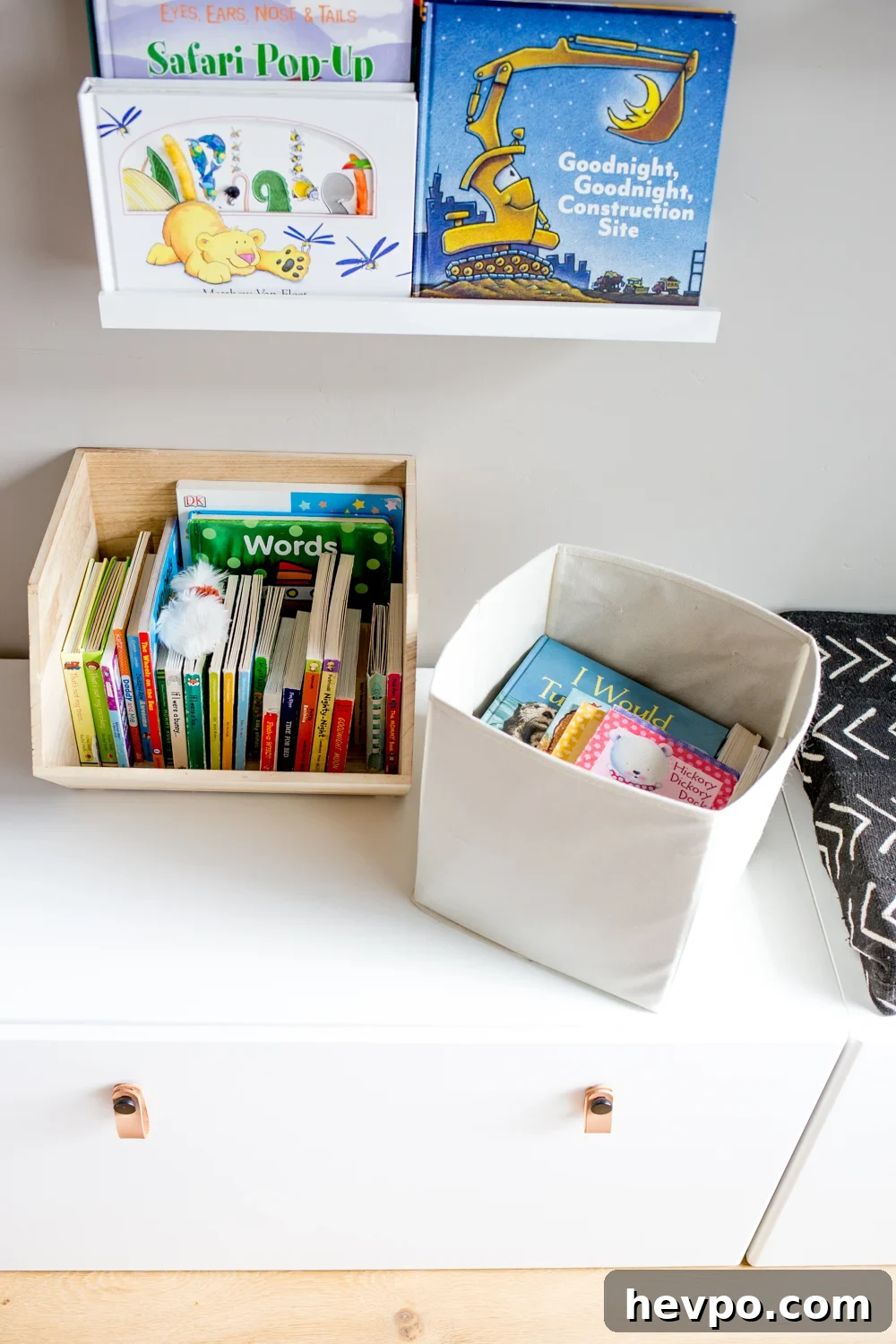
Thinking about simplifying your kiddos’ book collection?
Five signs it might be time to declutter your kids’ books:
- Your kids use books more as toys than reading material.
- Books are taking over rooms or surfaces in your home.
- It takes you more than a couple of minutes each night to tidy the books.
- Many titles in your collection are available at the local library.
- There are numerous books you don’t enjoy reading aloud.
When you pare down to a curated set of favorites, story time becomes calmer and more intentional. Rotating borrowed titles from the library helps keep variety without clutter, and keeps the focus on the ritual of reading together rather than the size of the collection.
Pin this Post