

I never imagined I would become someone who plans meals in advance.
For a long time, meal planning felt tediously unnecessary to me. I kept a well-stocked pantry and fridge, and spontaneity was my default. In practice I did have a loose plan for the fresh items I bought, but it was informal and often changed or disappeared when life intervened: a sudden invitation, a long day at work, a desire to eat out, or simply a change of mood.
And then, I had a child.
I kept my unstructured approach for months, until it became obvious it wasn’t working. What used to feel like creative freedom — improvising meals on the fly — turned into stress as I tried to squeeze cooking into the same day as work and childcare. I found myself rushing through simple, uninspired dinners and missing the satisfaction of a well-cooked meal.
Meal planning quickly emerged as the solution. A few months later, I’m a calmer, happier cook. I don’t always write out every week’s plan — sometimes a mental outline is enough — but regular planning has restored a sense of order and ease in my kitchen.
FREE PRINTABLE: You can download the meal planner I use to map out our weekly menus!
Meal Planning Tips: How I Do It
I plan only dinners that I share with Maxence — my lunches are usually simple at-home assemblies or meals out — and in our household breakfasts, snacks, and desserts don’t require planning.
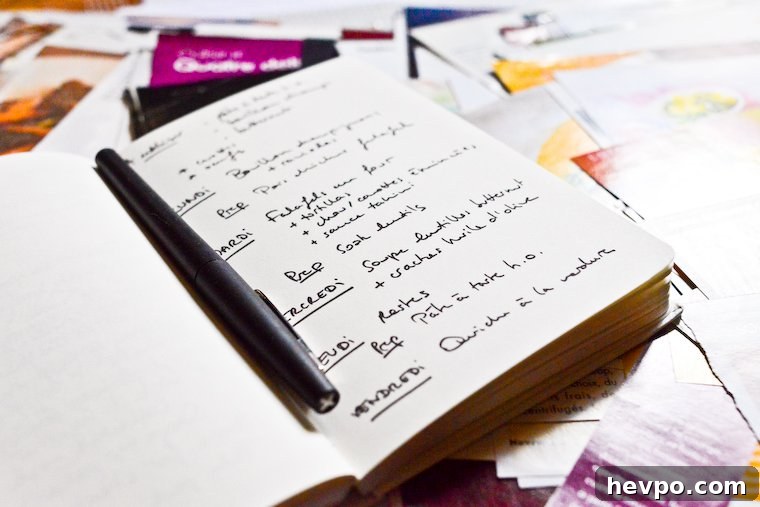
I put together my weekly plan on Mondays, after I unpack our vegetable delivery. When I plan I also consider:
- A quick inventory of pantry and freezer items that I want or need to use, plus any leftovers from the previous week (stock, pesto, dough scraps, etc.),
- The current list of dishes I’m inspired to cook,
- A rough schedule for the week so I know which nights we’ll be eating at home, eating out, or hosting guests, and which evenings I’ll have time for more involved cooking.
From there I:
- Create a list of dishes assigned to specific days, including designated leftovers nights and one or two wildcard meals, and note what parts of the menu are suitable for our toddler,
- Make a list of advance prep tasks that can be done the day before — washing and chopping vegetables, soaking legumes, mixing doughs, or defrosting items —
- Write a shopping list of missing ingredients and note the days I’ll need them so I can plan errands efficiently.
This gives me a clear picture of what needs to be done and when, allowing me to slot preparation steps into small pockets of time throughout the week.
Read on for the 9 benefits and 7 common “Yes, buts” of meal planning.