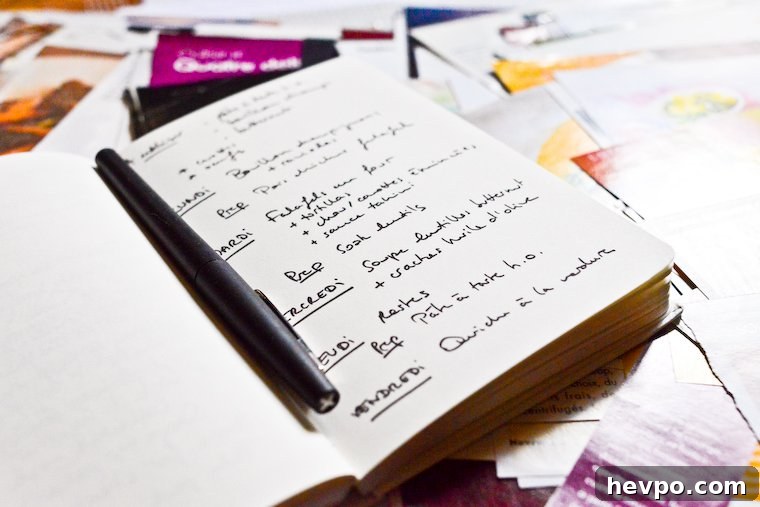
I never imagined I would become someone who plans meals in advance.
For a long time, meal planning felt tediously unnecessary to me. I kept a well-stocked pantry and fridge, and spontaneity was my default. In practice I did have a loose plan for the fresh items I bought, but it was informal and often changed or disappeared when life intervened: a sudden invitation, a long day at work, a desire to eat out, or simply a change of mood.
And then, I had a child.
I kept my unstructured approach for months, until it became obvious it wasn’t working. What used to feel like creative freedom — improvising meals on the fly — turned into stress as I tried to squeeze cooking into the same day as work and childcare. I found myself rushing through simple, uninspired dinners and missing the satisfaction of a well-cooked meal.
Meal planning quickly emerged as the solution. A few months later, I’m a calmer, happier cook. I don’t always write out every week’s plan — sometimes a mental outline is enough — but regular planning has restored a sense of order and ease in my kitchen.
FREE PRINTABLE: You can download the meal planner I use to map out our weekly menus!
Meal Planning Tips: How I Do It
I plan only dinners that I share with Maxence — my lunches are usually simple at-home assemblies or meals out — and in our household breakfasts, snacks, and desserts don’t require planning.
I put together my weekly plan on Mondays, after I unpack our vegetable delivery. When I plan I also consider:
- A quick inventory of pantry and freezer items that I want or need to use, plus any leftovers from the previous week (stock, pesto, dough scraps, etc.),
- The current list of dishes I’m inspired to cook,
- A rough schedule for the week so I know which nights we’ll be eating at home, eating out, or hosting guests, and which evenings I’ll have time for more involved cooking.
From there I:
- Create a list of dishes assigned to specific days, including designated leftovers nights and one or two wildcard meals, and note what parts of the menu are suitable for our toddler,
- Make a list of advance prep tasks that can be done the day before — washing and chopping vegetables, soaking legumes, mixing doughs, or defrosting items —
- Write a shopping list of missing ingredients and note the days I’ll need them so I can plan errands efficiently.
This gives me a clear picture of what needs to be done and when, allowing me to slot preparation steps into small pockets of time throughout the week.
Read on for the 9 benefits and 7 common “Yes, buts” of meal planning.
Meal Planning Tips: The 9 Benefits
- It simplifies daily life.
Once you’re used to the routine, a weekly plan can be assembled in thirty minutes or less. After that, it’s about executing the plan and freeing time and mental energy for other things.
- It helps you actually use your cookbooks and bookmarked recipes.
Scheduling meals encourages you to try dishes you’ve clipped, bookmarked, or saved in cookbooks, and makes it more likely those recipes get made.
- You make more efficient use of pantry reserves.
Regular inventory-taking helps you prioritize ingredients that need to be used before they spoil and choose recipes to match.
- Picky eaters benefit too.
Getting picky household members involved in planning can increase buy-in and reduce mealtime battles.
- It supports a healthier diet.
When meals are planned, it’s easier to ensure variety and balance rather than defaulting to convenience foods.
- You’ll cut food waste.
Buying only what you need, cooking what you buy, and intentionally incorporating leftovers reduces waste.
- It saves money.
Meal planning reduces impulse takeout and last-minute convenience purchases by making home cooking more predictable and convenient.
- It becomes a useful cooking log.
If you keep weekly plans in one place, you’ll have a record to revisit for successful ideas and to build future menus quickly.
- The process helps you grow as a cook.
Planning makes it easier to schedule dishes that stretch your skills or introduce new techniques on days when you have time to experiment.
Ready to begin? Download the printable meal planner I use to organize our weekly menus!
Meal Planning Tips: The 7 “Yes, Buts” (and Solutions)
- “Yes, but I find it daunting to design a new plan every week.”
Use a simple framework instead: assign food types to days (for example, salad Monday, fish Tuesday, pizza or quiche Wednesday, stew Thursday) and fill in specifics seasonally. This reduces decision fatigue while keeping variety.
- “Yes, but I worry it will be too much cooking.”
You don’t have to cook from scratch every day. Choose recipes that provide multiple meals: roast or braise once and use the leftovers creatively across several lunches or dinners.
- “Yes, but I end up with too many leftovers.”
Plan a dedicated leftovers night where everyone assembles plates from remaining bits, or pack leftovers for lunch. If you dislike repeat meals, freeze portions and bring them back into rotation later.
- “Yes, but my schedule changes often.”
Leave some flexibility by underplanning a few nights and keeping quick, reliable shortcut recipes on hand that use pantry and freezer staples for nights you’re unexpectedly out.
- “Yes, but I have trouble sticking to the plan.”
Check if your plan is too ambitious. Scale back to simpler recipes, or keep the plan flexible to allow swapping dishes when you change your mind.
- “Yes, but I like to shop the market with no list and buy what looks best.”
Do your menu planning after the market run and incorporate the fresh items you bought. If you’re missing a few ingredients, pick them up later.
- “Yes, but I can’t give up spontaneous cooking.”
Plan one or more wildcard meals where no dish is pre-decided — these nights let you improvise freely and are best placed later in the week so you can use up leftovers without disrupting other planned meals.
Join the conversation!
Do you plan your meals? If not, what holds you back? If you do, what has worked for you and what hasn’t?
Don’t forget! I offer a FREE printable meal planner to help you design your weekly menus.